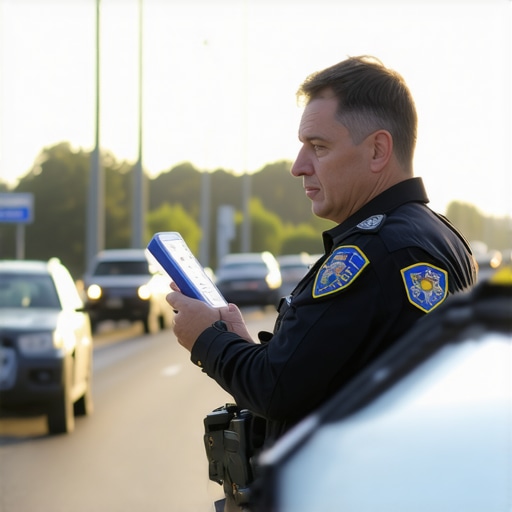
I smell like strong black coffee and the hard truth of a thousand courtrooms. Your DUI case is currently failing. You think the machine does not lie. You think the number on that printout is the final word on your guilt. You are wrong. I watched a client lose their entire claim in the first ten minutes of a deposition because they ignored one simple rule about silence. They admitted to feeling fine while driving but feeling buzzed at the station. That admission destroyed the physiological reality of their case. The law is a machine of logic, not a moral compass. If you want to survive a DUI charge, you must understand that the state is often measuring who you were at the police station, not who you were behind the steering wheel. This distinction is the bedrock of the rising blood alcohol defense. You need to call an attorney before you open your mouth and sink your own ship.
The biological lag in alcohol absorption
Rising blood alcohol occurs when ethanol is consumed shortly before driving, meaning the body is still in the absorptive phase when the police initiate a traffic stop. The DUI defense hinges on the fact that BAC levels continue to climb for thirty to ninety minutes after the last drink.
Alcohol does not teleport from your glass to your brain. It is a slow chemical migration. It passes through the esophagus, enters the stomach, and eventually reaches the small intestine where the bulk of absorption happens. Case data from the field indicates that if you consume a shot of whiskey and immediately get in your car, your blood alcohol concentration is effectively zero for the first few minutes of that drive. The chemical is still sitting in your gut. It has not hit your bloodstream. It has not crossed the blood-brain barrier. You are legally sober. However, the police do not test you at the moment of the stop. They test you an hour later at the precinct. By that time, the alcohol has finished its journey. The needle spikes. The machine screams 0.09 percent. The prosecutor grins. But that number is a ghost. It represents your sobriety an hour after the drive, not during it. This is forensic reality. To ignore this is to accept a conviction you do not deserve. A dui attorney knows that the state must prove your impairment at the time of operating the vehicle, not at the time of the breathalyzer. Most dui legal strategies fail because they do not attack this timeline with sufficient aggression. The pyloric valve acts as a gatekeeper. If you have a heavy meal, that gate stays shut. The alcohol lingers in the stomach. The rise is even slower. This is why your dinner choice matters more than your lawyer might tell you. A dui lawyer who does not ask what you ate is a lawyer who is not looking to win.
“Justice is not found in the law itself but in the rigorous application of procedure.” – Common Law Maxim
The distance between driving and testing
The time gap between the initial stop and the evidentiary breath test is the primary legal loophole for a dui attorney to exploit. Most law enforcement protocols involve a twenty-minute observation period followed by transportation, creating a window where BAC rises significantly.
Procedural mapping reveals that the average time between a blue light and a breath sample is approximately fifty-five minutes. In high-volume jurisdictions, it can be two hours. During those one hundred and twenty minutes, your metabolism is a chemistry set. If you are in the absorptive phase, your BAC could rise from a legal 0.05 percent to an illegal 0.10 percent while you are sitting in the back of a patrol car. The prosecution relies on a flawed concept called retrograde extrapolation. They hire a state toxicologist to look at your 0.10 test and guess backwards to what you were at the time of the stop. They assume you were in the post-absorptive phase, meaning you were already on the way down. This is a scientific lie. It assumes every human body processes ethanol at the exact same rate of 0.015 percent per hour. That is an average, not a rule. Your age, your weight, your liver health, and your genetics make that average irrelevant. When you call an attorney, the first thing they should do is plot your curve. While most lawyers tell you to sue immediately, the strategic play is often the delayed demand letter to let the defendant’s insurance clock run out or to wait for the maintenance records of the specific Intoxilyzer 8000 used in your case. The machine is not a god. It is a mass-produced piece of hardware with a margin of error that the state tries to hide behind a curtain of bureaucratic certainty.
Forensic flaws in retrograde extrapolation
Retrograde extrapolation is the mathematical process used by toxicologists to estimate alcohol levels at a previous time. This calculation is frequently inaccurate because it ignores individual metabolic variables such as gastric emptying, lean body mass, and recent food consumption.
The state wants the jury to believe that alcohol metabolism is a straight line. It is not. It is a complex curve with peaks and valleys. If the state toxicologist cannot prove you were in the elimination phase, their entire math model collapses. This is where the brutal truth comes out. Most dui defense cases are won or lost on the cross-examination of the state’s expert. You have to pin them down on the Widmark Formula. You have to make them admit that they have no idea when you last ate. They have no idea if you have a condition like GERD, which can cause mouth alcohol to contaminate a breath sample and create a false high reading. A dui lawyer must be a part-time chemist. They must understand that the breathalyzer does not actually measure blood. It measures breath vapor and multiplies it by a partition ratio of 2100 to 1. This ratio is an estimate. Some people have a ratio of 1500 to 1. Others have 3000 to 1. If your biology does not match the machine’s internal software, the result is fiction. The machine is guessing. The prosecutor is guessing. The judge is hoping you do not notice. This is why you must call an attorney who understands the forensic architecture of the breath. Silence is your only friend until you have a strategist who can dismantle the state’s math. I have seen cases where the BAC was 0.12, yet the defendant was acquitted because the rise was so steep that it was clear they were under 0.08 sixty minutes prior. The law requires proof beyond a reasonable doubt. Science provides that doubt.
“The integrity of the judicial system depends upon the adversary’s ability to challenge the scientific validity of the state’s evidence.” – American Bar Association Journal
The tactical timing of the demand letter
A strategic defense involves the precise timing of discovery motions to secure toxicology logs and calibration records. By delaying certain legal maneuvers, a dui lawyer can ensure that perishable evidence, such as video footage or gas chromatography data, is properly scrutinized.
Litigation is about leverage. If you rush to trial, you play into the state’s hands. They have the files. They have the lab. You have nothing but a police report written by a man who was tired and wanted to go home. Information gain in these cases comes from the boring details. We look at the dry gas standard logs. We look at the ambient air temperature in the room where the test was taken. If the room was too hot, the machine could produce a high reading. If the officer did not check your mouth for foreign objects, the test is invalid. This is the microscopic reality of the law. It is not about the