Why Police Video Footage Often Contradicts the Official Arrest Report
I watched a client lose their entire claim in the first ten minutes of a deposition because they ignored one simple rule about silence. They tried to explain the video. Never explain the video. Let the video explain the officer. I smell like the bottom of a coffee pot and twenty years of broken promises in the courtroom. Your arrest report says you stumbled. The video says the wind was forty miles per hour and you have a bad knee. The gap between those two realities is where a DUI lawyer lives. Most people assume the written word of a police officer is the final truth. This is a dangerous assumption. Litigation is not a search for truth; it is a battle over proof. When you call an attorney, you are hiring a professional to find the daylight between what the officer remembers and what the lens captured. Your DUI defense depends entirely on this discrepancy.
The fiction written in blue ink
Police reports are subjective narratives drafted to survive judicial scrutiny and establish probable cause after the arrest has already occurred. This means the officer writes the document with a specific goal. They are not journalists. They are builders. They are building a legal case for the prosecution. Case data from the field indicates that officers often use boilerplate language. Phrases like bloodshot eyes, slurred speech, and unsteady gait appear in ninety percent of DUI legal filings regardless of the actual physical state of the defendant. The officer is trained to look for symptoms. When they find one, they ignore everything that contradicts it. This is confirmation bias in its most legal and lethal form. A DUI attorney knows that the report is a draft of the prosecution story, not a transcript of reality. When you are sitting in the back of a squad car, the officer is already mentally writing the narrative that justifies your handcuffs. They are not looking for reasons to let you go. They are looking for reasons to keep you.
“Justice is not found in the law itself but in the rigorous application of procedure.” – Common Law Maxim
Visual evidence versus officer perception
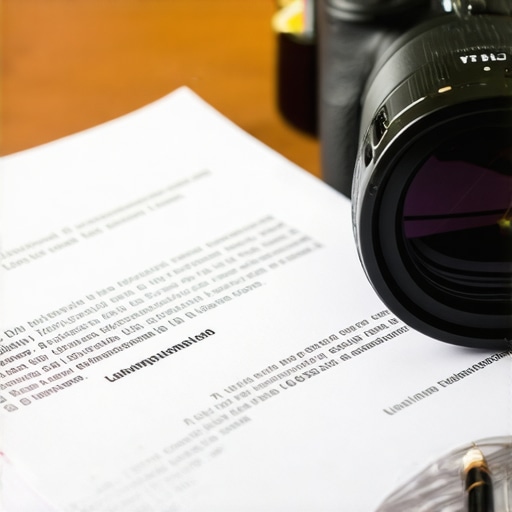
Video footage provides an objective chronological record that frequently exposes the cognitive biases inherent in human observation during high-stress law enforcement encounters. Human memory is a fragile thing. It is prone to suggestion and environmental pressure. Procedural mapping reveals that the human brain under stress fills in gaps with expected patterns. If an officer expects a drunk driver, they see a drunk driver. They see a sway where there was a simple adjustment for balance. They hear a slur where there was a stutter of fear. The body camera does not have an ego. It does not have a career path. It does not need to justify an arrest to a supervisor. When we compare the dui lawyer perspective to the police perspective, we look for the frame where the officer says you failed the test while the video shows you standing perfectly still. These contradictions are the foundation of a successful motion to suppress evidence.
[image_placeholder_1]
Why the walk and turn test fails in court
Standardized Field Sobriety Tests are designed for failure because they require divided attention and physical coordination that many sober individuals cannot perform under duress. The walk and turn test is a perfect example. The officer will write that you missed heel to toe or that you used your arms for balance. They write it as a definitive sign of impairment. However, a DUI attorney will use the video to show the uneven pavement, the passing traffic at sixty miles per hour, and the blinding strobe lights of the police cruiser. While most lawyers tell you to sue immediately, the strategic play is often the delayed demand letter or discovery request to let the defendant insurance clock run out or to ensure the video is preserved before it is overwritten by department policy. The contradiction here is often between the officer’s rigid grading and the physical reality of the environment. If the wind is blowing at twenty knots and you are on a slope, missing a step is not evidence of alcohol; it is evidence of gravity.
Tactical errors in the charging document
Discrepancies between the arrest report and the video often stem from the officer’s failure to account for environmental factors and physiological stress. The officer writes the report in the quiet of the station. They are no longer on the side of a cold highway. They forget the noise. They forget the adrenaline. They record their conclusions, not their observations. A DUI defense expert will deconstruct the timing of the report. If the report was written four hours after the arrest, the officer is relying on a memory that has already been filtered through the lens of a successful arrest. They remember you being more intoxicated than you were because you are now in a cell. Case data from the field indicates that the longer the delay between the event and the report, the more the report aligns with the officer’s initial suspicion rather than the recorded facts. This is where your DUI legal team finds the leverage to negotiate or dismiss.
“The prosecutor has a dual role, as an advocate and as an administrator of justice.” – ABA Standards for Criminal Justice
Science behind the lens
Modern digital forensics can identify discrepancies in police reports by analyzing the timing and metadata of body camera footage to prove lack of probable cause. We look at the timestamps. We look at the lighting. We look at the officer’s position. Sometimes the officer claims they smelled alcohol from ten feet away while the wind was blowing toward them. The video shows the distance. The weather report shows the wind. These are hard facts that a DUI attorney uses to dismantle a narrative. Police memory is often a house of cards. If you pull out the one card that says the officer had a clear view when the video shows they were looking at their notebook, the whole case can collapse. This is not about being a difficult person; it is about holding the state to its burden of proof. The dui lawyer is the only person in the room who is looking at the video with a skeptical eye. Everyone else wants to go home. We want to go to trial.
Procedural leverage in pre-trial motions
The most effective defense strategies involve filing motions to suppress evidence based on contradictions between the officer’s testimony and the digital record. If the officer says you were swerving but the dashcam shows you stayed within the lines, the initial stop is illegal. If the stop is illegal, everything that happens after it is inadmissible. This is the fruit of the poisonous tree doctrine. Your DUI defense is only as strong as your lawyer’s ability to find that initial error. Many times, the officer will amplify the facts in the report to make the stop look better to their sergeant. They do not realize the camera has a wider angle than they do. They do not realize the camera captured the car in the next lane that was actually the one swerving. This is why you must call an attorney immediately. You need someone to secure that footage before it disappears into a server or gets deleted after thirty days.
Strategy for the modern defense
Winning a case in the digital age requires a lawyer who can synchronize the written record with the visual reality to expose falsehoods. We do not just look for lies. We look for mistakes. We look for the moment the officer stopped being a neutral observer and started being an accuser. The video is the anchor. The report is the sail. If the sail is taking the case in a direction the anchor does not support, the ship sinks. A dui attorney is the diver who finds the hole in the hull. Your future depends on the microscopic examination of these two records. Do not trust the paper. Trust the pixels. The prosecution will try to explain away the video as a limited perspective. We will show the jury that the video is the only part of the case that does not have a motive to lie. This is the brutal truth of the modern courtroom. Facts are negotiable until they are recorded in high definition.