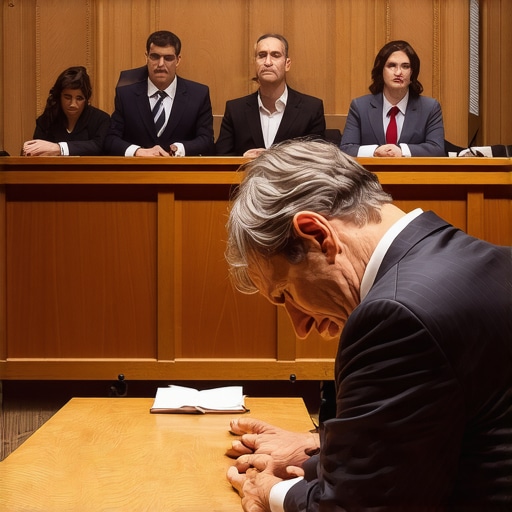
Why Pleading No Contest in a DUI Case Is a Strategic Trap
I watched a client lose their entire claim in the first ten minutes of a deposition because they ignored one simple rule about silence. They thought that by saying no contest in their criminal case, the civil litigation would simply vanish. It did not. Instead, it provided a structural roadmap for the opposition to dismantle their assets. Most people view a no contest plea as a clever shield; in the world of high stakes litigation, it is actually a target. You are essentially telling the state you will not fight, but you are also signaling to the civil courts that you have no viable defense. It is a tactical surrender that assumes the system is merciful. It is not. Justice is a product of procedural leverage, not a gift granted to those who stop resisting.
The false safety of the no contest plea
Pleading no contest or nolo contendere means you accept the punishment without a formal admission of guilt, yet a dui attorney will warn that the court treats this exactly like a guilty plea for sentencing. In a dui legal framework, this plea results in a criminal conviction, mandatory license suspension, and hefty fines. It is a procedural dead end. While the plea is designed to prevent the conviction from being used as an admission of guilt in a subsequent civil lawsuit, this protection is often narrower than defendants realize. In many jurisdictions, a no contest plea to a felony DUI is still admissible. You are trading your right to a dui defense for a minor administrative convenience that may not even exist by the time you reach civil court. The prosecution wants you to take this route because it relieves them of the burden of proving the blood alcohol content (BAC) accuracy or the officer’s probable cause. Every time a defendant enters this plea, the state avoids a preliminary hearing where their evidence would have been shredded. You need to call an attorney who views the no contest option as a last resort rather than a starting point.
“Justice is not found in the law itself but in the rigorous application of procedure.” – Common Law Maxim
How civil liability follows your criminal record
Civil liability in a dui case is often the most expensive consequence, as the standard of proof in civil court is a preponderance of the evidence rather than beyond a reasonable doubt. A dui lawyer knows that even if your nolo contendere plea stays out of the record, the underlying facts discovered during the criminal investigation are fair game. The plaintiff’s attorney will subpoena the arresting officer, the lab technician, and the breathalyzer logs to recreate the state’s case in a civil setting. By not fighting the criminal charges, you lose the opportunity to create a transcribed record of the officer’s mistakes during cross examination. Information gain in these cases is found in the struggle. While most lawyers tell you to sue or settle immediately, the strategic play is often the delayed demand letter. This allows the defendant’s insurance clock to run out while we gather exculpatory evidence that the prosecution tried to bury. If you do not challenge the field sobriety tests during the criminal phase, you have no sworn testimony to use when the civil suit seeks punitive damages against you.
Technical flaws in breath and blood evidence
Technical flaws in breath and blood evidence often center on the intoxilyzer 8000 calibration logs and the chain of custody for forensic samples. A dui lawyer must audit the gas chromatograph maintenance records to identify instrument drift or interference from mouth alcohol or acetone which can inflate results. Many defendants do not realize that the breath test is not a direct measurement of blood alcohol but a mathematical conversion based on a partition ratio that varies between individuals. If you have acid reflux or GERD, the machine can mistake stomach vapors for deep lung air, resulting in a false positive high reading. Pleading no contest means you never get to hire an expert toxicologist to explain these variables to a jury. You are essentially agreeing that the machine was perfect. Machines are never perfect. They are maintained by humans who are often overworked and underpaid. We look for the software glitches and the ambient temperature fluctuations that the police department ignored. If the blood draw was not handled with the correct anticoagulant, the sample can ferment, creating endogenous ethanol that did not exist when you were behind the wheel.
Strategic advantages of a delayed demand
Strategic advantages of a delayed demand involve waiting for the prosecution to fail their speedy trial obligations or for the lab backlogs to compromise the forensic evidence. A dui attorney understands that time is the enemy of the state’s memory; officers forget details and witnesses disappear. By forcing the state to actually prepare for a jury trial, you create procedural friction that leads to better plea deals or total dismissals. If you plead no contest early, you are giving the state a free win. We look at the discovery packet for what is missing. Is the body cam footage incomplete? Is the CAD report inconsistent with the officer’s sworn affidavit? These are the levers we pull to suppress evidence. A motion to suppress based on an illegal traffic stop can end a case before it even starts. If the fourth amendment was violated, the blood results are fruit of the poisonous tree. You cannot afford to ignore these constitutional safeguards by rushing into a nolo plea.
“A defendant should be informed of the direct consequences of a plea, including the loss of civil rights and the impact on future litigation.” – ABA Standards for Criminal Justice
The reality of the court record
The court record is a permanent archive of your legal history, and a no contest plea appears as a conviction on almost every background check. For professionals with fiduciary duties or security clearances, the distinction between guilty and no contest is non-existent. A dui defense must be built on the presumption of innocence, which is abandoned the moment you accept the prosecutor’s terms. In high stakes dui legal battles, the goal is often to reduce the charge to reckless driving or wet reckless, which carries significantly fewer collateral consequences. This only happens when the state knows you are willing to go to verdict. They track which dui attorneys are trial lawyers and which ones are settlement mills. If you hire a lawyer who never goes to trial, the prosecution will never give you their best offer. They know you are looking for the exit, and they will make sure it is an expensive one. You must show the litigation architect‘s resolve by preparing every case as if a jury will decide it. Only then do the technical defenses regarding retrograde extrapolation or rising blood alcohol become effective bargaining chips.
Why a trial verdict is the only true clearance
A trial verdict of not guilty is the only way to truly clear your name and prevent the department of motor vehicles from destroying your driving privilege. While a no contest plea might feel like a quick fix to a stressful situation, the long term financial bleed from insurance premiums and career limitations is staggering. A dui lawyer is not just there to hold your hand; they are there to dismantle the state’s narrative. We examine the Horizontal Gaze Nystagmus test for false positives caused by neurological conditions or circadian rhythm disruption. We challenge the one leg stand and walk and turn tests based on environmental factors like sloped pavement or passing traffic. If you do not call an attorney who is ready to litigate these microscopic details, you are not getting a defense; you are getting a conviction coordinator. The courtroom is a place of procedural warfare. Those who arrive without a strategy to win usually end up paying for the mistakes of the police. Stop looking for the easy way out and start looking for the procedural leverage that saves your future.