The Illusion of Forensic Certainty at the Roadside
I watched a defendant lose their entire leverage in the first ten minutes of a preliminary hearing because they ignored one simple rule about silence. They assumed the roadside machine was the final word on their guilt. It was not. I have spent twenty five years in the trenches of the courtroom, and I can tell you that the metal box the officer holds is not a scientist; it is a glorified calculator with a penchant for lying. Most people see the flickering red numbers and give up. They believe the dui legal system is a conveyor belt to a conviction. This is the first and most dangerous mistake. The courtroom is not about what happened on the asphalt; it is about what the prosecution can prove through the narrow, suffocating straw of the rules of evidence. If you understand the mechanics of the machine and the failure of the human operating it, you realize the case against you is often a house of cards waiting for a stiff legal breeze.
The myth of portable breathalyzer accuracy
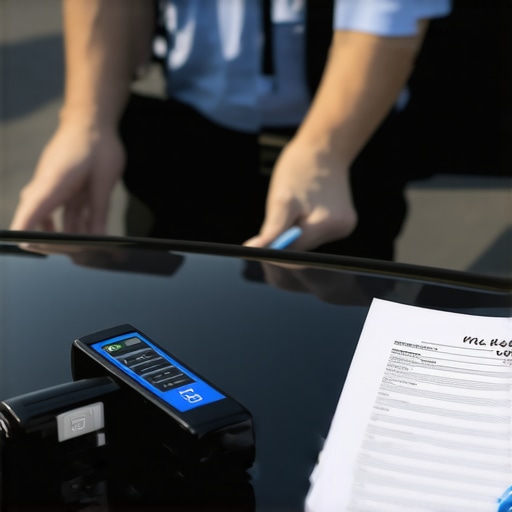
Roadside breath tests function as investigative tools rather than evidentiary certainties. In the context of a dui defense, these results often fail the Daubert standard for scientific admissibility. Dui attorneys argue that environmental factors and calibration errors render the blood alcohol concentration reading unreliable for a jury trial conviction. Most jurisdictions categorize these handheld devices as Preliminary Alcohol Screening or PAS tests. Case data from the field indicates that these devices are prone to massive fluctuations based on temperature, radio frequency interference, and even the breath volume of the subject. A dui lawyer knows that the law distinguishes between a device used to establish probable cause for an arrest and a device used to prove guilt beyond a reasonable doubt. The former is a low bar; the latter requires a level of precision that a portable, plastic unit simply cannot achieve in the wind and rain of a midnight traffic stop.
The failure of the fuel cell
Every dui defense must begin with a forensic autopsy of the device itself. Most portable units utilize fuel cell technology, where a chemical reaction between alcohol and a platinum electrode generates an electric current. It sounds sophisticated, but it is notoriously fickle. The fuel cell does not just react to ethanol; it reacts to a variety of molecular structures that look like ethanol to a cheap sensor. Procedural mapping reveals that substances like acetone, which is naturally produced by people on ketogenic diets or those with undiagnosed diabetes, can trigger a false positive. I have seen cases where a simple cleaning solvent used on the officer’s hands or the interior of the squad car provided enough ambient vapor to spike a reading. These machines are not mass spectrometers. They are blunt instruments. When we talk about dui legal standards, we are talking about the difference between a guess and a fact. A fuel cell that has not been replaced or recalibrated after five hundred uses is no longer a scientific instrument; it is a random number generator.
“Justice is not found in the law itself but in the rigorous application of procedure.” – Common Law Maxim
The fifteen minute rule of silence
The arresting officer is required by administrative code to observe the suspect for a continuous period of fifteen to twenty minutes before administering any breath test. This is not a suggestion. It is a fundamental requirement to ensure that mouth alcohol does not contaminate the sample. Dui legal experts look for the one minute where the officer turned their back to check the trunk or radioed dispatch. If the officer breaks that line of sight, the breathalyzer result is compromised. If the suspect burps, hiccups, or regurgitates during that window, the clock must reset. Most officers are in a hurry. They want to clear the scene and get back to the station. They cut corners. Procedural zooming shows that a single burp can bring raw alcohol from the stomach into the oral cavity, creating a reading that is three times higher than the actual blood alcohol level. A dui attorney will dismantle the officer’s testimony by proving they were more focused on the paperwork than the clock.
The partition ratio trap
The entire premise of breath testing relies on a mathematical assumption called Henry’s Law. This law states that in a closed system, the amount of alcohol dissolved in the blood is proportional to the amount of alcohol in the breath. The industry standard assumes a ratio of 2100 to 1. This means the machine assumes that for every 2,100 milliliters of breath, there is the same amount of alcohol as one milliliter of blood. Here is the problem. Human beings are not closed systems. Individual partition ratios can range from 1500 to 1 to over 3000 to 1. If your biological ratio is lower than the machine’s hardcoded assumption, the device will mathematically overestimate your intoxication by as much as thirty percent. This is not a theory; it is biological reality. While most lawyers tell you to plead early for a deal, the strategic play is the administrative challenge to the license suspension to force the officer to testify under oath before the trial. This allows a dui lawyer to lock the officer into a timeline that often contradicts the machine’s internal log.
“The reliability of scientific evidence is the gatekeeper of a fair trial under the Sixth Amendment.” – American Bar Association Journal
The ghost in the machine
Every evidentiary breath test has an internal computer log that records every error, every failed calibration, and every time the internal temperature fluctuated. The prosecution will never volunteer this data. You have to go get it. I call this the ghost in the machine because it reveals the secret life of the device when it isn’t being used on a citizen. If the machine had a ‘slope detection’ error three hours before your arrest, its ability to distinguish between mouth alcohol and deep lung air is suspect. A dui defense built on data is far more effective than one built on character. The machine does not care about your clean driving record, but it does care about the fact that its infrared sensor was failing to reach its operating temperature. When you call an attorney, you are not just hiring a spokesperson; you are hiring a forensic investigator who knows how to read the digital heartbeat of the state’s evidence.
The constitutional shield of the sixth amendment
The right to cross examine your accuser includes the right to cross examine the machine. Since a machine cannot take the stand, the person who calibrated it must. In many cases, the technician who maintained the breathalyzer is unavailable or the records are incomplete. Without a proper chain of custody for the calibration of the device, the result is hearsay. Dui legal strategy involves challenging the foundational requirements of the test. If the state cannot prove the machine was in perfect working order on the day of the arrest, the judge should suppress the evidence. This is where the dui lawyer earns their fee. We are looking for the missing link in the bureaucratic chain. The law is a game of precision, and when the state is sloppy, the defendant wins. The courtroom is a place of shadows, and my job is to shine a light on the mechanical failures the prosecution wants to keep in the dark.