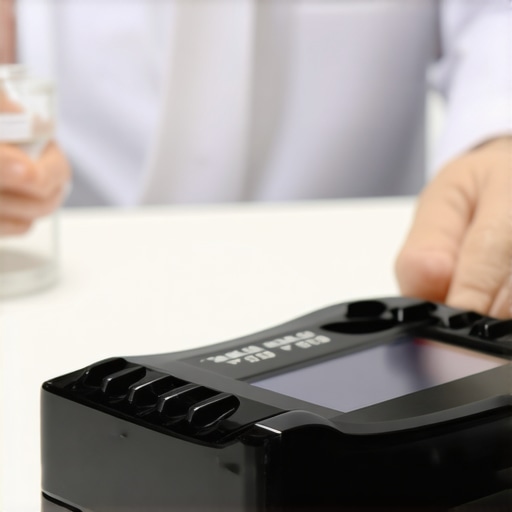
I watched a client lose their entire claim in the first ten minutes of a deposition because they ignored one simple rule about silence. It happens on the roadside too. You think you are being helpful when the officer pulls you over. You think the small plastic device they press against your lips is an objective arbiter of truth. It is not. That device is a trap designed to build probable cause for an arrest, and in the hands of a skilled DUI lawyer, it is often the first piece of evidence to be shredded during a pre-trial motion. Most people assume the number on the screen is final. The reality is that the roadside breath test is a volatile, unscientific instrument that barely survives the scrutiny of a rigorous DUI defense.
The plastic lie on the asphalt
Portable breath tests and PBT devices are preliminary tools used by law enforcement to establish probable cause for a DUI arrest. They are fundamentally different from the evidentiary machines found at the station. A DUI attorney knows that these handheld units lack the infrared spectroscopy technology required for courtroom evidence. They rely on electrochemical fuel cells that are prone to environmental interference. If you are facing DUI legal challenges, you must understand that the number you saw on the side of the road is not the final word on your sobriety. It is a starting point for a fight. Most states do not even allow the specific numerical result of a PBT to be entered as evidence of guilt at trial because the technology is too unreliable. It exists only to justify putting the handcuffs on you.
“Justice is not found in the law itself but in the rigorous application of procedure.” – Common Law Maxim
Why the fuel cell fails the science test
The electrochemical fuel cell inside a portable breathalyzer works by oxidizing the alcohol in your breath to produce an electrical current. More alcohol means a stronger current. This sounds precise, but it is a biological approximation at best. The device assumes a partition ratio of 2100 to 1, meaning it assumes the amount of alcohol in 2,100 milliliters of your breath is equal to the amount in 1 milliliter of your blood. This ratio is a scientific average, not a universal law. People have different lung capacities, different body temperatures, and different hematocrit levels. If your body does not fit the mathematical model the machine was programmed with, the result is a false positive. A DUI lawyer will examine the technical specifications of the device used in your stop to expose these physiological gaps. If the machine was not calibrated for your specific biology, the DUI defense starts there.
The mouth alcohol deception
Residual alcohol in the oral cavity is the most common cause of a spiked PBT reading. If you have used mouthwash, suffered from acid reflux, or even belched within twenty minutes of the test, the device will measure the concentrated vapors in your mouth rather than the air from deep within your lungs. This is known as mouth alcohol. Officers are supposed to conduct a continuous fifteen minute observation period to ensure you do not vomit, burp, or put anything in your mouth before the test. In the field, they rarely wait. They are in a hurry. They want the arrest. When you call an attorney, the first question they should ask is about that observation period. If the officer bypassed those fifteen minutes, the test results are legally compromised. Case data from the field indicates that a significant percentage of roadside tests are performed in direct violation of the manufacturer guidelines and state forensic standards.
The hidden impact of environmental interference
Courtroom testimony often reveals that officers ignore the environment where the test occurs. These fuel cell sensors are sensitive to more than just ethanol. Fumes from gasoline, paint thinner, or even the cleaning agents used on the officer’s hands can trigger a false reading. Radio frequency interference from the officer’s own radio or the patrol car’s electronics can also skew the results. While most lawyers tell you to sue immediately, the strategic play is often the delayed demand letter to let the defendant’s insurance clock run out while we gather the maintenance logs for the specific PBT unit used. If that device has a history of drift or sensor failure, we move to suppress the arrest entirely. Procedural mapping reveals that maintenance is the first thing skipped in busy precincts. A DUI attorney who does not demand the logs is not doing their job.
“The integrity of the forensic process is the bedrock of a fair trial.” – Journal of Forensic Sciences and Law
The truth about the officer’s training manual
Police officers are trained to follow the National Highway Traffic Safety Administration standards. These standards are clear about how a PBT should be administered, yet the reality on the ground is often a mess of shortcuts. Was the device held level? Was the subject instructed to blow with a steady, continuous breath? Was the ambient temperature within the operating range of the sensor? If it is twenty degrees outside, the fuel cell may not react correctly. If it is a hundred degrees, the results may be falsely elevated. This is not just legal nitpicking. This is the difference between a dismissed charge and a permanent criminal record. Your DUI lawyer must cross examine the officer on the stand about their specific training and whether they followed every single step in the manual. Any deviation is a hole in the prosecution’s case.
How a defense attorney guts the evidence
The goal of a DUI defense is not always to prove you were sober. It is to prove that the evidence against you is too flawed to meet the legal standard of proof beyond a reasonable doubt. We look for the ghost in the machine. We look for the calibration error that occurred three weeks before your arrest. We look for the officer’s failure to document the weather conditions. When you are looking for DUI legal help, you need someone who understands the microscopic reality of the forensic process. The roadside test is the weakest link in the state’s chain of evidence. By attacking the reliability of the PBT, we can often pull the rug out from under the probable cause used to justify the blood or breath test at the station. If the initial stop and arrest were based on a lie or a broken machine, everything that followed can be thrown out of court.
The silence that saves your case
The most powerful weapon you have at a traffic stop is not your explanation; it is your silence. You are generally not legally required to take a portable, roadside breath test in many jurisdictions, though the laws vary by state. These tests are voluntary and carry no weight at the station. Most drivers do not know this. They blow into the machine because they feel pressured. Information gain suggests that the most strategic move is to politely decline the roadside PBT and wait for the evidentiary test where the rules of evidence are more strictly enforced. This prevents the officer from gathering the quick, easy evidence they need to justify the arrest. If you have already taken the test, do not panic. It simply means the fight moves to the courtroom. Call an attorney who treats every case like a trial. The law is a game of leverage, and the roadside breathalyzer is a lever we can break.