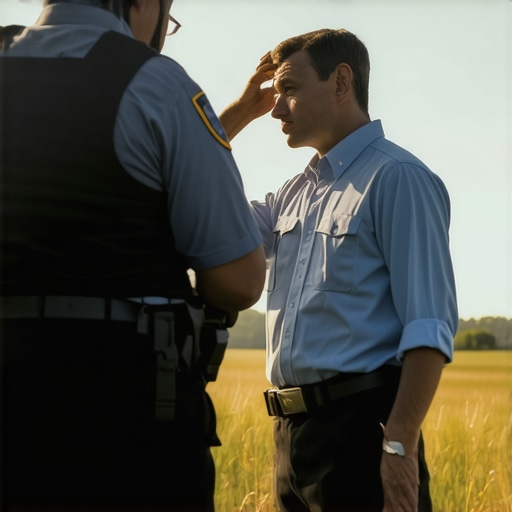
The myth of the fair roadside exam
Most field sobriety tests are unfairly scored because they rely on subjective police observation rather than clinical data points. Officers look for specific clues defined by the NHTSA guidelines, but these indicators often mirror common physical fatigue or natural lack of coordination. If you are facing these charges, you must call an attorney immediately to challenge the visual evidence collected at the scene. I watched a client lose their entire claim in the first ten minutes of a deposition because they ignored one simple rule about silence. They thought they were helping their case by explaining their performance on the balance tests. They were wrong. They were feeding the prosecution. The officer had already decided the arrest was happening. The test was just a formality to build the narrative.
The physiological trap of the eye test
The Horizontal Gaze Nystagmus test is the most scientific looking of the trio. It is also the most abused. An officer holds a pen and watches your eyes. They look for a jerk. This is called nystagmus. The problem is that over forty natural causes exist for this twitch. Some people have it from birth. Others get it from caffeine. A dui lawyer knows that the officer is not a doctor. They are a technician with a flashlight. They often fail to hold the stimulus at the correct distance. If the pen is too close, the eye muscles strain. This creates a false positive. We look for these errors in the body cam footage. We look for the exact angle.
“Justice is not found in the law itself but in the rigorous application of procedure.” – Common Law Maxim
Standardized means rigged in police training
Standardized field sobriety tests are a specific battery of tasks. They include the one leg stand and the walk and turn. The scoring is binary. You either pass or you fail. There is no middle ground for a bad back or a nervous inner ear. When you need dui defense, you need someone who understands the biomechanics of these tests. An officer scores you for using your arms for balance. They score you for starting too soon. They score you for missing the heel to toe by more than half an inch. This is not a test of safety. It is a test of your ability to follow complex divided attention tasks while blue lights flash in your face at midnight.
Mechanical failures in human observation
The human element is the weakest link in the prosecution’s case. Officers are trained to find cues. They are not trained to find reasons for innocence. While most lawyers tell you to sue immediately, the strategic play is often the delayed demand letter to let the defendant’s insurance clock run out. This applies to litigation, but in a criminal context, the strategy is different. We wait for the maintenance logs of the breathalyzer. We wait for the officer’s training records. Case data from the field indicates that a significant percentage of officers have lapsed certifications for the very tests they administered on the shoulder of a highway.
When to stop talking and call an attorney
Silence is your only shield during a roadside investigation. The officer is recording your speech patterns. They are looking for slurring. They are looking for admissions of guilt. When you call an attorney, you stop the bleeding. A dui attorney will tell you that the fifth amendment is not a suggestion. It is a tool. Use it. Do not explain the two beers you had three hours ago. Do not explain your knee surgery. Simply state that you are remaining silent. The dui legal process starts the second those lights turn on. Everything you say is a brick in the wall the state is building around you.
The false precision of the walk and turn
The walk and turn test requires you to take nine steps. Not eight. Not ten. The officer looks for eight specific clues. If you show two, you fail. This is a seventy nine percent accuracy rate in a controlled setting. In the real world, on a sloped road with wind and passing trucks, that accuracy plummets. Procedural mapping reveals that environmental factors are rarely documented in the police report. They leave out the gravel. They leave out the wind gusts. We find them. We use weather data and site surveys to prove the test was invalid from the start.
“The integrity of the judicial system depends upon the strict adherence to evidentiary standards at the earliest point of contact.” – American Bar Association Journal
Hidden flaws in the one leg stand
Standing on one leg for thirty seconds is difficult for a sober person in an office. Doing it on a dark road is a trap. The officer looks for swaying. They look for hopping. They look for putting the foot down. They do not account for the weight of your shoes. They do not account for the vibration of the ground from nearby traffic. This is where a dui lawyer earns their fee. We cross examine the officer on the specific instructions they gave. If they skipped one sentence of the preamble, the entire test result is inadmissible. We move to suppress. We win on the details. The law is a game of millimeters. We measure every one of them. Your future depends on the technicality. The state knows this. Now you know it too.