The Truth About Standardized Field Sobriety Testing Failures
I watched a client lose their entire claim in the first ten minutes of a deposition because they ignored one simple rule about silence. They felt the need to explain their actions rather than letting the evidence speak for itself. In the world of DUI defense, your biggest enemy is not always the alcohol. It is the officer who believes their subjective opinion outweighs scientific protocol. I smell the stale coffee in the courtroom every morning and I see the same patterns of failure. Officers are human. They get tired. They get lazy. They skip steps. When a patrol officer skips a step in a standardized field sobriety test, the entire house of cards falls down. You need a dui attorney who understands the physics of a roadside stop as well as the law. This is not a game of luck. This is a game of procedural precision. Most people assume the tests are designed to be passed. They are wrong. These tests are designed to gather evidence of your failure. They are divided attention tasks meant to overwhelm your cognitive load. If the officer fails to follow the NHTSA manual to the letter, the results are legally meaningless. We see it every day. Poor lighting, rushing traffic, and biased instructions. The legal system relies on you being too intimidated to question the badge. I am not intimidated. I look for the cracks in the procedure. That is where your freedom lives.
The myth of the roadside balance trial
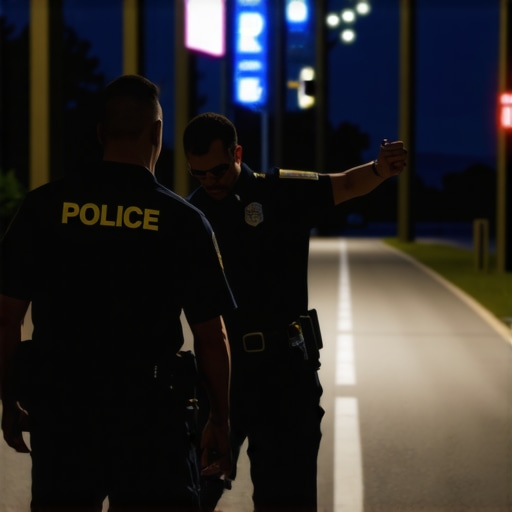
Field sobriety tests are not scientific instruments of measurement. They are subjective observation tools used by patrol officers to build probable cause for a DUI arrest. A DUI attorney analyzes the NHTSA manuals to prove that these divided attention tasks are frequently administered under improper conditions. The officer stands there with a clipboard and a flashlight, acting like a scientist. They are not scientists. They are observers with a specific goal. They want to justify the handcuffs they have already gripped in their belt. The one leg stand and the walk and turn are not natural movements. Most sober people cannot perform them perfectly on a dark highway with cars flying by at seventy miles per hour. The wind shear from a passing semi-truck is enough to make anyone stumble. The officer marks that stumble as a clue of impairment. They do not mark the wind. They do not mark the flashing blue lights that create a strobe effect on the retina. They only mark the failure. This is why dui legal representation is mandatory for anyone facing these charges. You cannot fight subjective observations with your own subjective explanations. You fight them with the manual. The National Highway Traffic Safety Administration has very specific rules. If the officer deviates from the script, the test is compromised. I have spent decades deconstructing these moments second by second in dashcam video. It is rare to see an officer get it perfectly right.
“Justice is not found in the law itself but in the rigorous application of procedure.” – Common Law Maxim
Environmental variables that destroy test validity
External factors such as uneven pavement, passing traffic, and high wind speeds invalidate standardized field sobriety tests. Any DUI defense must focus on the environmental conditions at the arrest scene. A dui lawyer examines dashcam footage to identify sloping surfaces that make the one leg stand impossible. Look at the ground. Is it gravel. Is it sloped for drainage. Is there oil on the asphalt. The manual explicitly states the surface must be level and non-slippery. Yet, officers routinely conduct these tests on the shoulder of a highway which is designed with a specific grade to move water away from the road. Gravity is not impairment. If the surface is not flat, the balance tests are a sham. I have seen dui defense cases won simply by sending a private investigator to measure the incline of the road where the stop occurred. If that incline is more than a few degrees, the balance cues are scientifically invalid. The officer will never admit this on the stand. They will say the road looked flat to them. Their perception is the problem. They are trained to see guilt. They are not trained to see the five percent grade of the pavement. This is where a call an attorney becomes the only logical step. We bring the engineers. We bring the surveyors. We prove the officer was setting you up for failure from the moment your foot touched the ground.
[IMAGE_PLACEHOLDER]
The physiological trap of the eye gaze examination
The Horizontal Gaze Nystagmus test is the most technical and most abused tool in the patrol officer arsenal. It requires specific timing, exact distances, and smooth pursuit of a stimulus like a pen or flashlight. A dui attorney knows that nystagmus can be caused by fatigue, medication, or natural physiology rather than alcohol consumption. The officer is looking for an involuntary jerking of the eye. They are supposed to hold the stimulus twelve to fifteen inches from your face. They are supposed to move it at a specific speed. If they move it too fast, they can actually cause the jerking they are looking for. It is called optokinetic nystagmus. It is a biological response to a fast-moving object, not a sign of being drunk. Most officers rush this. They have been on shift for ten hours. They want to get the paperwork done. They sweep the pen across your field of vision like they are swatting a fly. Then they claim they saw the onset of nystagmus prior to forty five degrees. It is a lie. Or rather, it is a mistake born of incompetence. Without dui legal experts to cross-examine the officer on the exact seconds it took to complete the pass, that false evidence goes to the jury. The jury hears the word medical and they think science. It is my job to show them it is junk science when performed by a tired cop on the side of a freeway.
Instructional errors during the walk and turn
The walk and turn test is a divided attention task that begins the moment the officer tells you to put your feet on the line. Most people think the test is about walking. It is actually about listening. A dui lawyer identifies when an officer gives conflicting instructions or fails to demonstrate the turn correctly. There are eight specific clues the officer is looking for. Only two of them involve actually walking. If you start before the officer finishes talking, that is a clue. If you lose your balance while they are giving instructions, that is a clue. This is a trap. You are nervous. Your adrenaline is spiking. You have blue and red lights flashing in your mirrors. You want to cooperate, so you start the test. The officer marks you down for being too eager to prove your innocence. They call it impairment. I call it human nature. The turn itself is a specific pivot. If the officer does not show you how to do the pivot, how can they grade you on it. They expect you to be a gymnast on a balance beam made of grit and oil. If you use your arms for balance even slightly, they count it. They do not care if the wind is blowing at thirty miles per hour. They do not care if you have an old high school football injury in your knee. They only care about the scorecard. And that scorecard is rigged.
“The integrity of the judicial process depends upon the scrupulous adherence to standardized administrative protocols by law enforcement.” – American Bar Association Standards
Why medical conditions mimic intoxication
Many physical conditions including inner ear infections, neuropathy, and back injuries create the appearance of failed sobriety tests. An experienced dui attorney will use medical records to prove that a client was physically unable to perform the one leg stand regardless of sobriety. The officer is supposed to ask if you have any physical ailments before starting. Often, they ask it as a throwaway question while they are already positioning you. If you say you have a bad back, they ignore it. They tell you to try your best. Your best is not good enough for their checklist. I have defended clients with vertigo who were arrested because they could not stand on one leg. The officer wrote down that they were swaying. Of course they were swaying. The world was spinning because of a medical condition, not a beer. We bring in the doctors. We show the DUI defense team the history of treatment. We show the jury that the officer ignored the truth in favor of an easy arrest. This is why you call an attorney who handles dui legal matters specifically. General practitioners do not know the NHTSA guidelines for medical exclusions. We do. We know that certain eye conditions like strabismus or amblyopia make the eye tests completely useless. The officer never checks for these. They just shine the light and reach for the cuffs.
The tactical necessity of a DUI attorney during discovery
The discovery phase of a DUI case is where the prosecution is forced to reveal the technical failures of the arresting officer. A dui lawyer demands the maintenance logs for breathalyzers and the full unedited video of the field sobriety tests. The police report is a story written by the winner. The dashcam is the truth. I have seen reports that say a client fell over when the video shows they only stepped off the line once. I have seen reports that claim slurred speech when the audio is crystal clear. The patrol officer knows that most people will just plead guilty. They do not expect a dui attorney to watch the video five hundred times. They do not expect us to time the HGN test with a stopwatch to prove it was too fast. We use procedural zooming to find the one second where the officer messed up the instructions. That one second can lead to a motion to suppress. If the judge tosses the tests, the prosecution usually loses their case. They have no probable cause left. This is the ROI of a high-end DUI defense. It is about the leverage of detail. We do not look for the big lie. We look for the hundred small mistakes that add up to a violation of your constitutional rights. The law is a machine. If one gear is stripped, the machine stops working. We find the stripped gear.
What the patrol manual says vs what the officer does
There is a massive discrepancy between academy training and street enforcement regarding DUI investigations. While the NHTSA manual demands standardization, patrol officers often develop shortcuts that compromise the legal integrity of the arrest. They get comfortable. They think they can smell alcohol and that is enough. It is not. The smell of alcohol is not the smell of impairment. You can have one drink and smell like a brewery, yet be perfectly fine to drive. The tests are supposed to bridge that gap. But when the officer shortcuts the walk and turn, they are guessing. They are gambling with your life. They do not care about the statutory requirements for evidence collection. They care about their stats. I have seen officers conduct tests in the rain. I have seen them conduct tests on the side of a hill. They will tell you it was the only safe place. If it was not a safe place to do the test correctly, they should not have done the test at all. A dui attorney will hold them accountable for that choice. We do not accept excuses about roadside safety when it comes to your criminal record. If the test cannot be done right, the results must be ignored. That is the rule of law. It is a harsh truth, but it is the only one that matters in a courtroom. If you are facing these charges, stop talking to the police and call an attorney. Your future depends on the defense of your legal rights through the meticulous deconstruction of the officer’s errors.