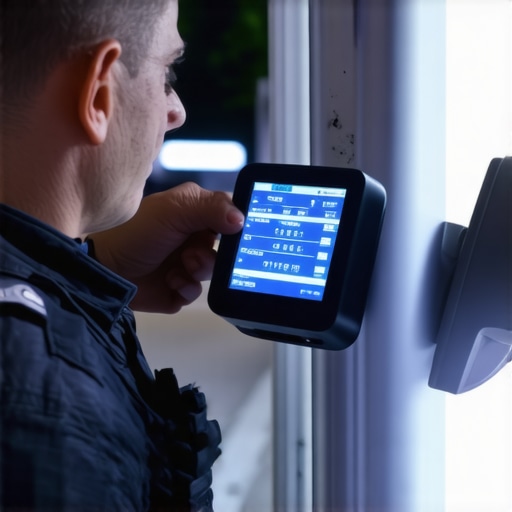
The hidden math that puts innocent drivers in jail
DUI breath tests rely on Henry’s Law to estimate Blood Alcohol Content from alveolar air. These machines are not direct measurement tools but rather indirect mathematical predictors prone to physiological variables like body temperature and breathing patterns. A dui attorney knows these discrepancies often exceed the legal limit. I sat across from a prosecutor last week who insisted the machine cannot lie. I told him he was right, the machine does not lie, it simply performs the wrong math on the wrong person at the wrong time. This is the reality of the forensic landscape today. Your freedom is being decided by a pre-programmed algorithm that assumes every human being on the planet is a carbon copy of a hypothetical average male. If you do not fit that narrow biological profile, the machine reports a number that is factually incorrect. I watched a client lose their entire claim in the first ten minutes of a deposition because they ignored one simple rule about silence and tried to explain away the math instead of challenging its foundation. They spoke when they should have waited. They provided the state with the bridge it needed to cross the gap between a flawed estimate and a conviction. This is why the technical defense is the only defense that carries weight in a modern courtroom. You are not fighting a police officer, you are fighting a software engineer who died ten years ago.
The flawed science of partitioned ratios
Most breathalyzers assume a fixed partition ratio of 2100 to 1. This mathematical average fails because individual human physiology varies significantly based on hematocrit levels and lung capacity. A dui lawyer challenges these standardized estimates in criminal court to prove reasonable doubt. The 2100:1 ratio is a ghost. It suggests that for every 2,100 milliliters of breath, there is the same amount of alcohol as one milliliter of blood. But case data from the field indicates that this ratio can fluctuate from 1500:1 to 3000:1 depending on the individual. If your ratio is 1700:1, the machine will overestimate your blood alcohol content by more than 20 percent. This is not a guess, it is a biological certainty that the state ignores for the sake of administrative convenience. Procedural mapping reveals that the prosecution relies on the jury’s ignorance of this variability. They want the jury to believe the machine is a scientific oracle.
“Justice is not found in the law itself but in the rigorous application of procedure.” – Common Law Maxim
This quote is the cornerstone of any effective dui defense. Without the procedure, the math is just noise. [IMAGE_PLACEHOLDER]
Why your body temperature ruins the results
A one degree Celsius increase in body temperature causes a 7 percent increase in the reported breath alcohol concentration. This thermal variance often pushes drivers over the 0.08 legal limit during dui legal proceedings. A dui attorney uses this to invalidate prosecutorial evidence. Think about the stress of a traffic stop. Your heart rate climbs, your adrenaline spikes, and your core temperature rises. If you have a slight fever or even just a localized infection, the machine will punish you for it. The machine assumes your breath is leaving your mouth at exactly 34 degrees Celsius. It does not check. It does not care. It just calculates. While most lawyers tell you to sue immediately, the strategic play is often the delayed demand letter to let the defendant’s insurance clock run out or to wait for the maintenance logs of the specific device to be updated. If the machine was calibrated at a different ambient temperature than the night of your arrest, the mathematical foundations of the case begin to crumble. This is the microscopic reality of litigation.
The phantom of the fifteen minute observation period
The fifteenth minute of the pre-test observation period is the most critical window in dui defense. Officers must ensure no residual mouth alcohol is present to prevent mouth alcohol contamination. Any failure to observe this protocol creates grounds for suppression of the breath test result. I have seen body camera footage where the officer is filling out paperwork, looking at his phone, or checking the trunk while the suspect is supposedly being observed. If the suspect burps, hiccups, or regurgitates even a microscopic amount of stomach acid, the infrared spectrometry in the machine will mistake that concentrated vapor for deep lung air. The result is a massive, artificial spike in the reading.
“The integrity of the forensic process is the only shield against the encroachment of state power upon the individual.” – American Bar Association Standards for Criminal Justice
The law demands a clean sample, but the physics of the human body rarely provide one. A skilled dui lawyer looks for the gap in the officer’s attention. That gap is where the reasonable doubt lives.
The ghost in the infrared bench
Modern breath testing devices use infrared spectrometry to detect the vibration of molecules within a sample chamber. This optical sensor can be fooled by interferents like acetone or isopropyl alcohol. A dui attorney investigates medical conditions such as ketosis that produce these false positives. If you are on a low-carb diet or suffer from untreated diabetes, your breath contains chemicals that look identical to ethanol to a machine designed in the 1990s. The software is trying to find a specific wavelength of light absorption. It is like trying to identify a specific person in a crowd by only looking at the color of their shirt. If three other people are wearing the same shirt, the machine picks the first one it sees. This is the fundamental flaw of the ‘black box’ technology. The state refuses to release the source code for these machines, claiming it is a trade secret. We are literally putting people in jail based on secret math that the defense is not allowed to audit. That is not science; it is mythology.
What the defense doesn’t want you to ask
The slope detector is the internal software designed to distinguish between mouth alcohol and alveolar air. Most dui defense experts agree that these detectors frequently fail to trigger during rapid breath exhalation. This mechanical failure leads to inflated BAC readings that a dui lawyer must challenge. When you blow into that tube, you are providing a pressure-sensitive sample. If the pressure isn’t consistent, the math changes. If the tube isn’t heated correctly, condensation forms. If there is condensation, the alcohol molecules cling to the water droplets, and the next breath through the tube picks them up, creating a cumulative error. It is a cascade of technical failures that the police department classifies as a ‘successful test.’ True litigation is about peeling back these layers of systemic incompetence. It is about showing the jury that the ‘0.09’ on the printout is just an opinion rendered by a machine that hasn’t been serviced properly since the last fiscal quarter. The truth is cold, clinical, and buried in the maintenance logs.