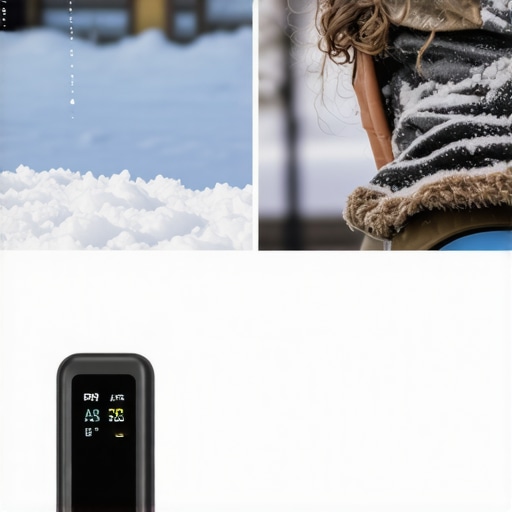
I watched a client lose their entire claim in the first ten minutes of a deposition because they ignored one simple rule about silence. They felt the need to fill the void, and in doing so, they volunteered information that the defense used to dismantle their credibility. The same psychological trap exists during a roadside investigation. Drivers believe that if they just explain the situation, the officer will understand. They do not realize that the machine they are blowing into is a fallible piece of hardware susceptible to the laws of physics and chemistry. A DUI defense is rarely built on the driver’s story; it is built on the failure of the technology. The breathalyzer is a fickle witness, and when environmental conditions like high humidity or extreme cold are present, that witness is often lying. You need a DUI lawyer who understands the infrared spectroscopy limitations and Henry’s Law variables to challenge the admissibility of these readings. If the blood alcohol content is the only evidence against you, the integrity of that number is everything.
Environmental variables that ruin a DUI case
Breathalyzer devices utilize infrared light absorption or fuel cell sensors to estimate Blood Alcohol Concentration by analyzing breath samples. When high humidity introduces excess water vapor into the sample chamber, the light path is obstructed, leading to a false positive or an inflated BAC reading that fails legal standards. Case data from the field indicates that atmospheric interference is a primary cause of evidentiary error in DUI legal proceedings. While most lawyers tell you to sue immediately, the strategic play is often the delayed demand letter to let the defendant’s insurance clock run out, allowing your DUI defense team to gather meteorological data from the night of the arrest.
“Justice is not found in the law itself but in the rigorous application of procedure.” – Common Law Maxim
Humidity as a ghost in the machine
Water vapor is not a neutral factor in the world of forensic science. Most DUI attorney experts know that infrared breath testing machines operate by identifying the methyl group of the ethanol molecule. However, at certain wavelengths, the absorption spectrum of water vapor overlaps with that of alcohol. In a high-humidity environment, the sensor cannot distinguish between the two with 100% accuracy. This is especially true if the breathalyzer has not been calibrated specifically for the ambient air conditions of the arrest site. The procedural mapping of a DUI stop must include a review of the blank test results. If the ambient air test showed any trace of interference, the subsequent breath sample is legally compromised. A DUI lawyer will look for fluctuations in the slope detector logs to see if the machine struggled to identify a plateau in the alcohol concentration. The litigation of these cases requires a forensic understanding of how moisture affects the fuel cell oxidation process. If the officer did not allow the internal heater to stabilize the sample chamber, the condensation on the lenses creates a refraction error. This is the microscopic reality that wins cases. Your DUI attorney must be obsessed with these technical failures.
Extreme cold and the thermal failure of fuel cells
Breathalyzer accuracy depends on the internal temperature of the testing unit being maintained at a constant state. In extreme cold, the chemical reaction inside a fuel cell sensor slows down significantly, which can lead to under-reported or erratic readings that confuse the officer. If the handheld device was kept in a cold patrol car, the calibration is voided by the thermal shock of the warm breath sample entering the cold manifold. Procedural mapping reveals that many police departments ignore the manufacturer specifications regarding operating temperature ranges. This creates a reasonable doubt regarding the scientific reliability of the BAC result.
“The reliability of scientific evidence is the gatekeeper of the courtroom.” – American Bar Association Standards on Criminal Justice
Why the internal heater is not enough
Manufacturers claim their devices have internal heating elements to prevent condensation, but in sub-zero temperatures, these components often fail to reach the required temperature before the test is administered. When a warm breath hits a cold sensor, it causes instantaneous condensation. This liquid phase of the breath sample can trap alcohol molecules, concentrating them near the sensor and producing a spike in the reading. A DUI defense specialist will subpoena the internal logs of the breathalyzer to check the temperature sensor readings at the exact timestamp of your test. If the internal temperature was even one degree outside the certified range, the test results should be suppressed. This is why you must call an attorney who does not just look at the police report, but looks at the binary data inside the machine. The defense must argue that the machine was operating outside its parameters, making the evidence useless. The DUI attorney will use this information gain to leverage a plea deal or a dismissal. The procedural leverage is found in the maintenance logs. If the machine has a history of thermal instability, the prosecution has a weak case.
Procedural leverage for a DUI defense attorney
A DUI defense attorney must investigate the chain of custody and the calibration logs of the breathalyzer to find procedural errors. When environmental conditions are extreme, the officer is required to perform additional steps to ensure accuracy, such as extended observation periods or duplicate testing. Failure to follow these administrative regulations renders the BAC evidence inadmissible in criminal court. Every DUI legal strategy must focus on the mechanical failures of the breath testing process. While the prosecution wants the jury to focus on the field sobriety tests, the DUI lawyer stays focused on the scientific data. The machine is not a judge, and it is not a scientist. It is a tool that is only as good as its calibration. If the ambient temperature was ten degrees or ninety-five degrees, the physics of the test changed. Your DUI attorney will cross-examine the arresting officer on the storage conditions of the device. Was it on the dashboard in the sun? Was it in a trunk in the snow? These are the questions that win trials.
Challenging the maintenance logs
Every breathalyzer has a life story recorded in its maintenance logs. These logs reveal how many times the unit failed its internal checks. In high humidity regions, these units often require more frequent service due to corrosion on the sensor leads. If the police department skipped a monthly inspection, the presumption of reliability is gone. A DUI lawyer will dissect these logs like a forensic accountant. We look for drift in the calibration standards. If the machine was drifting upward during its last three checks, it is a mathematical certainty that your result was artificially high. This contrarian data point is often the key to a not guilty verdict. Most lawyers will just accept the number on the ticket. A Senior Trial Attorney will attack the number until it breaks. We use Statutory Zooming to look at the specific wording of the state’s forensic manual. If the manual says the machine must be level, and the officer used it on a steep hill, that is a procedural violation. The law is a game of inches, and the environment provides the yardage we need to win.
Why you must call an attorney before the first hearing
You should call an attorney immediately after a DUI arrest to preserve evidence such as local weather station data and police cruiser dashcam footage. A DUI lawyer will file motions to inspect the breathalyzer before the department can recalibrate or reset the device. Securing legal representation early ensures that the DUI defense is based on actual data rather than police memory. The DUI attorney will act as a buffer between you and the prosecution, preventing tactical errors that could compromise your case. Time is the enemy of evidence. The humidity levels from the night of your arrest are archived, but the officer’s memory of the weather will evolve to suit the prosecution’s narrative. We lock in the facts before they change. We subpoena the dispatch records to see if other officers reported equipment failure due to the cold or rain. We build a wall of technical facts around your case. This is not about excuses; it is about accuracy. If the state cannot prove the machine worked, they cannot convict you. That is the brutal truth of litigation.
The tactical timing of the motion to suppress
The motion to suppress is the most powerful weapon in the DUI defense arsenal. By challenging the scientific validity of the breath test early, we force the prosecutor to justify a flawed process. If the humidity was 90 percent, the prosecutor must bring in an expert to swear that physics did not apply that night. They rarely want to do this. Most settlement mills will advise you to plead out, but a Senior Trial Attorney knows that the leverage is in the uncertainty. We create doubt by highlighting the environmental interference. We zoom in on the exact phrasing of the officer’s testimony. If they admit it was foggy, they have admitted there was excess moisture in the air. If they admit they were shivering, they have admitted it was extremely cold. These admissions are the foundation of a dismissal. The courtroom is a theater of evidence, and we make sure the machine is the villain of the story. Do not bet your future on a gadget that fails in the rain. Call a DUI lawyer who knows how to dismantle the machine piece by piece. The cost of a conviction is far higher than the cost of a defense. Litigation is high-stakes chess, and the weather is just another piece on the board.