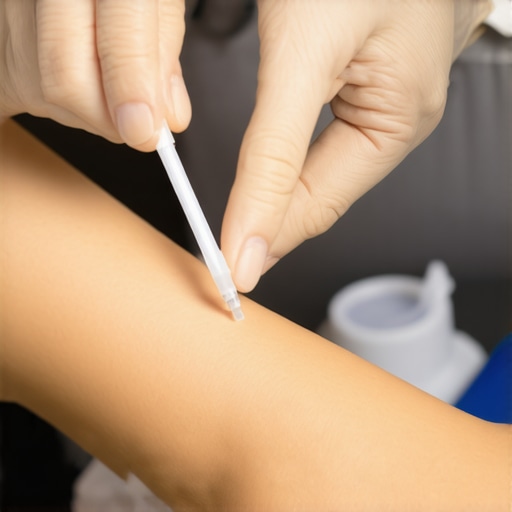
The Science of Tainted Evidence and the Alcohol Swab Defense
I watched a client lose their entire claim in the first ten minutes of a deposition because they ignored one simple rule about silence. They thought they could explain away a high blood alcohol concentration. You cannot. If the forensic science is tainted at the needle tip, you stop talking and let the procedural failure do the heavy lifting. The courtroom is not a place for apologies; it is a theater of precision where the smallest deviation from protocol becomes a tactical advantage. When you face a dui legal challenge, the focus must shift from your behavior to the mechanical and chemical failures of the state.
The deposition disaster that ended a claim
A deposition fails when a defendant attempts to provide narrative excuses for a high BAC rather than focusing on the procedural failures of the blood draw. Forensic errors are objective facts that do not require personal justification; speaking too much only provides the prosecution with character evidence to use later. I have seen seasoned professionals crumble under the weight of a simple question because they felt the need to fill the silence. The silence is where the defense lives. In dui defense, the primary objective is to isolate the variables that the state claims are absolute. If the phlebotomist used an alcohol swab, the integrity of the sample is gone. This is a scientific fact that no amount of testimony can fix. You must call an attorney who understands that the fight is won in the lab notes, not in the apology. Most cases are lost because the defendant tries to be helpful. Being helpful is the fastest way to a conviction. The prosecution is not your friend, and the nurse who drew your blood is a witness for the state, not a medical provider. Your only ally is the strict application of Title 17 or your specific state’s forensic guidelines.
“Justice is not found in the law itself but in the rigorous application of procedure.” – Common Law Maxim
The chemistry of a compromised skin surface
Alcohol swabs introduce external isopropyl alcohol into the puncture site, which can be drawn into the blood vial through the vacuum pressure of the needle. This contamination creates a false positive or an artificially high BAC reading because forensic testing equipment may misidentify these foreign alcohols as ethanol. When the skin is prepared for a legal blood draw, the use of a non-alcoholic antiseptic like povidone-iodine is mandatory. If a standard 70 percent isopropyl swab is used, the defense has a massive opening. As the needle pierces the skin, a minute amount of the surface alcohol is pulled into the lumen of the needle. This is not a theory; it is fluid dynamics. This contaminant enters the vacutainer, a vessel designed to hold a precise vacuum. Any external substance introduced during the draw renders the final percentage calculation moot. A dui lawyer knows that gas chromatography, the gold standard for testing, relies on the assumption that only internal ethanol is present. When isopropanol from a swab enters the mix, the flame ionization detector may produce a peak that overlaps with ethanol, leading to an inflated result. This is the “bleed” in the litigation process where the state’s ROI begins to vanish.
The myth of the sterile environment
The environment of a police station or a hospital basement is rarely as sterile as the prosecution claims during a trial. Contaminants such as cleaning agents, hand sanitizers, and even the air quality in the room can influence the volatile organic compounds detected during headspace gas chromatography. Legal blood draws are often performed in chaotic settings. I have seen draws done on the hood of a car or in a crowded holding cell. Each of these environments introduces risk. If the person drawing the blood just used hand sanitizer, which contains high levels of ethanol, the vapors alone can compromise the sample. This is why you need a dui attorney who will subpoena the maintenance records of the room where the draw occurred. We look for the hidden variables. Was the air conditioning unit malfunctioning? Was there a recent spill of industrial cleaners? The prosecution wants you to believe the vial is a pristine time capsule. It is actually a volatile chemical soup susceptible to every error in the book. Procedural mapping reveals that most errors happen in the first three minutes of the encounter.
“The integrity of forensic evidence relies entirely on the chain of custody and the purity of the collection method.” – American Bar Association Standards for Criminal Justice
Fermentation risks in the vial
Fermentation within a blood vial occurs when glucose and yeast interact due to a lack of proper refrigeration or insufficient preservative levels. This process creates endogenous ethanol, meaning the blood produces its own alcohol after it has left the body, leading to false DUI charges. Every blood vial contains sodium fluoride as a preservative and potassium oxalate as an anticoagulant. If the phlebotomist fails to invert the tube exactly eight to ten times, these chemicals do not mix properly. Without the preservative, the white blood cells and any present yeast begin to consume the blood sugar. This is basic biology. The result is a vial that essentially turns into a very small bottle of wine. By the time the lab tests it three days later, the BAC has climbed from a legal 0.05 to a criminal 0.09. This is the contrarian data point that the state ignores. While most lawyers tell you to sue immediately, the strategic play is often the delayed demand for the raw lab data to let the timeline of mismanagement become clear. You are not just fighting a number; you are fighting a biological process that the state failed to stop.
How your attorney dismantles the lab report
Dismantling a lab report requires a microscopic review of the chromatograms and the internal standards used by the forensic analyst. Discrepancies in the baseline noise of the graph or the integration of the peaks can reveal that the machine was not properly calibrated for that specific run. The lab report you see is the “PR version” of the truth. The real story is in the raw data files. I look for the carry-over effect, where a high-BAC sample from a previous test taints the results of the next one. Most labs are high-volume factories. They prioritize speed over accuracy. A dui defense built on forensic psychology understands that the technician is often overworked and under-trained. They cut corners. They skip the blank tests between samples. They ignore the warnings on the software. When we find these gaps, the state’s case doesn’t just settle; it evaporates. The goal is to make the cost of litigation higher than the state is willing to pay. This is the cold reality of the legal system. It is about leverage, and the alcohol swab is the lever that can crack the entire foundation of a DUI prosecution. Do not let them tell you the science is settled. Science is only as good as the person holding the swab.