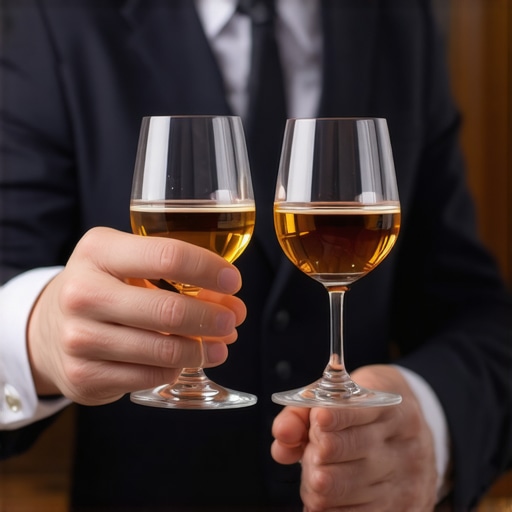
The trap of the polite confession
Admitting to alcohol consumption during a DUI traffic stop provides the prosecution with the probable cause needed for an arrest. When you mention two drinks, you confirm the presence of ethanol in your system, allowing the dui attorney less room to challenge the initial police stop logic or the officer’s decision to escalate the investigation. I watched a client lose their entire claim in the first ten minutes of a deposition because they ignored one simple rule about silence. They thought that by being helpful, they would be let go. Instead, they handed the state a confession on a silver platter. The officer is not your friend. The officer is a data collection agent for the District Attorney. When you say you had two drinks, you have already lost the battle of perception. You have admitted to drinking and driving. The only question left for the court is how much you drank. This admission allows the state to explain away any lack of physical impairment by claiming you have a high tolerance. It is a no-win scenario for the driver. Every dui lawyer knows that the best client is the one who says nothing at all. Silence is not an admission of guilt; it is a constitutional shield. If you break that shield, you are doing the prosecutor’s job for them. The moment those words leave your lips, the officer’s body camera records it as a definitive statement of fact. There is no taking it back. There is no ‘I was just kidding’ or ‘I meant two small sips.’ In the eyes of the law, two drinks is a confession of impairment until proven otherwise by a rigorous dui defense. Your honesty is a weapon that will be used to pierce your own defense strategy.
“Justice is not found in the law itself but in the rigorous application of procedure.” – Common Law Maxim
How a dui attorney dismantles the roadside narrative
A skilled dui attorney focuses on procedural errors and constitutional violations to suppress evidence gathered during a traffic stop. By examining the police report against the dashcam footage, the dui lawyer identifies discrepancies in the Standardized Field Sobriety Tests or the preliminary alcohol screening. Most people don’t realize that the police have a specific set of rules they must follow. If they deviate by even a fraction, the evidence might be thrown out. I have seen cases where the officer failed to properly explain the ‘Walk and Turn’ test. That small failure made the entire test result inadmissible. The law is a game of inches. You might think you failed the test because you stumbled, but a dui lawyer sees a failure of the officer to provide a level surface for the test. We look at the wind speed, the lighting, and the passing traffic. We look at the calibration logs of the breathalyzer. These machines are not infallible. They are complex instruments that require constant maintenance. If the station missed a single calibration date, your BAC result is a piece of fiction. We hunt for these technicalities because the system is designed to process you as quickly as possible. You are a number on a docket. Our job is to stop that machine from grinding you up. Case data from the field indicates that a majority of arrests are based on subjective observations rather than objective science. We turn that subjectivity against the prosecution. We show the jury that what the officer called ‘slurred speech’ was actually just your natural way of talking or a result of extreme stress. Procedural mapping reveals that the more we can isolate the officer’s mistakes, the higher the chance of a dismissal or a reduction in charges.
The technical failure of breath testing equipment
The breathalyzer or intoxilyzer used by law enforcement is often a dated technology prone to physiological interference and mechanical error. A dui defense expert can argue that residual mouth alcohol or acid reflux caused an artificially high BAC reading during the breath test. These machines do not actually measure your blood. They measure the air in your lungs and use a mathematical formula to guess what is in your blood. That formula assumes everyone is the same. It assumes your body temperature is exactly 98.6 degrees. If you have a slight fever, the machine will report a higher alcohol level than you actually have. This is the ‘bleed’ of litigation where science meets the harsh reality of the courtroom. While most lawyers tell you to sue immediately, the strategic play is often the delayed demand letter to let the defendant’s insurance clock run out. In the context of a DUI, the strategic play is the deep dive into the machine’s software. We look for ‘source code’ errors. We look for RFI or radio frequency interference. Was the officer’s radio near the machine when you blew into it? If so, the result is tainted. We treat the breathalyzer like a hostile witness. We cross-examine its history, its repair records, and its software version. Most people just accept the number. We never accept the number. We know that the margin of error is often large enough to bridge the gap between a crime and a legal limit. This is the forensic psychology of the case. If we can make the jury doubt the machine, we win.
Why the prosecution loves your cooperation
Cooperating with police during a drunk driving investigation almost always results in a stronger case for the prosecutor. Every field sobriety test you agree to perform is designed for failure, providing the dui attorney with more incriminating evidence to overcome in court. You cannot ‘pass’ these tests. You can only fail them. There is no score for ‘did well.’ There are only ‘clues’ of impairment. If you start too soon, that is a clue. If you use your arms for balance, that is a clue. Even if you walk the line perfectly but turn the wrong way, you have failed in the eyes of the officer. The system is rigged to find guilt. When you cooperate, you are giving them the rope to hang you. I once had a client who was a professional dancer. She performed the tests perfectly, but the officer still arrested her because he claimed her eyes had ‘nystagmus.’ This is the involuntary jerking of the eye. It can be caused by caffeine, fatigue, or just the flashing lights of the patrol car. But to the prosecutor, it is ‘scientific proof’ of intoxication. This is why you must call an attorney immediately. You need someone to step between you and the state’s narrative. The prosecution wants you to feel guilty. They want you to think it is over. It is never over until we have seen the evidence. We look for the ‘ghost in the settlement conference,’ the piece of evidence that the prosecution is hiding because it helps your case. Sometimes it is a malfunctioning camera. Sometimes it is a witness who saw you acting perfectly normal five minutes before the stop.
“The right to remain silent is not a suggestion; it is the fundamental barrier between the individual and the state’s power to incarcerate.” – American Bar Association Journal
Tactics for the first forty eight hours
The first forty eight hours after a DUI arrest are the most vital for securing video evidence and witness statements. A dui lawyer must act quickly to preserve evidence such as surveillance footage from the establishment where the alcohol consumption allegedly occurred. If we wait, that footage is deleted. If we wait, the witnesses forget the details. We need to know what you ate. We need to know who you were with. We need to know the exact timeline of your night. This is where the ex-military strategist in me takes over. We map the territory. We identify the flank attacks. If the bar served you too much, they might be liable under ‘dram shop’ laws, which changes the leverage of the entire case. We look at the officer’s personnel file. Has he been disciplined for lying before? Has he had issues with his breathalyzer certification in the past? We go on the offensive. We don’t wait for the prosecution to give us discovery. We go out and get it ourselves. The courtroom is not about truth; it is about perception and the mastery of the rules. If you admitted to two drinks, our job is to show that those two drinks were spread over five hours and consumed with a large steak. We turn your admission into a proof of your responsibility. We show that you were well below the limit and that the officer’s perception was skewed by his own bias. This is how you win a case that seems impossible. You don’t give up. You fight for every inch of the law. Final tactical assessment: never talk to the police without your counsel present. Your future depends on your silence.