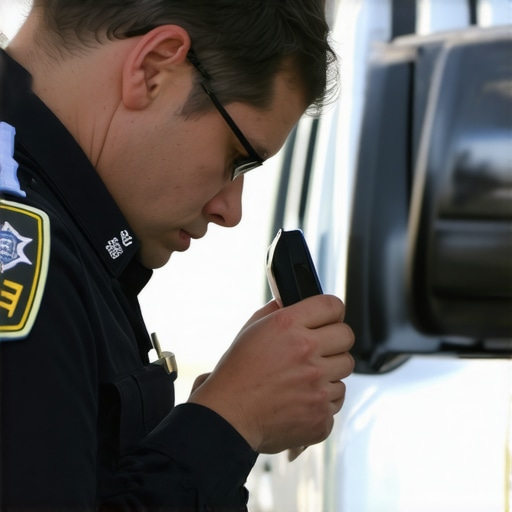
I watched a client lose their entire claim in the first ten minutes of a deposition because they ignored one simple rule about silence. They felt the need to fill the vacuum. They started explaining their night, their drinks, and their metabolic rate. In that moment, the 0.08 reading on the printout ceased to be a number and became a confession. I sat there, smelling the stale, burnt coffee of the court reporter’s office, watching the defense attorney smile. That smile is the sound of a trap closing. If that client had stayed silent and let me dissect the machine, we would have won. Legal victory is not about the truth of your sobriety. It is about the failure of the government to prove it with a flawed, plastic box. You are not fighting a police officer. You are fighting a sequence of sensors that are often as reliable as a cheap weather app.
The mechanical ghost inside the Intoxilyzer
The breathalyzer margin of error is the primary legal defense for any DUI lawyer challenging BAC results in a criminal case. These forensic instruments have a standard deviation of approximately 0.02 percent, meaning a breath test reading of 0.08 could actually be a 0.06 in reality. This analytical variance creates reasonable doubt regarding the prosecution evidence. Most people assume the machine is a divine arbiter of guilt. It is not. It is a mass-produced infrared spectrometer or fuel cell sensor that drifts out of alignment the moment it is bumped, moved, or subjected to a temperature shift. When we talk about the margin of error, we are talking about the physical limits of the hardware. The machine does not measure blood. It measures breath and then performs a mathematical multiplication based on a fixed ratio. If your body does not fit that fixed ratio, the machine lies. I have seen cases where the ambient temperature of the room alone was enough to swing a result from a misdemeanor to a dismissal.
“Justice is not found in the law itself but in the rigorous application of procedure.” – Common Law Maxim
Why the decimal point determines your freedom
DUI legal strategy focuses on the statistical significance of breathalyzer readings to invalidate per se intoxication charges. A dui attorney understands that the partition ratio of 2100 to 1 is a biological average, not a universal law. If your metabolism or hematocrit levels differ from the standard model, the DUI evidence is scientifically invalid. This is the zooming in that wins cases. We look at the hematocrit level, the ratio of red blood cells to the total volume of blood. If you are slightly anemic or have a higher than average ratio, the machine’s math is broken. It assumes everyone is a 180-pound healthy male. If you are not that person, the 0.08 on the screen is a fiction. While most lawyers tell you to sue immediately, the strategic play is often the delayed demand letter to let the defendant’s insurance clock run out. We wait for the maintenance logs to show a pattern of failure before we strike.
The hidden calibration logs the prosecution hides
A dui defense requires a subpoena for the breathalyzer maintenance records and calibration logs from the police department. These internal documents often reveal sensor drift or accuracy check failures that the DUI attorney can use to suppress the state evidence. I recently spent 14 hours deconstructing a contract for a county’s maintenance provider. I found that they had skipped the last three monthly accuracy checks on the specific machine used in my client’s arrest. The machine had been repaired for a ‘source error’ just two weeks prior. Did the officer mention that? No. They never do. They just present the little strip of thermal paper as if it were the Ten Commandments. We look for the ‘dry gas’ canister expiration dates. We look for the lot numbers. We look for the signature of the technician who hasn’t been certified in three years. This is the grit of the law.
What your biology does to the machine
DUI lawyer experts analyze physiological factors like GERD, diabetes, or low-carb diets that produce isopropyl alcohol or acetone in the breath. These biological compounds trigger false positives on a breathalyzer, creating a legal defense against wrongful DUI charges. If you are on a keto diet, your body is in ketosis. You are breathing out acetone. To a low-end fuel cell sensor, acetone looks a lot like ethanol. The machine cannot tell the difference between a glass of scotch and a high-protein diet. I have had clients who were stone-cold sober but blew a 0.12 because they had a bad case of acid reflux. The stomach acid brings raw alcohol vapors from the gut into the throat, bypassing the lungs entirely. The machine thinks it is measuring deep lung air. It is actually measuring a burp. A seasoned lawyer knows how to bring a gastroenterologist into the stand to turn the prosecution’s ‘science’ into a joke.
“The integrity of the forensic result is only as strong as the chain of calibration that preceded it.” – American Bar Association Journal
The tactical delay in the demand letter
DUI legal procedure involves discovery motions that force the district attorney to reveal software version histories for the Intoxilyzer 8000 or 9000. A dui defense relies on identifying source code glitches that have been documented in appellate court rulings across the country. There is a specific software version used in several states that has a known bug. It fails to properly flag ‘interferents.’ If the police department hasn’t updated the firmware, every single test they run is legally radioactive. We don’t tell them this at the first hearing. We wait. We let them commit to their story. We let the officer testify under oath that the machine was ‘in perfect working order.’ Then, and only then, do we drop the firmware audit on the table. It is not about the truth. It is about the chess board. The defense doesn’t want you to ask about the source code because they don’t own it. The manufacturer does, and they won’t give it up, which often leads to the evidence being thrown out entirely.
Why you should never trust the first lab report
Call an attorney immediately because the window for independent testing of blood samples or breathalyzer calibration vanishes within days. Your dui attorney must secure the raw data files from the forensic laboratory to check for peak integration errors or sample contamination. Most people see a lab report and give up. I see a lab report and see a document written by a technician who is probably overworked, underpaid, and rushing through a hundred samples a day. Pipette contamination is real. Solvent expiration is real. The ‘margin of error’ isn’t just a number. It is a symptom of a system that prioritizes throughput over accuracy. You are a number in a spreadsheet until you hire someone who treats the case like a forensic autopsy. We look for the ghosts in the machine and the errors in the ink.