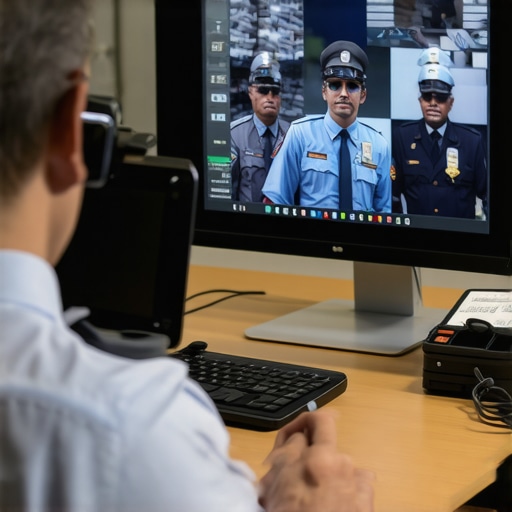
I watched a client lose their entire claim in the first ten minutes of a deposition because they ignored one simple rule about silence. He believed the officer’s bodycam would prove his sobriety. He thought the footage was his salvation. Instead, that wide-angle lens captured every micro-stumble, every slightly slurred vowel, and every instance of argumentative behavior that a jury would later interpret as intoxication rather than frustration. Most people think a camera is an objective observer. It is not. It is a tool of the prosecution, framed by the officer’s movements and edited by the limitations of the hardware itself. If you are facing a charge, you need a dui attorney who understands the physics of these devices, not just the law.
The silent witness that betrays your defense
Bodycam footage functions as a digital record of the arrest that juries often treat as absolute truth in a dui defense. This electronic evidence captures the visual and auditory cues used to establish probable cause during a traffic stop. Understanding the technical limitations of these sensors is vital for any dui lawyer. Case data from the field indicates that the first thirty seconds of many recordings are silent due to the pre-roll buffer on the hardware. This means the visual of you exiting the vehicle exists without the context of the officer’s initial commands. While most lawyers tell you to sue immediately, the strategic play is often the delayed demand letter to let the defendant’s insurance clock run out or to ensure the metadata of the video is preserved before it is overwritten by department retention policies. The hardware itself, often manufactured by Axon or WatchGuard, uses a wide-angle lens that can distort distances. This distortion makes a driver appear more unsteady on their feet than they actually were. A skilled dui lawyer knows how to cross-examine an officer on the specific model of camera used and its known optical aberrations.
“Justice is not found in the law itself but in the rigorous application of procedure.” – Common Law Maxim
Why the camera angle lies to the jury
The perspective of a chest-mounted camera creates a skewed view of field sobriety tests that complicates a dui legal strategy. Because the camera is located at the officer’s mid-torso, it does not see what the officer’s eyes see. This discrepancy allows for a motion to suppress evidence if the officer’s testimony contradicts the digital record. Procedural mapping reveals that officers often position themselves to highlight perceived failures while blocking the camera’s view of the driver’s successes. If you are performing the walk and turn test, the camera might only see your upper body, missing the fact that your feet stayed perfectly on the line. You must call an attorney who can hire an expert to reconstruct the scene. This reconstruction proves that the officer’s narrative is a subjective interpretation of a limited visual field. The sensory reality of a DUI stop involves blinding strobe lights from the patrol car which are often not fully captured by the camera’s dynamic range. This creates a situation where the driver looks disoriented by alcohol, when in reality, they were simply blinded by high-intensity LED light bars. A dui attorney will use this technical failure to dismantle the prosecution’s claims of physical impairment.
The thirty second silent window that breaks a case
Audio recording protocols in police bodycams often result in a gap of evidence that a dui defense can exploit. Most department policies require the camera to stay in a buffering mode that saves video but discards audio until the officer manually activates the recording. This gap creates a window of missing context regarding the initial interaction. Information gain from forensic analysis shows that these silent seconds often contain the most critical moments of the encounter. If the officer was aggressive or failed to provide proper Miranda warnings during this silent phase, the visual evidence can be challenged. The dui attorney must demand the raw files, not just the exported MP4, to examine the audit logs. These logs show exactly when the record button was pressed and if any segments were redacted. In many jurisdictions, the failure to preserve the full metadata can lead to an adverse inference instruction, telling the jury they can assume the missing evidence would have helped the defendant. This is why you should call an attorney before the department’s 60-day or 90-day purge cycle deletes the background data that could prove your innocence.
“The integrity of the criminal justice system depends on the transparency of the evidence-gathering process.” – ABA Standards for Criminal Justice
How the lens distortion creates a false intoxication
Optical artifacts in low-light environments often make a sober individual appear intoxicated on a dui defense video. The high ISO settings used by bodycams to see in the dark introduce digital noise and motion blur that mimics the appearance of stagger or sway. This technical reality is a cornerstone of modern dui legal tactics. Forensic video analysts point out that the frame rate of a bodycam is often variable. When the frame rate drops to save battery or storage space, movement appears jerky. To a juror, this look like the physical instability associated with a high blood alcohol content. A dui lawyer must be prepared to explain the concept of ‘rolling shutter effect’ to a jury. This effect can make straight lines appear curved and steady movements appear erratic. While the prosecution will present the video as a clear window into the past, the reality is that it is a compressed, low-resolution interpretation of a chaotic event. The smell of the air, the coldness of the night, and the vibration of passing traffic are all missing from the file. Without that sensory context, the video is a hollow narrative designed to secure a conviction. The strategic move is to introduce the weather reports and road condition data to provide the context the camera missed.
The specific way metadata wins a dui defense
Digital forensics and the chain of custody for video files are the primary battlegrounds for a modern dui attorney. Every video file contains a hash value that acts as a digital fingerprint to ensure the footage has not been altered or trimmed. If this fingerprint changes, the evidence is tainted and potentially inadmissible in court. A dui attorney will scrutinize the cloud storage platform, such as Evidence.com, to see who accessed the file and when. If an officer viewed the footage before writing their report, their testimony is no longer based on their memory, but on the video itself. This is known as ‘memory contamination.’ It turns the officer into a narrator of the video rather than an independent witness. You need to call an attorney who can identify these procedural shortcuts. The ROI of litigation in these cases often hinges on the ability to prove that the officer tailored their written statement to match the digital record, ignoring details that the camera missed. This clinical approach to evidence is what separates a high-stakes litigator from a settlement mill. The goal is not just to watch the video, but to deconstruct the environment in which it was created, stored, and presented.