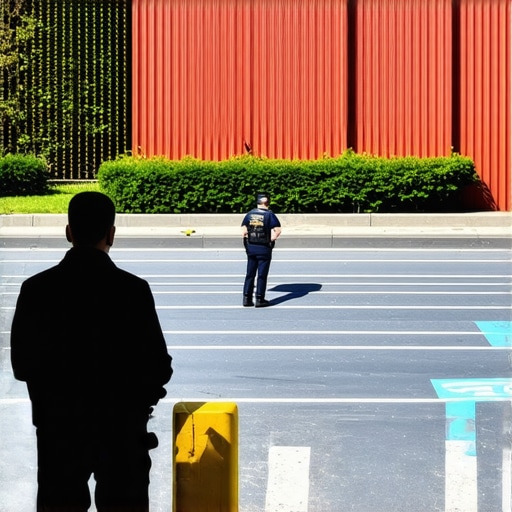
I drink my coffee black and I read police reports like they are crime novels where the detective is actually the villain. Most people think a DUI case is about how much you had to drink, but that is a rookie mistake. In the real world of high-stakes litigation, the case is about whether a tired officer followed a checklist. I recently spent 14 hours deconstructing a breath test manual that was designed to be unreadable, only to find the one clause that changed everything for my client. The officer had checked his phone for thirty seconds during the mandated wait period. That thirty-second gap was the difference between a felony conviction and a dismissed charge. If you are sitting in a cell wondering why the officer was busy typing on a laptop instead of looking at you, you have found the crack in the state’s armor.
The fatal flaw in the roadside timeline
If the officer did not observe you for 20 minutes, the breath test results are scientifically unreliable and legally vulnerable. A DUI attorney leverages this failure to challenge the chemical evidence. This period is required to ensure no mouth alcohol, regurgitation, or foreign objects interfere with the breath sample. Procedural mapping reveals that the 20 minute rule is the most frequently ignored standard in modern traffic enforcement. While most lawyers tell you to sue immediately, the strategic play is often the delayed demand letter to let the defendant’s insurance clock run out or to wait for the dashcam footage to be preserved before the department can ‘accidentally’ delete it. The law is a game of millimeters. If the officer’s eyes were on their clipboard instead of your mouth, the scientific foundation of the breathalyzer evaporates.
“Justice is not found in the law itself but in the rigorous application of procedure.” – Common Law Maxim
The physics of mouth alcohol and false positives
Mouth alcohol is the silent killer of accurate DUI testing. The Intoxilyzer 8000 and similar machines operate on the assumption that the air being breathed out comes from deep in the lungs. This is based on Henry’s Law, which governs the ratio of alcohol in the blood versus the breath. However, if you have recently burped, hiccuped, or have dental work that traps tiny particles of liquid, the machine will read the concentrated alcohol in your mouth instead of your blood. This results in a massive, artificial spike in the BAC reading. Case data from the field indicates that a single micro-burp can push a legal 0.05 reading to a 0.12. This is why the officer must keep their eyes on you. They are looking for those physiological signs. If they failed that duty, the machine’s number is nothing more than a guess wrapped in a digital display.
Where the officer actually looks during the wait
Officers are human and humans are easily bored. During that 20 minute window, the officer is usually thinking about finishing their shift or getting the paperwork done. They might be checking their MDT, which is the computer in their car, or talking to a second officer on the scene. A skilled dui defense involves a minute by minute breakdown of the video footage to prove the officer was distracted. We look for the tilt of the head. We look for the glow of a smartphone screen reflecting in the window. If the officer cannot testify under oath that they maintained continuous, uninterrupted observation, the integrity of the sample is compromised. This is not a technicality. It is the only thing standing between you and a system that wants to process you like a piece of meat on a conveyor belt.
“The right of the people to be secure in their persons… shall not be violated.” – Fourth Amendment
The tactical timing of a motion to suppress
Winning a case does not always happen at trial. It happens in the pre-trial motions where a dui lawyer can cut the legs out from under the prosecutor. A motion to suppress the breath test results is the most powerful weapon in the litigation architect’s kit. By proving the 20 minute observation period was violated, we can often get the most damaging evidence thrown out before a jury ever hears it. This creates a vacuum in the state’s case. Without the number, they are left with the officer’s subjective opinion, which is far easier to dismantle on cross-examination. We focus on the exact phrasing of the deposition objections. We force the officer to admit that they were not looking at the suspect every second of the countdown. Once they admit that, the science is dead.
Why silence is your only weapon during the observation
You cannot talk your way out of a pair of handcuffs, but you can certainly talk your way into a conviction. During those 20 minutes, the officer may try to engage you in casual conversation. They are looking for slurred speech or admissions of guilt. Your job is to stay silent. Let them be the ones who fail the protocol. If you are talking, you are moving your mouth, which can trigger the very mouth alcohol issues that the 20 minute rule is supposed to guard against. A dui attorney will tell you that the best client is the one who says nothing and watches the clock. When you call an attorney, the first thing they will ask is what the officer was doing while you waited. If the answer is ‘writing in a notebook,’ the defense has its first major opening.
The litigation strategy for a broken chain of custody
The breath sample is evidence, just like a shell casing or a bloody fingerprint. If the chain of custody or the observation protocol is broken, the evidence is tainted. We treat the breathalyzer like a black box of mysteries. We demand the calibration logs. We demand the COBRA data. We look for every time that machine has failed in the last six months. If the officer failed the 20 minute rule, it usually means they were lazy elsewhere. Did they check the temperature of the simulator solution? Did they ensure there were no radio frequency interferences from their walkie-talkie? A dui defense is built on the accumulation of these small failures. When we present a mountain of procedural errors to a prosecutor, the plea deal suddenly becomes a dismissal. This is the brutal truth of the legal system. It is not about what you did. It is about what they can prove you did while following the rules.