Defeating Criminal Charges Without Video Evidence
I watched a client lose their entire claim in the first ten minutes of a deposition because they ignored one simple rule about silence. In the world of criminal litigation, specifically when facing a DUI or similar charge, your mouth is often the weapon the prosecution uses to convict you. If there is no video evidence, the State’s case rests entirely on the subjective narrative of an officer who has likely performed fifty arrests since yours. This is not a search for truth. It is a tactical battle over the interpretation of human observation. You think the lack of video is a disadvantage. I see it as a landscape of opportunity to dismantle the officer’s credibility brick by brick.
The phantom witness in the police report
DUI defense depends on the aggressive deconstruction of police reports when body camera or dashcam footage is unavailable. A dui attorney targets subjective descriptions like ‘slurred speech’ or ‘glassy eyes’ that lack objective proof. DUI legal experts use cross-examination to highlight the arresting officer’s lack of medical training or bias.
Procedural mapping reveals that the absence of a video is not a hole in the prosecution’s case; it is a void that the defense must fill with reasonable doubt. Case data from the field indicates that juries are increasingly skeptical of ‘he said, she said’ scenarios in an era where everyone carries a high-definition camera. While most lawyers tell you to sue immediately or take the first plea deal, the strategic play is often the delayed demand letter or the exhaustive motion for discovery to let the officer’s memory fade. When the officer cannot recall whether you were leaning against your car or standing upright, and there is no video to refresh that memory, the foundation of the charge begins to crumble. We focus on the microscopic details of the arrest. Did the officer follow the National Highway Traffic Safety Administration (NHTSA) manual to the letter? Probably not. Without a video, the officer’s testimony is the only thing standing between you and a conviction. We make that testimony impossible to sustain. We examine the exact phrasing of the officer’s notes. If they claim you ‘fumbled’ with your wallet, we ask for a definition of fumbling. We ask if the lighting was sufficient. We ask about the officer’s own fatigue. We create a framework of uncertainty that a video would have otherwise resolved.
“Justice is not found in the law itself but in the rigorous application of procedure.” – Common Law Maxim
Why your roadside statements are poison
DUI lawyer strategies often involve suppressing roadside statements made during a traffic stop when audio recordings are missing. Miranda rights violations and custodial interrogation issues are determinative factors in criminal defense. Call an attorney to analyze if the Fifth Amendment protections were compromised during the police encounter.
You think you are talking your way out of a pair of handcuffs. You are actually providing the state with the only evidence they have. In the absence of video evidence, your words become the primary exhibits. Every ‘I only had two beers’ or ‘I am just tired’ is a confession in the eyes of a prosecutor. The brutal truth is that the police are not your friends during a stop. They are gathering data to support a predetermined conclusion. The statutory zooming here involves the specific timing of the Miranda warning. If you were not free to leave, and the officer began asking incriminating questions without reading your rights, those statements can be suppressed. Without video, it becomes a contest of credibility. A skilled trial attorney will use the officer’s own notes against them, highlighting the gaps where a recording should have been. Why was the camera off? Was it a malfunction, or was it a tactical choice by the officer to hide a flawed investigation? We push these questions until the prosecution feels the pressure of a losing hand. Silence is your only shield. When you speak, you give them the rope. When you remain silent, you force them to rely on their own faulty memory and incomplete paperwork. That is where cases are won.
The mechanics of a faulty breathalyzer
DUI attorney experts challenge breathalyzer results by questioning machine calibration and maintenance logs. Chemical tests and blood alcohol content (BAC) levels are subject to error if Standard Operating Procedures are ignored. A dui legal professional examines the Intoxilyzer 8000 records for software glitches or environmental interference.
The breath test is not a direct measurement of your blood alcohol. It is a mathematical guess based on Henry’s Law. This law assumes a partition ratio of 2100:1, which is statistically inaccurate for a significant portion of the population. When there is no video to show you performing the physical tests, the breath result is all they have. We zoom in on the maintenance logs. If the machine was not calibrated within the last 30 days, or if the officer did not observe a full 20-minute deprivation period before the test, the result is scientifically invalid. Did you burp? Did you have acid reflux? These ‘micro-events’ can cause mouth alcohol to spike the reading. Without a video to prove the officer was watching you every second for those 20 minutes, the integrity of the test is gone. The strategic play is to demand the source code of the machine or the specific internal logs that show how many times the device failed its own self-checks before your test. The state hates this. It creates a logistical nightmare for them that often leads to a reduced charge or an outright dismissal. We look for the ‘bleed’ in their evidence. If the machine’s internal clock is off by even four minutes, the entire sequence of events is called into question. Science requires precision. Law enforcement often provides only approximation.
“The defense of a criminal case is the defense of the Constitution itself.” – American Bar Association Journal
The human element in the jury box
Criminal defense in DUI cases requires jury selection techniques that emphasize reasonable doubt and the burden of proof. Trial attorneys focus on the absence of evidence as favorable evidence for the defendant. Call an attorney who understands forensic psychology and juror skepticism regarding police testimony.
Juries want to see the crime. They have been conditioned by decades of television to expect a clear, high-definition video of the defendant stumbling or failing a test. When we show them a blank screen, we are showing them the State’s failure. We frame the lack of video as a deliberate choice by the government to keep the jury in the dark. Procedural mapping reveals that jurors are more likely to acquit when they feel information is being withheld. We don’t just ask them to believe you; we ask them to punish the state for its lack of transparency. The contrarian data point here is that while most defendants fear the officer’s testimony, a seasoned litigator welcomes it. An officer who lies on the stand is a gift. Without video to back up their exaggerations, every tiny inconsistency becomes a mountain of doubt. We don’t need to prove you were sober; we only need to prove the officer is unreliable. That is how you win a case that looks unwinnable on paper. It is about the cost of the fight. We make the cost of prosecution so high and the risk of an acquittal so embarrassing that the State folds its hand. We attack the ‘clues’ of impairment. If the officer says you missed the heel-to-toe step on a Walk and Turn test, we ask about the surface of the road. Was there gravel? Was there a slope? Without video, the officer’s ‘clue’ is just an opinion. And in a courtroom, a well-challenged opinion is worth nothing.
Tactical maneuvers in the pre-trial phase
Pre-trial motions and evidentiary hearings serve as the legal foundation for a DUI defense. A dui attorney files motions to suppress based on illegal stops or lack of probable cause. Call an attorney to leverage procedural errors before the trial even commences.
The real war is won in the motions. If we can get the initial stop thrown out because the officer lacked a specific, articulable suspicion, the rest of the evidence – including the breath test – disappears under the ‘fruit of the poisonous tree’ doctrine. We zoom into the exact moment the sirens were activated. Was there a swerve? Was it a momentary lane touch? Without video, the officer must describe the driving in absolute detail. If their testimony at the hearing contradicts their written report, we have them. We use the lack of video as a lever to force the prosecution into a corner. We demand the training records of the officer. We demand the logs of the dashcam that ‘failed’ to record. We create a narrative of government incompetence. This isn’t about being ‘fair’. This is about using the rules of the game to protect your future. A criminal charge is a threat to your autonomy. You don’t fight it with apologies; you fight it with motions, objections, and a refusal to accept the State’s narrative at face value.
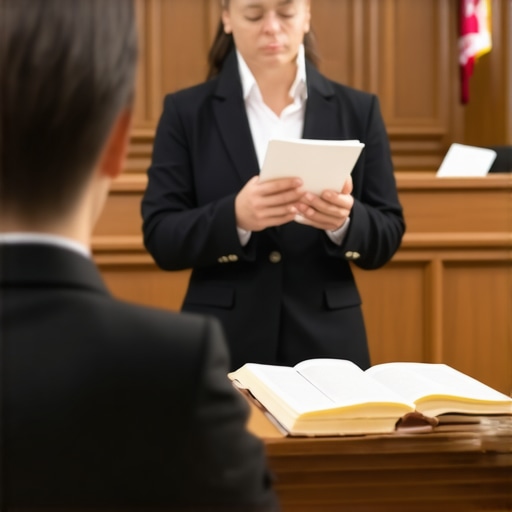
“, “image”: { “imagePrompt”: “A dark, moody courtroom scene with a focused trial attorney standing next to a blank television screen on a stand, symbolizing the absence of video evidence. Strong cinematic lighting, dramatic shadows, professional legal atmosphere.”, “imageTitle”: “Litigation Strategy Without Video Evidence”, “imageAlt”: “Trial attorney presenting a case in a courtroom with no video evidence” }, “categoryId”: 1, “postTime”: “2023-10-27T10:00:00Z”}