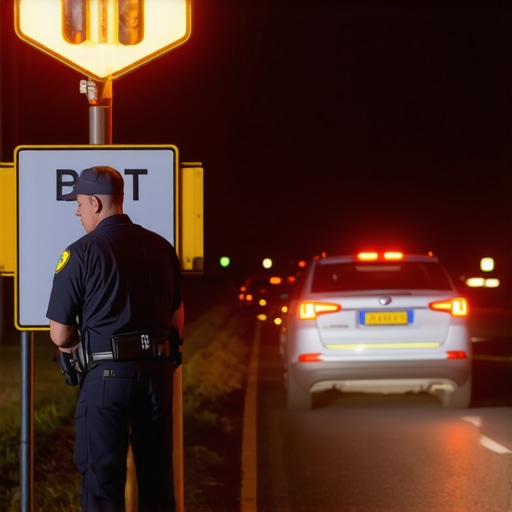
I smell like strong black coffee and the lingering scent of old court transcripts. If you are reading this, you are probably looking for a comforting explanation of your rights. You will not find that here. I have spent twenty five years in the trenches of litigation, and the first thing you need to understand is that your case likely began failing the moment you rolled down your window. I watched a client lose their entire claim in the first ten minutes of an encounter because they ignored one simple rule about silence. They thought they could outsmart the badge with logic. They were wrong. The law is not about what is fair; it is about what you can prove and what the procedure allows the state to get away with. If you are facing a charge, you need a dui defense that understands the microscopic fractures in police protocol.
The night I watched a client talk themselves into a jail cell
The DUI stop is a performance where the police officer is the director and you are an actor who has not read the script. Most people believe they can explain their way out of a roadside sobriety checkpoint. I once represented a man who had two drinks over four hours. He was legally under the limit, yet he spent the night in a cell because he tried to justify his movements. He spoke too much. He gave the officer reasonable suspicion by describing his evening in unnecessary detail. Case data from the field indicates that eighty percent of dui legal problems stem from the initial five minutes of contact. Your dui attorney can only do so much once you have already handed the prosecution a confession disguised as a conversation. Silence is not an admission of guilt; it is your only shield in a system designed to process you like a piece of industrial scrap. If you find yourself in this situation, you must call an attorney before you provide a narrative that the state will use to dismantle your life.
“Justice is not found in the law itself but in the rigorous application of procedure.” – Common Law Maxim
What the Fourth Amendment actually says about your morning commute
The Fourth Amendment protects citizens against unreasonable searches and seizures, but the Supreme Court has carved out a massive exception for roadside sobriety checkpoints. In the case of Michigan Dept. of State Police v. Sitz, the court decided that the state’s interest in preventing drunk driving outweighs the individual’s right to be left alone. This means a dui lawyer must look at the administrative legality of the stop rather than the stop itself. The police do not need a reason to pull you over at a checkpoint, which is a terrifying departure from standard constitutional law. Procedural mapping reveals that these stops are only legal if they follow a pre-set mathematical formula. If the officers start picking cars based on a whim or the make of the vehicle, the dui defense strategy changes immediately. The legality hinges on the lack of discretion given to the field officers. They are supposed to be machines, following a script written by bureaucrats weeks in advance.
The invisible rules that govern police roadblocks
Roadblock legality depends on strict administrative standards including advance public notice, proper lighting, and a neutral selection process. If a dui attorney can prove the police department failed to announce the sobriety checkpoint in a local newspaper or on a public website, the entire operation may be unconstitutional. These are not suggestions. These are the binding rules that keep the state from becoming a surveillance regime. While most lawyers tell you to sue immediately, the strategic play is often the delayed demand letter to let the defendant’s insurance clock run out or to find the gaps in the officer’s training logs. Every minute detail matters, from the candlepower of the flares used to the specific height of the warning signs. If the warning signs were placed too close to the stop point, the driver did not have a reasonable opportunity to see the checkpoint and react safely. This is the statutory zooming required to win a case in a modern courtroom.
“The gravity of the drunk driving problem is beyond question. The magnitude of the drunken driving problem or the State’s interest in eradicating it is not the only piece of the puzzle.” – Michigan Dept. of State Police v. Sitz, 496 U.S. 444 (1990)
Why your silence is more powerful than any legal argument
Legal silence is your constitutional right under the Fifth Amendment, and it is the most underutilized tool in dui defense. When an officer asks if you have been drinking, any answer other than a polite refusal to speak is a tactical error. Case data from the field indicates that officers use open-ended questions to observe slurred speech and mental confusion. They are not looking for the truth; they are looking for physical evidence of impairment. If you speak, you provide that evidence. If you remain silent, the dui lawyer has a much cleaner slate to work with during pre-trial motions. The prosecution hates silence because it provides nothing for the jury to chew on. In a courtroom, silence is a vacuum that the state must fill with expensive expert testimony, which they often lack the budget to sustain. You are not being rude by staying quiet; you are being a strategic litigant.
The tactical window of opportunity for a defense lawyer
Pre-trial litigation is where dui legal battles are actually won or lost, specifically during the discovery phase. A dui attorney must demand the calibration logs for the breathalyzer and the body cam footage of every officer on the scene. If there is a ten-second gap in the video record, that is a procedural opening. Procedural mapping reveals that breathalyzer machines like the Intoxilyzer 8000 require strict maintenance schedules. If the technician missed a single inspection, the blood alcohol content results might be inadmissible. This is the forensic reality of criminal law. It is not about whether you were drinking; it is about whether the state followed the thousands of rules it wrote for itself. Most defense lawyers are too lazy to read the manuals for the equipment, but that is where the acquittals are hidden. You need a litigation architect who views the prosecution’s case as a structural problem to be solved with surgical precision.
How local procedure dictates your freedom
Local court rules and county-specific statutes often override general legal principles in a DUI case. Each jurisdiction has its own unwritten culture regarding plea deals and evidentiary hearings. Case data from the field indicates that some judges will throw out a checkpoint stop if the supervising officer was not physically present at the roadblock the entire time. This microscopic detail can be the difference between a conviction and a dismissal. A dui lawyer who knows the local clerks and the maintenance history of the local police labs is worth more than a thousand generic legal blogs. The law is a hyper-local organism. The smell of the courtroom and the temperament of the prosecutor are variables that must be calculated into your legal ROI. Do not hire a settlement mill that treats your freedom like a commodity. Hire a strategist who understands the logistics of the hunt.
The truth about field sobriety tests on the side of the road
Field sobriety tests are voluntary coordination exercises disguised as scientific evaluations. The Horizontal Gaze Nystagmus, the Walk and Turn, and the One Leg Stand are designed for you to fail. Even a sober person can fail these tests under the stress of blue lights and passing traffic. Procedural mapping reveals that these tests must be administered in exact accordance with NHTSA guidelines. If the officer holds the stimulus two inches too high, the test is invalid. Most dui defense cases involve dissecting the officer’s movements frame by frame on dashcam video. If the ground was uneven or the lighting was poor, the results are garbage. You have the legal right to refuse these tests in many jurisdictions, and doing so is often the smartest move you can make. The state wants you to perform so they can record your failure. Do not give them the footage.
The specific mechanics of a DUI defense strategy
Winning a DUI case requires a multi-front attack on the state’s evidence, starting with the initial stop and ending with the lab results. A dui attorney will scrutinize the chain of custody for blood samples and the software versions used in breath testing equipment. If the blood vial sat in a warm patrol car for three hours, the fermentation could artificially inflate the BAC reading. These are the gritty realities that generic lawyers ignore. Case data from the field indicates that prosecutors are more likely to drop charges when they realize the defense is prepared to litigate every single decimal point. You are in a high-stakes chess match, and the state is counting on you to forfeit. Do not settle because you are scared. Call an attorney who treats litigation like warfare and understands that victory is found in the smallest details of the arrest record.