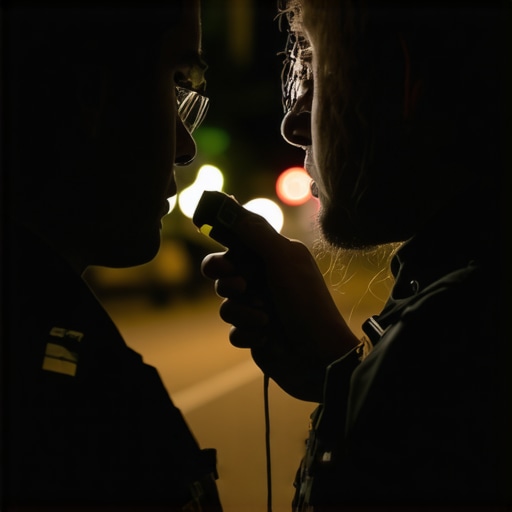
I smell like strong black coffee and the hard reality of a courtroom at 8:00 AM. You are here because you think the machine is infallible. You are wrong. Your case is likely failing right now because you believe the police report. I watched a client lose their entire claim in the first ten minutes of a deposition because they ignored one simple rule about silence. They volunteered information about a spicy dinner they had two hours before the stop, thinking it made them sound relatable. Instead, it gave the prosecution the leverage to explain away a clear case of gastroesophageal reflux disease that contaminated the breath sample. In the world of DUI legal strategy, what you don’t say is often more important than the science itself. Most people walk into my office thinking a breathalyzer is a medical grade instrument. It is not. It is a roadside calculator that makes massive assumptions about your biology. If you do not understand the mechanics of mouth alcohol, you are walking into a conviction with your eyes closed. You need a DUI attorney who treats the machine as a hostile witness. A DUI defense is not about being a nice person. It is about the forensic deconstruction of a flawed measurement. When you call an attorney, you should be asking about slope detectors and infrared spectroscopy, not just about the fine cost. This is the reality of the system. It is built to process you, not to find the truth.
The machine cannot distinguish between your lungs and your gums
Mouth alcohol is the presence of residual ethanol in the oral cavity that is blown into a breathalyzer, causing an artificially high reading. This phenomenon occurs when alcohol from the stomach or mouth enters the breath stream, bypassing the deep lung air measurement required for an accurate blood alcohol concentration. Case data from the field indicates that even a microscopic amount of ethanol in the mouth can double a test result. The Intoxilyzer 8000 and similar devices are designed to measure 2100 milliliters of breath and multiply the ethanol found there to estimate blood levels. This is known as the partition ratio. However, this ratio is a mathematical average that does not apply to every human body. If you have any liquid alcohol in your mouth, the machine assumes that concentration exists in your entire blood supply. While most lawyers tell you to sue immediately, the strategic play is often the delayed demand letter to let the defendant’s insurance clock run out or to wait until the machine’s maintenance logs reveal a pattern of sensor drift. The hardware is looking for a specific infrared light absorption rate. It cannot tell the difference between ethanol molecules coming from your alveolar air sacs and those clinging to a dental bridge or a crown. This is the fundamental lie of the breath test.
“Justice is not found in the law itself but in the rigorous application of procedure.” – Common Law Maxim
The failure of the mandatory observation period
The fifteen minute observation period is a procedural requirement where an officer must watch a suspect to ensure they do not burp, hiccup, or vomit. This protocol is the only thing standing between a valid sample and a contaminated one. Procedural mapping reveals that officers rarely follow this rule with the required vigilance. They are often typing on a laptop, checking their phone, or searching the vehicle while the clock runs. If you have a condition like GERD or even a simple case of acid reflux, a silent burp can bring raw alcohol vapor from your stomach into your mouth. This is called eructation. The machine’s slope detector is supposed to identify the rapid rise and fall of alcohol concentration associated with mouth alcohol, but these sensors are notoriously unreliable. They are binary systems trying to interpret complex biological events. A DUI lawyer must subpoena the dashcam or station house video to count every second of that observation period. If the officer turned their back for ten seconds to grab a form, the scientific foundation of the test is legally compromised. We do not look for the big mistake. We look for the small procedural crack that lets the whole case collapse. This is how a DUI defense is built in the real world.
How your medical history becomes a criminal record
Medical conditions such as GERD, Hiatal Hernia, and even certain dental work are the primary causes of false positive breath tests. These conditions allow alcohol to be trapped or redirected into the mouth during the testing sequence, leading to a blood alcohol concentration reading that is scientifically impossible. Case data from the field indicates that many individuals are convicted because their DUI attorney failed to cross-reference their medical records with the breath test timestamps. If you have a bridge, a porcelain crown, or a periodontal pocket, tiny amounts of alcohol can hide there for thirty to forty minutes. The standard waiting period of fifteen minutes is insufficient for these physical traps. Furthermore, if you are on a low-carb diet or have diabetes, your body may be in a state of ketosis. This produces isopropyl alcohol, which some older breathalyzer models confuse for ethyl alcohol. The prosecution will try to bury these facts under a mountain of “standardized” procedure. You must be aggressive. You must force the court to acknowledge that the defendant’s internal physiology is a variable the machine cannot control. This isn’t about fairness. It is about the fact that a machine is being used to testify against you without a medical degree. Any DUI lawyer worth the retainer knows that the machine’s software is a proprietary secret, shielded from the very people it accuses.
“The scientific reliability of breath testing is predicated entirely upon the assumption of a deep lung air sample free from contamination.” – American Bar Association Criminal Justice Standards
Why the slope detector is a marketing myth
The slope detector is a software algorithm designed to detect the difference between the alcohol curve of mouth alcohol and the curve of deep lung air. In theory, mouth alcohol creates a sharp peak that dissipates quickly, while alveolar air creates a steady plateau. Procedural mapping reveals that these algorithms fail in the presence of continuous micro-regurgitation. If a subject has a constant flow of gastric gases due to a medical condition, the slope detector sees a steady stream and identifies it as deep lung air. This is a catastrophic failure of the technology. The manufacturer of the Intoxilyzer does not provide the source code for these algorithms, claiming it is a trade secret. This means you are being convicted by a black box that your DUI attorney cannot even audit. The contrarian data point here is that the machine is often more accurate when it is older and more prone to throwing error codes, because the newer models are programmed to “smooth out” the data to avoid unsuccessful tests. When the machine forces a result, it is often ignoring the very biological noise that proves your innocence. You should never assume the machine is right just because it printed a piece of paper with a number on it. That number is an opinion, not a fact. A DUI defense must treat that number as a starting point for an investigation, not the end of the conversation.
The tactical advantage of demanding raw data logs
Raw data logs and maintenance records for breathalyzers often reveal hidden errors, calibration drifts, and sensor failures that are not visible on the final breath ticket. Accessing these records allows a DUI lawyer to demonstrate that the specific unit used in your case has a history of malfunction or was not properly maintained according to state statutes. Case data from the field indicates that breathalyzers are frequently kept in service long after their fuel cells have begun to degrade. A fuel cell sensor works by an electrochemical reaction where alcohol is oxidized, creating an electrical current. As these cells age, their sensitivity changes. If the department is skipping weekly or monthly calibrations to save money, the machine’s internal reference point becomes skewed. We don’t just look at your test. We look at the fifty tests that came before yours. If the machine was showing a pattern of “Ambient Fail” or “Invalid Sample” errors in the days leading up to your arrest, we have a path to suppression. Most people just want to settle. They want the nightmare to be over. But if you don’t fight the logistics of the test, you are giving up the only leverage you have. The prosecution relies on your desire to go home. I rely on their inability to prove the machine was working perfectly at 2 AM on a Tuesday.
How to force the prosecution to admit the science is flawed
Forcing the prosecution to admit the flaws in breath testing requires an aggressive cross-examination of the state’s expert witness regarding Henry’s Law and temperature variables. Breath tests rely on the assumption that your breath is exactly 34 degrees Celsius. If you have a fever or even just a naturally high body temperature, the concentration of alcohol in your breath increases by approximately 6.5 percent for every degree above the average. Procedural mapping reveals that police never take a suspect’s temperature before a breath test. They just assume you are a standard laboratory model. You are not. You are a biological entity with fluctuating internal states. A DUI attorney must use this lack of individualized data to create reasonable doubt. If the state cannot prove your body temperature was 34 degrees, they cannot prove the partition ratio was 2100:1. If they cannot prove the ratio, they cannot prove the BAC. It is a house of cards held together by the hope that you won’t hire someone who knows how to pull the bottom card. This is why you call an attorney who understands that the courtroom is not a place for apologies. It is a place for the surgical removal of the state’s evidence. The truth about mouth alcohol is that it is a symptom of a much larger problem: a legal system that values efficiency over scientific accuracy. Do not be a victim of that efficiency. Demand the data. Challenge the machine. Break the process.