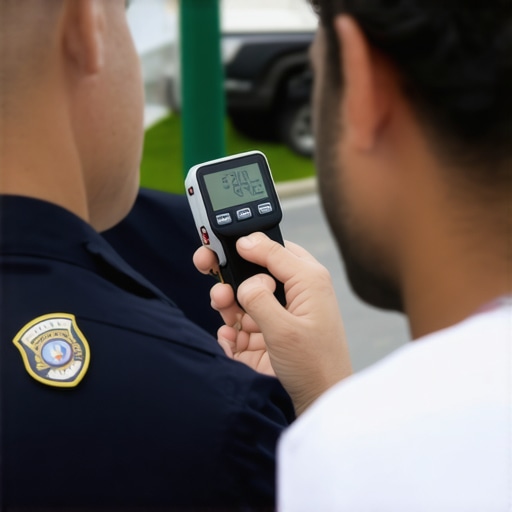
The Truth About Mouth Alcohol and Breathalyzer Spikes
I watched a client lose their entire claim in the first ten minutes of a deposition because they ignored one simple rule about silence. They believed they could talk their way out of a technical reading. In the legal arena, silence is a shield, but most people treat it like a confession. This specific client felt the need to explain why their breathalyzer result was high, offering theories that the prosecutor later used to dismantle their credibility. If they had simply shut their mouth and let the defense team attack the procedural integrity of the machine, they would be home right now. Instead, they are fighting a felony charge because they didn’t understand that the machine is often a liar. You are here because you probably believe the breathalyzer is an infallible scientific instrument. It is not. It is a fallible box of sensors prone to environmental interference and biological glitches. When you face a DUI legal battle, the machine is the primary witness for the prosecution. My job as a dui lawyer is to cross-examine that machine until its testimony falls apart under the weight of scientific reality.
The phantom ethanol in your dental work
Mouth alcohol refers to residual ethanol trapped in dental work or the mucosal lining of the throat. This localized concentration causes the infrared spectrometry or fuel cell sensor in a breathalyzer to register a blood alcohol concentration significantly higher than the actual systemic levels present in the bloodstream. This phenomenon occurs because the device assumes the air sample comes from deep lung air, known as alveolar air. If you have a bridge, a crown, or even a piece of food stuck in your teeth that has soaked up a small amount of an alcoholic beverage, the breathalyzer will read that concentrated vapor. It does not matter if your actual blood alcohol content is well below the legal limit. The machine is tricked by the concentrated molecules in your oral cavity. A dui attorney looks for these discrepancies immediately. We examine your dental history and the timeline of your last drink to prove that the reading was a localized spike rather than a systemic measurement. This is a primary pillar of dui defense because it challenges the fundamental assumption of the breath test.
Why the officer ignored the observation period
The deprivation period is a mandatory fifteen to twenty minute window where a police officer must continuously observe a suspect to ensure they do not burp, hiccup, or vomit. Any such action brings gastric vapors into the mouth, which results in a false positive for high alcohol levels. Officers often get lazy. They check their phones, they fill out paperwork, or they talk to their partner while the clock runs down. If that officer turned their back for even thirty seconds, the integrity of the test is compromised. In the world of dui legal strategy, this is a procedural void. If we can prove the officer failed to maintain eyes on the suspect, the entire test result can often be suppressed. The law demands rigorous adherence to these steps because the machines are so sensitive to mouth alcohol spikes. Without that twenty minute buffer, the machine is simply guessing. You must call an attorney the moment you realize the procedure was rushed or ignored.
“Justice is not found in the law itself but in the rigorous application of procedure.” – Common Law Maxim
The biological failure of infrared spectrometry
Infrared spectrometry works by identifying molecules based on how they absorb specific wavelengths of light. However, many chemical compounds found in the human body, such as acetone produced during ketosis or burped up gastric acid, share similar molecular signatures with ethanol. This is the hidden flaw in the technology. If you are on a low carb diet or suffer from diabetes, your breath might contain high levels of acetone. The breathalyzer, in its mechanical simplicity, often identifies this acetone as ethyl alcohol. This leads to an inflated BAC reading that has nothing to do with intoxication. This is why a dui defense must often include a medical component. We look at your metabolic state at the time of the arrest. We analyze whether you were in a state of ketoacidosis or if you suffer from GERD. These are not excuses. They are scientific facts that prove the machine was incapable of distinguishing between a drink and a natural metabolic process.
Navigating the discovery phase of a DUI trial
Discovery is the formal process where the defense demands all evidence from the prosecution, including the maintenance logs, calibration records, and software versions of the specific breathalyzer used. These documents often reveal that the machine was overdue for service or had a history of error codes. Most people think they are stuck with the number on the paper. They are wrong. A seasoned dui lawyer treats that number as a starting point for an investigation, not an end point. We look for the internal memory logs of the device. Sometimes these machines have slope detectors designed to flag mouth alcohol, but the detectors fail or are ignored by the operator. While most lawyers tell you to sue immediately, the strategic play is often the delayed demand letter to let the defendant’s insurance clock run out or to wait for the maintenance records to show a pattern of neglect. The prosecution wants you to plead guilty because the evidence looks overwhelming. Our job is to show them that their evidence is built on a foundation of digital sand.
“The integrity of the judicial system rests upon the accuracy of the evidence presented before the court.” – American Bar Association Standards
The tactical timing of your legal response
A strategic legal response involves filing motions to suppress evidence based on the lack of probable cause or the failure of the officer to follow state mandated testing protocols. Timing these motions allows the defense to expose weaknesses in the prosecution’s case before a trial even begins. Every second you wait after an arrest is a second the prosecution uses to solidify their narrative. You need a dui defense that understands the logistics of the courtroom. It is about territory. If we can take the breathalyzer off the table through a motion to suppress, the prosecution usually has no case left. They are left with the officer’s subjective observations, which are much easier to challenge than a digital readout. The goal is to create enough doubt about the machine’s accuracy that the risk of going to trial becomes too high for the state. This is how cases are won. This is how you protect your future from a machine that cannot tell the difference between a glass of wine and a burp. Call an attorney who knows how to fight the machine, not just someone who will hold your hand while you plead guilty.