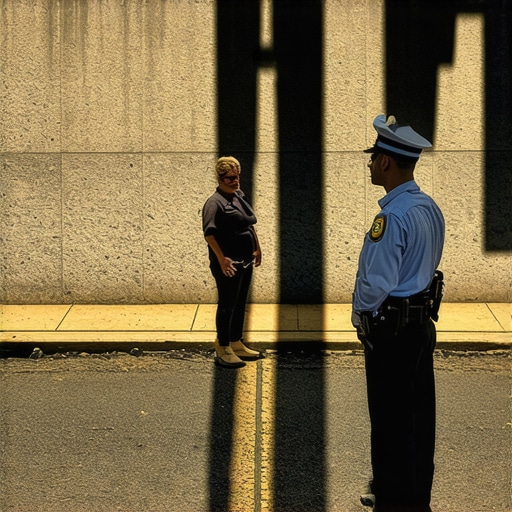
You walk into my office with a stack of papers and a look of desperation. I smell like strong black coffee because I stayed up reviewing the body cam footage of your arrest. You think you failed the test. I think the test failed you. I watched a client lose their entire claim in the first ten minutes of a deposition because they ignored one simple rule about silence. They tried to justify a stumble. In a DUI case, justification is a confession. The prosecution wants you to believe that standing on one leg in the dark while strobe lights from a patrol car flicker in your peripheral vision is a fair assessment of sobriety. It is not. It is an orchestrated failure. The law is chess. You are the king. The officer is a pawn trying to put you in check before the game even begins. Most people assume the law is about truth. It is not. It is about evidence and the procedural leverage your dui lawyer can exert. If you believe your balance issues were due to alcohol, you have already lost. If you realize your balance issues were due to biology and physics, we have a fight.
The myth of the perfect roadside performance
Field sobriety tests are subjective tools used by a dui attorney to challenge the validity of an arrest rather than scientific measures of impairment. These tests rely on an officer’s personal observation of balance, coordination, and instructions given under extreme stress, often in poor environmental conditions like uneven roads or high winds. Case data from the field indicates that even sober individuals fail these tests at a high rate. The officer is not a doctor. They are a witness with a bias toward finding a crime. Procedural mapping reveals that the moment the officer asks you to step out of the vehicle, the arrest is already being mentally processed. The test is merely a way to gather evidence to support a decision already made. It is a trap. The dui defense begins with the understanding that these tests are designed for failure. The asphalt is rarely level. Your shoes are rarely ideal. Your nerves are shot. These factors create a physical impossibility for the average person. I have seen Olympic athletes stumble on a roadside because of the psychological pressure alone. This is not about your blood alcohol level. This is about how well you can perform a circus act for a man with a badge and a flashlight.
“Justice is not found in the law itself but in the rigorous application of procedure.” – Common Law Maxim
Medical conditions that the officer ignored
A dui legal expert understands that dozens of physical conditions mimic the symptoms of intoxication during a roadside evaluation. Vertigo, inner ear infections, back injuries, and even recent dental work can affect your equilibrium and cause you to fail the one leg stand or the walk and turn. While most lawyers tell you to sue immediately, the strategic play is often the delayed demand letter to let the defendant’s insurance clock run out or to gather medical records that predate the arrest. Your dui attorney must be a forensic investigator. If you have a history of knee surgery, that is not an excuse; it is a defense. If you have naturally occurring nystagmus, the eye test is invalid. The officer will never ask if you have a neurological condition that causes your eyes to jerk. They will simply mark a box on their report. This is where the dui defense finds its teeth. We don’t just say you were sober. We prove the officer was incompetent in his medical assessment. We bring in experts to testify about the vestibular system. We show the jury that the human body is not a machine. We dismantle the officer’s credibility by showing his lack of medical training. This is how we win. We turn your physical weakness into a legal strength. Every stumble is a medical fact waiting to be documented by a professional.
The failure of the standardized three test battery
The dui defense must focus on the National Highway Traffic Safety Administration standards which dictate exactly how these tests must be administered. Any deviation from these specific protocols can render the results inadmissible in court. Call an attorney who knows the manual better than the cop does. The three tests are the Horizontal Gaze Nystagmus, the Walk and Turn, and the One Leg Stand. If the officer starts the timer too late or gives the instructions in the wrong order, the test is tainted. I have seen cases dismissed because the officer stood too close to the suspect, causing a distraction that led to a balance break. This is the microscopic reality of litigation. We look for the small errors. We look for the flickering lights in the background that cause optokinetic nystagmus. We look for the passing traffic that creates a wind gust. These are not excuses. These are procedural violations. The officer is required to provide a clear, flat surface. He is required to check for contact lenses. He is required to ask about physical disabilities. When he fails, the evidence fails. Dui defense is the art of finding the hole in the prosecution’s net. If the net is broken, the fish goes free. We are the ones who break the net. We do it with the manual. We do it with the law. We do it with a relentless focus on the officer’s mistakes.
“The right to a fair trial includes the right to challenge the reliability of the evidence presented against the accused.” – ABA Standards for Criminal Justice
Why the walk and turn test is a trap
The walk and turn test is a test of divided attention more than physical balance, and a dui lawyer knows this is a psychological gambit. You are asked to listen to complex instructions while maintaining a specific stance, and any movement during the instruction phase is counted as a failure. This is why you should call an attorney immediately after an arrest. The officer wants you to fail before you even take your first step. He is looking for