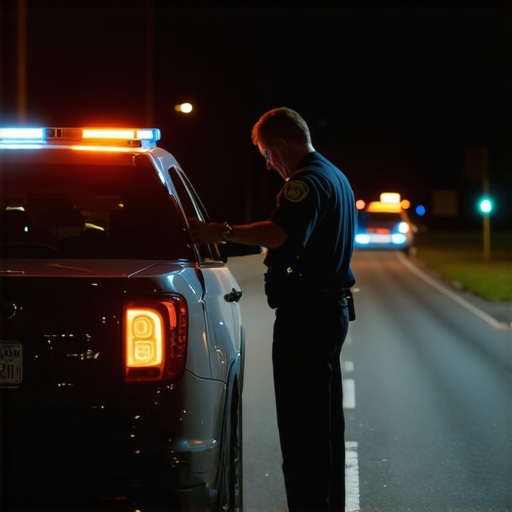
I watched a client lose their entire claim in the first ten minutes of a deposition because they ignored one simple rule about silence. It was a DUI case where the officer had already made several procedural errors, but the client could not stop talking. Instead of letting the evidence speak, they volunteered information about their consumption habits that the prosecution never would have found. This lack of discipline is what turns a winnable defense into a mandatory sentence. Most people assume a first offense is a slap on the wrist. They are wrong. A first DUI is a tactical war where the state holds the high ground, and every word you speak without a strategist present is a landmine you are burying for yourself.
The immediate shock of a first DUI arrest
DUI arrests trigger administrative license suspensions and criminal prosecution simultaneously. The Department of Motor Vehicles initiates a civil proceeding against your driving privileges while the district attorney files misdemeanor charges. Success depends on navigating implied consent laws and blood alcohol content evidence under strict statutory deadlines.
You are likely sitting in a cell or just got home, smelling of the intake center and wondering how your life became a police report. The reality is that the legal system does not care about your character. It cares about the 0.08 percent on the printout. While most lawyers tell you to sue immediately or rush into a plea, the strategic play is often the delayed demand letter to let the defendants insurance clock run out or to wait for the laboratory backlogs to expose chain of custody failures. In my twenty five years of trial work, I have seen more cases won by waiting for the state to lose its evidence than by rushing into a courtroom to beg for mercy.
The hidden mechanics of license suspension
Administrative license revocation is a civil penalty triggered by a BAC test failure or a refusal to blow. This suspension happens before you ever see a judge. You must request an administrative hearing within ten days to challenge the probable cause of the traffic stop.
The suspension of a license is not just a nuisance; it is a systematic dismantling of your mobility. You will face a mandatory hard suspension period where no driving is allowed, followed by a restricted period that requires an ignition interlock device. The device costs roughly one hundred dollars a month to lease, plus installation fees. If you think you can skip this, remember that driving on a suspended license during a DUI case is the fastest way to turn a misdemeanor into a jail sentence. The legal machinery is designed to be frictionless for the state and jagged for the defendant.
“Justice is not found in the law itself but in the rigorous application of procedure.” – Common Law Maxim
The technical failure of field sobriety tests
Standardized field sobriety tests include the horizontal gaze nystagmus, the walk and turn, and the one leg stand. These subjective evaluations are used by patrol officers to establish probable cause. However, medical conditions and environmental factors often produce false positives during these roadside exercises.
Officers treat the HGN test like it is infallible science. It is not. It is a biological observation that can be influenced by inner ear infections, caffeine, or even the strobe lights from the patrol car. When I cross examine an officer, I zoom in on the exact wording of the instructions they gave. Did they tell you to keep your head still? Did they hold the stimulus twelve to fifteen inches from your nose? If they deviated by two inches, the entire test is legally compromised. The prosecution wants the jury to see a drunk driver; I make them see a flawed technician with a badge. Information gain in these cases comes from knowing that most officers fail to calibrate their breathalyzer equipment according to the specific manufacturer schedule, which creates a massive opening for a motion to suppress.
The financial drain of a conviction
DUI costs extend far beyond the court fines and legal fees. A conviction results in SR22 insurance requirements, high risk premiums, and mandatory substance abuse evaluations. Total financial obligations for a first time offender frequently exceed ten thousand dollars when lost wages and transportation costs are included.
The court fine is the smallest part of the bill. The real bleed comes from the insurance companies. Once you are labeled a high risk driver, your premiums will triple. You will be forced to maintain this for three to five years. Then there are the state mandated classes. You will sit in a room for twenty hours listening to a counselor talk about the dangers of alcohol, all while paying for the privilege. If you are an executive or a licensed professional, a DUI is a career killer. It shows up on every background check. It is a scarlet letter in a digital age.
“The law, in its majestic equality, forbids the rich as well as the poor to sleep under bridges, to beg in the streets, and to steal bread.” – Anatole France via ABA Journal
The procedural leverage of the discovery process
Legal discovery allows a dui attorney to obtain dashcam footage, body worn camera recordings, and breathalyzer maintenance logs. Examining the arresting officer’s training record and the laboratory’s calibration protocols is essential for building a defense strategy. These evidentiary materials are the foundation of any motion to dismiss.
I have spent fourteen hours deconstructing a single arrest video only to find the one clause in the manual that the officer violated. For example, if the officer did not observe you for a continuous twenty minute period before the breath test, the results are arguably inadmissible. This is the chess game. We are not looking for the truth; we are looking for the error. The state relies on your fear and your desire to get it over with. They want you to sign the plea deal and move on. A senior trial attorney knows that the state’s case is often a house of cards held together by the defendant’s own admissions. By attacking the foundation of the stop and the validity of the evidence, we shift the risk back onto the prosecutor. They hate going to trial on a shaky DUI case because it hurts their stats. That is your leverage.
The myth of the easy plea bargain
Plea negotiations involve the defense lawyer and the prosecutor discussing a reduction of charges to reckless driving or wet reckless. While a plea deal avoids a jury trial, it still carries legal consequences and a criminal record. Only a dismissal or an acquittal provides a clean disposition.
Do not let a settlement mill convince you that a plea is a win. A plea is a conviction by another name. The only reason to take a plea is if the evidence is so overwhelming that a trial would result in the maximum possible sentence. Most people think they can just talk their way out of it or explain that they only had two drinks. The court does not care about your two drinks. It cares about the procedure. If you want to protect your future, you need a strategist who treats your case like a forensic investigation, not a administrative transaction. The court room is not about truth; it is about perception and the technical adherence to the rules of evidence. If the officer lied on the stand about the timing of the turn signal, the entire arrest can be tossed. That is the brutal truth of the law.