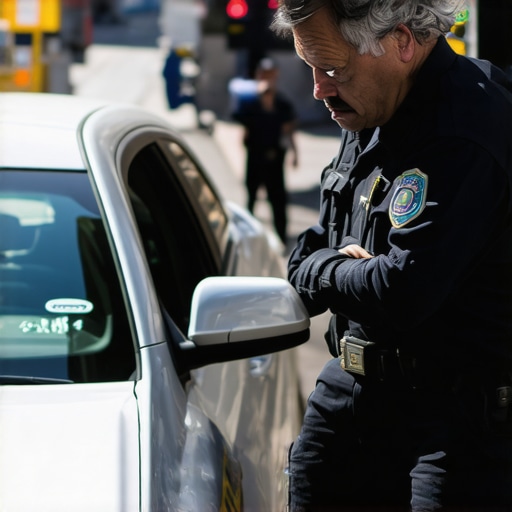
The air in a courtroom during a suppression hearing smells like ozone and mint. It is the scent of nervous energy and aggressive preparation. I watched a client lose their entire claim in the first ten minutes of a deposition because they ignored one simple rule about silence. They believed they could negotiate with the officer on the side of the road. By the time they realized the officer was not their friend, they had already signed away their rights. This is the reality of the American legal system where the state uses psychological warfare to bypass the fourth amendment.
The sensory overload of the midnight traffic stop
Police officers use high-intensity LED strobes and tactical positioning to create a state of cognitive dissonance in drivers. This sensory bombardment is designed to induce a fight or flight response that impairs your ability to think clearly about your constitutional rights. When the lights are blinding you and the officer is looming over your window, your brain is not processing legal advice; it is processing survival. This is exactly when you need to call an attorney to act as your shield. The flashing lights are not just for safety; they are a psychological tool to establish immediate dominance. The officer knows that a disoriented driver is far more likely to agree to a voluntary search or a breath test. Procedural mapping reveals that the first thirty seconds of an interaction determine the outcome of the entire case. If you provide a dui defense lawyer with a clean slate by staying silent, your chances of a dismissal increase significantly.
The legal fiction of implied consent statutes
Implied consent laws suggest that by holding a driver license you have already agreed to chemical testing if an officer suspects impairment. While this is the statutory framework, it does not mean you are without options or that the officer is allowed to skip the proper warnings. Many officers use these laws as a threat rather than a procedural requirement. They will tell you that your license will be suspended immediately as if it is a foregone conclusion. This is a half-truth designed to generate fear. A dedicated dui attorney understands that the administrative suspension is a separate battle from the criminal charge. Case data from the field indicates that refusing a test often provides more tactical advantages than providing the state with its primary piece of evidence. The state wants your breath because their observations are subjective and easily torn apart in cross examination.
“Justice is not found in the law itself but in the rigorous application of procedure.” – Common Law Maxim
[IMAGE_PLACEHOLDER_1]
Why the officer asks you to step out of the vehicle
The request to exit the vehicle is a tactical maneuver to remove you from your private space and place you in a controlled environment. Once you are standing on the white line of the shoulder, the officer has full control over your physical movement and can observe your balance and coordination under extreme stress. This is where the physical intimidation begins. They will stand close, use a heavy flashlight to track your eyes, and speak in a commanding tone. This is the moment you must ask for a dui lawyer. Do not wait until you are in the back of the patrol car. The officer is building a narrative of impairment based on how you stand, how you blink, and how you breathe. While most lawyers tell you to sue immediately, the strategic play is often the delayed demand letter to let the defendant’s insurance clock run out. This same patience applies to the roadside. Every second you spend arguing with the officer is a second they are recording your voice for the jury to hear.
The hidden calibration errors in roadside breath testing
Roadside breathalyzers are notoriously unreliable devices that are often poorly maintained and sensitive to environmental factors. These portable units are not the same as the evidentiary machines found at the station. They are prone to false positives caused by mouth alcohol, acid reflux, or even certain diets. An aggressive dui legal strategy involves subpoenaing the maintenance logs of these devices to show a pattern of neglect. If the device has not been calibrated within the specific window required by state law, the results can be thrown out. I have seen cases where a device was used for months without a single check of its internal fuel cell. This is the microscopic reality of litigation. It is not about whether you were drinking; it is about whether the machine was functioning at a level of scientific certainty that justifies a criminal conviction.
Tactical advantages of a delayed demand for counsel
Demanding an attorney at the right moment can pause the officer’s momentum and force them to follow strict procedural protocols. The officer wants you to keep talking because every word is a potential piece of evidence. By stating clearly that you will not answer questions without a dui defense professional present, you effectively end the psychological interrogation. This shift in power is vital. The officer is trained to keep the conversation flowing to prevent you from thinking about your rights. When you interrupt that flow with a firm demand for counsel, you regain the initiative. This is the high-stakes chess of the courtroom brought to the asphalt. A dui attorney can later use this moment to show that you were alert, assertive, and fully aware of your surroundings, which contradicts the officer’s claim of intoxication.
“The right to be let alone, the most comprehensive of rights and the right most valued by civilized men.” – Olmstead v. United States
The chemical reality of the intoxilyzer sequence
The sequence of a breath test requires a specific observation period to ensure that the sample provided is deep lung air. If an officer fails to watch you for twenty minutes without interruption, the test is legally flawed. Officers often get distracted by paperwork, their radios, or other people on the scene. This break in the chain of observation is a critical flaw that a dui lawyer will exploit. We look for the moments where the officer turned their back or stepped away from the subject. The science of breath testing relies on a closed system. Any interference, such as a burp or a hiccup, can contaminate the sample with mouth alcohol and lead to an artificially high reading. The state treats these machines as infallible, but they are subject to the same laws of physics and human error as any other tool.
The psychological trap of the friendly officer
An officer who acts like a friend is often more dangerous than one who acts like an aggressor. They may use phrases like, I just want to make sure you get home safe, or, help me out here and I will see what I can do. This is a classic interrogation tactic. They are not trying to help you; they are trying to get you to waive your right to remain silent. They want you to admit to having a couple of drinks so they have probable cause for an arrest. The dui legal system is built on these small admissions. Once you give them an inch, they will take your freedom. The high-stakes attorney knows that there is no such thing as an off the record conversation during a traffic stop. Every word is being recorded and will be used to build the state’s case against you.
The final assessment of the arrest video
Reviewing the dash cam and body cam footage is the most important step in deconstructing a dui arrest. The video often tells a very different story than the officer’s written report. Where the report says the driver was stumbling, the video might show a person walking with perfect balance despite the wind from passing trucks. This is the information gain that wins cases. We look for the discrepancies between the officer’s testimony and the digital reality. A dui defense is only as strong as the evidence used to challenge the officer’s credibility. If the officer lied about the initial reason for the stop or the way the field sobriety tests were administered, the entire case can crumble. This is why you must never consent to a test without understanding that the video is your best witness. The state wants you to believe that the evidence is stacked against you, but a thorough investigation often reveals a different truth.