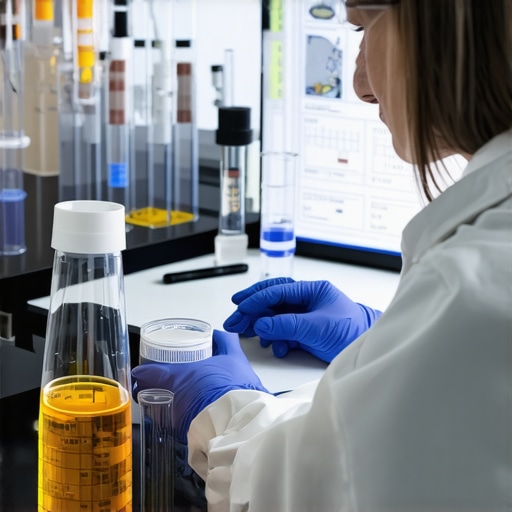
I sit across from the prosecutor in a sterile room that smells of ozone and mint. I use silence as a weapon. I watched a client lose their entire claim in the first ten minutes of a deposition because they ignored one simple rule about silence. They felt the need to explain. They felt the need to justify. In a DUI defense, that same human impulse to fill the quiet is what a prosecutor exploits during the forensic phase of a trial. My job as a senior trial attorney is to ensure that the only thing speaking is the evidence, or rather, the lack thereof.
How toxicologists influence the outcome of a DUI case
**Forensic toxicologists** serve as the expert interpreters of **blood alcohol concentration** data in **dui legal** proceedings. Their role involves reviewing **gas chromatography** results, verifying the **chain of custody**, and identifying **interfering substances** that can lead a **dui lawyer** to secure an acquittal or a reduction in charges during **alcohol-related trials**.
A forensic toxicologist is not merely a scientist; they are a professional witness who must bridge the gap between a laboratory vial and the constitutional rights of the defendant. When you **call an attorney**, you are looking for someone who can dissect the work of these experts. The prosecution relies on the toxicologist to provide a veneer of scientific certainty to a process that is often fraught with human error. We look for the gaps. We look for the moment the technician failed to calibrate the machine or the moment the blood sample sat on a loading dock in the midday sun. Procedural mapping reveals that the strength of the state’s case is only as robust as the temperature control of the refrigerator where the evidence was stored.
The mechanical reality of blood alcohol testing
**Blood alcohol concentration** is determined using **gas chromatography-mass spectrometry** (GC-MS), a process that separates chemical mixtures into individual components. A **dui attorney** must understand the **injector port temperature**, the **carrier gas flow rate**, and the **column length** to effectively challenge the **dui defense** evidence presented by the state laboratory.
The GC-MS is a complex beast. It requires a stationary phase and a mobile phase. The sample is vaporized and pushed through a column by a carrier gas, typically helium or nitrogen. Different molecules move at different speeds. The time it takes for ethanol to reach the detector is its retention time. However, if the column is old or if the technician has not run a proper blank between samples, you get carryover. You get ghost peaks. While most lawyers tell you to accept the lab results at face value, the strategic play is often to demand the raw data files from the gas chromatograph, which often reveals hidden errors that the summary report omits. We look at the peak integration. If the software is set to integrate the area under the curve automatically, it might include noise as part of the alcohol concentration.
“The integrity of forensic evidence relies not on the machine but on the technician’s adherence to every single step of the protocol.” – American Bar Association Journal
Why the state laboratory often gets it wrong
**State laboratories** often suffer from **systemic backlogs**, leading to **sample degradation** and **analytical shortcuts** that compromise **dui defense** strategies. A **dui lawyer** must investigate the **batch reports**, **calibration curves**, and **maintenance logs** to identify where the **forensic toxicologist** may have deviated from established **scientific protocols**.
The pressure to move cases through the system is immense. This leads to what I call the assembly line of guilt. Technicians might skip the required two-point calibration. They might use an internal standard that is past its expiration date. Case data from the field indicates that a significant percentage of lab errors are never caught because the defense never asks for the underlying data. We don’t just want the final number; we want the journey that number took. We want to see the chromatograms. We want to see if the vials were gray-top tubes containing the correct amount of sodium fluoride and potassium oxalate. If the preservative is insufficient, fermentation can occur within the vial itself, literally creating alcohol where there was none before.
The tactical timing of a motion to suppress
**Motions to suppress** forensic evidence are the most effective tools in a **dui defense** arsenal to exclude **blood test results**. By challenging the **scientific foundation** of the **toxicology report**, a **dui attorney** can prevent the jury from ever hearing about the **alcohol concentration** level, effectively gutting the prosecution’s case before it begins.
The timing of these motions is a matter of tactical leverage. You do not fire your best shots in the first round. You wait until the prosecution has committed to a theory. You wait until the expert witness has signed their affidavit. Then, you strike with a motion in limine based on the Daubert standard. You argue that the methodology used was not peer-reviewed or that the rate of error is too high for the evidence to be admissible.
“Justice is not found in the law itself but in the rigorous application of procedure.” – Common Law Maxim
The myth of the average human metabolism
**Retrograde extrapolation** is the scientific process of calculating a person’s **alcohol level** at the time of driving based on a later test. A **dui lawyer** challenges this by highlighting **individual metabolic rates**, **stomach contents**, and the **absorption phase** to prove that the **forensic toxicologist**’s math is purely speculative.
The state loves the Widmark Formula. They love to pretend every human being is a seventy kilogram male who metabolizes alcohol at exactly 0.015 percent per hour. This is a scientific fiction. Metabolism is influenced by liver health, genetics, and even the type of food consumed. If my client had a heavy meal before being stopped, they might have been in the absorption phase when they were driving, meaning their BAC was rising. By the time they reached the station for a blood draw, the level was higher than it was behind the wheel. The toxicologist will try to hide this behind a wall of jargon. I use staccato questions to break that wall. I force them to admit that their calculation is nothing more than an educated guess.
The questions the prosecution fears the most
**Expert witness cross-examination** focuses on the **vulnerability of the equipment** and the **subjectivity of the analysis**. By targeting the **limit of detection** and the **uncertainty of measurement**, a **dui attorney** can create **reasonable doubt** regarding the accuracy of the **alcohol-related trial** evidence provided by the state.
I ask about the software. I ask about the version of the firmware on the Intoxilyzer. I ask about the last time the ambient temperature of the room was recorded. These details seem microscopic, but they are the territory where cases are won or lost. I don’t care about the toxicologist’s credentials. I care about their fatigue. I care about the fact that they ran eighty samples that day. I care about the silence that follows when I ask them if they can personally guarantee, to a scientific certainty, that the sample was not contaminated by the isopropyl alcohol prep pad used by the nurse. That silence is where the jury finds the truth. In the field of high-stakes litigation, we do not look for the truth in a test tube. We look for it in the failure of the process.