The Echo Chamber of Breathalyzer Calibration and Why Your DUI Case is Built on Sand
I watched a client lose their entire claim in the first ten minutes of a deposition because they ignored one simple rule about silence. They felt the need to fill the void, explaining away their performance on a field sobriety test that was never designed for them to pass. This is the reality of the courtroom. It is a place where perception is manufactured through procedure. When you face a charge, you are not just fighting a machine; you are fighting a narrative created by an officer who was taught by another officer who was taught by an officer forty years ago. The cycle of misinformation is complete. This is why you call an attorney before you say a single word to the prosecution.
The closed loop of law enforcement science
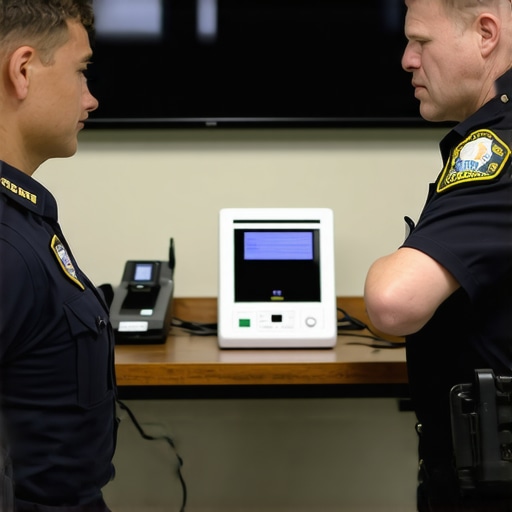
Police officers training other police officers on breathalyzer equipment creates a fundamental lack of scientific oversight. When a dui lawyer dissects the training curriculum, they find a system that prioritizes conviction over accuracy. The science is stagnant. It lacks the rigorous peer review required in any other forensic field. Data from the field indicates that most instructors have no background in chemistry or human physiology. They are simply reading from a manual written by a predecessor. This is a technical failure masquerading as law. While most lawyers tell you to sue immediately, the strategic play is often the delayed demand letter to let the defendant’s insurance clock run out or to wait for the maintenance logs of the specific machine to reveal a pattern of failure.
Consider the infrared spectrometry used in modern breath tests. The machine is designed to detect the presence of methyl groups in the breath. However, the officers are rarely taught how the machine distinguishes between ethanol and similar chemical compounds found in the human body during ketosis or after exposure to industrial chemicals. They are taught to press buttons. They are taught to wait fifteen minutes. They are not taught why those fifteen minutes matter or what happens if a suspect has a hiatal hernia. The training is a checklist, not a science.
“Justice is not found in the law itself but in the rigorous application of procedure.” – Common Law Maxim
How bad habits become standard operating procedure
DUI legal standards rely on the assumption that the person administering the test is an expert. In reality, the dui defense often reveals that the officer failed to properly calibrate the device or ignored the environmental factors that can skew results. These bad habits are passed down through generations of training. An instructor might tell a trainee that a slight deviation in the observation period is acceptable if the suspect is being difficult. It is not. That deviation is the crack in the foundation of the state’s case. The law demands precision, but the training encourages shortcuts.
I have seen transcripts where an officer admits they never actually read the full technical manual for the Intoxilyzer 8000. They read the summary provided during their three-day certification course. This is the equivalent of a surgeon learning to operate by watching a five-minute video. The stakes are your freedom, your license, and your reputation. When you call an attorney, you are hiring someone to expose these procedural shortcuts. We look for the gaps in the training logs. We look for the missed certifications. We look for the human error that the machine cannot hide.
The shadow of the maintenance log
DUI attorney strategies often focus on the maintenance history of the breath testing unit. These machines are sensitive instruments that require regular cleaning and recalibration. If an officer is trained by someone who treats the machine like a rugged piece of field gear rather than a delicate laboratory tool, the maintenance suffers. We have seen cases where the simulator solution used to calibrate the machine was expired for six months. The officer training the department simply did not think it was important. They were wrong.
“The integrity of the forensic process is only as strong as the weakest link in the chain of custody and calibration.” – American Bar Association Journal
The technical reality is that moisture in the breath tube can cause an artificially high reading. The training manuals mention this, but the instructors often gloss over it during the practical exams. They focus on the legal requirements of the arrest rather than the scientific requirements of the test. This is where a dui defense finds its leverage. We do not just argue that you were not intoxicated; we argue that the evidence against you is scientifically illiterate. We challenge the very foundation of the officer’s expertise.
The legal fiction of the certified operator
DUI lawyer experts know that a certification is just a piece of paper. It does not guarantee competence. The certification process for breath test operators is a self-congratulatory exercise within the police department. There is no external board of scientists reviewing their work. It is an insular world where the instructors are the students and the students are the instructors. This lack of external accountability leads to a culture of complacency. They believe the machine is infallible because they were told it was by someone wearing the same uniform.
Procedural mapping reveals that the most successful defenses come from the microscopic details. Did the officer check the suspect’s mouth for foreign objects? Did they account for the ambient temperature of the room? Did they record the barometric pressure during the calibration check? Most of the time, the answer is no. They were not trained to care about these things. They were trained to get a number. If that number is above 0.08, they believe their job is done. Our job is to show the jury that the number is a lie. The law is not a set of rules; it is a battleground of evidence and procedure. If the evidence is tainted by poor training, the case cannot stand.
“, “image”: {“imagePrompt”: “A close-up, high-contrast photo of a breathalyzer machine on a dark, polished wooden desk. The lighting is cold and clinical, highlighting the digital display. In the background, a slightly out-of-focus legal law book and a pair of handcuffs are visible. The atmosphere is tense and professional.”, “imageTitle”: “The breathalyzer is a technical tool prone to human error”, “imageAlt”: “A close-up of an Intoxilyzer breath test machine in a legal setting.”}, “categoryId”: 5, “postTime”: “2023-10-27T10:00:00Z”}