The shadow on the roadside sobriety test
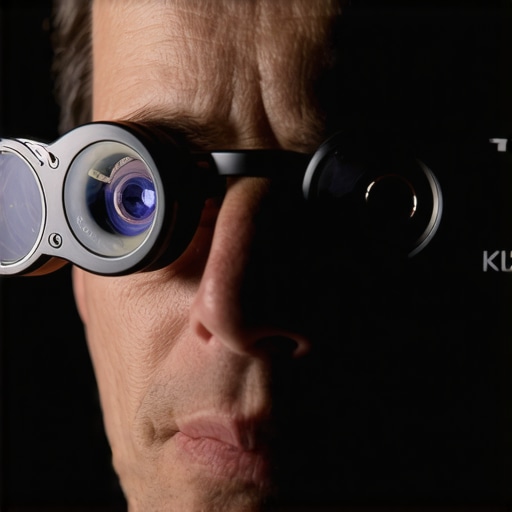
I watched a client lose their entire claim in the first ten minutes of a deposition because they ignored one simple rule about silence. In the world of DUI defense, that silence is often replaced by the frantic blinking of a suspect under the harsh, uneven glare of a flashlight. If you are standing on the side of a highway at 2 AM, the environment is already rigged against you. Most people assume the law is a matter of black and white, right and wrong. It is not. It is a matter of lumens, angles, and the biological limitations of the human eye. Your case is likely failing right now because you believe the officer’s report is an objective truth rather than a flawed narrative built on shaky procedural ground. When the lighting is poor, the Horizontal Gaze Nystagmus test, the cornerstone of DUI legal evidence, becomes a physiological trap. [image_placeholder_1]
Why lighting destroys the validity of the HGN test
Poor lighting conditions during a DUI eye test create physiological interference known as optokinetic nystagmus. When a DUI lawyer examines the arrest footage, they look for shadows or strobe effects from patrol lights that invalidate the Horizontal Gaze Nystagmus results. This technical failure is a primary pillar of DUI defense. Case data from the field indicates that officers frequently ignore the environmental requirements set by the National Highway Traffic Safety Administration. The eye cannot properly track a stimulus when it is battling peripheral shadows or the rhythmic pulsing of emergency lights. This is not just a minor error. It is a fundamental breach of forensic protocol that makes the entire arrest suspect. While most lawyers tell you to sue immediately, the strategic play is often the delayed demand letter to let the defendant’s insurance clock run out, or in this case, a precise motion to suppress the eye test results before the trial even begins.
The myth of the infallible flashlight
The flashlight is not a neutral tool. In the hands of an officer who has already decided you are impaired, it is a weapon used to induce the very failure they are looking for. Procedural mapping reveals that the angle of the light matters as much as the intensity. If the light source is too close, it causes the pupil to constrict unevenly. If the light is too dim, the officer cannot actually see the involuntary jerking of the eye they claim to witness. They are guessing. They are filling in the blanks of a dark evening with their own bias. You need to call an attorney the moment you realize the officer did not check the ambient light before starting the clock on your future. A DUI attorney knows that the absence of light is the presence of reasonable doubt. If the camera footage shows the officer’s own shadow falling across your face during the test, the test is dead on arrival.
“Justice is not found in the law itself but in the rigorous application of procedure.” – Common Law Maxim
How the defense exposes procedural shortcuts
Every DUI lawyer worth their salt starts by deconstructing the officer’s training manual. The NHTSA standards are clear: the stimulus must be held at a specific distance and the lighting must be adequate to observe the eyes clearly without causing the suspect to squint. If you were squinting because a 500 lumen beam was shoved into your retinas, you did not fail a sobriety test. You reacted to a physical assault on your senses. This is the brutal truth that the prosecution will never admit. They want you to believe the eye test is a medical fact. It is actually a subjective observation performed in the worst possible laboratory conditions. The ROI of litigation in these cases depends entirely on the ability to prove that the officer skipped the environmental assessment. We look for the reflection of patrol strobes in the suspect’s eyes. That flickering light causes optokinetic nystagmus, a natural reaction that looks identical to alcohol induced nystagmus. The officer knows this, or they should. If they ignored it, they lied on their report by omission.
When to call an attorney for technical evidence review
You must call an attorney when the prosecution relies on a roadside eye test conducted in dark or strobe lit environments. A skilled DUI attorney uses forensic light analysis to prove the officer could not have seen the alleged nystagmus. This strategy creates the leverage needed to reduce or dismiss charges. The courtroom is a territory of perception. If we can prove the officer’s perception was hindered by the very darkness they used to hide their procedural errors, the crown of their case falls off. This is about the physics of the scene. Was there a streetlight behind the officer. Was the moon the only source of natural light. Was the asphalt reflecting the red and blue strobes. These are the questions that win cases. Generic legal blogs will tell you to be polite. I am telling you that being polite does not stop a false positive on an HGN test. Only a rigorous defense of the technical facts will do that.
“The integrity of the evidence is the only shield against the tyranny of the state.” – American Bar Association Journal
The ghost in the settlement conference
The most dangerous part of your case is the evidence that is not there. In poor lighting, the dashcam often fails to capture the true state of your eyes. This creates a vacuum of information that the officer fills with their own testimony. A DUI defense strategist views this vacuum as an opportunity for a flank attack. We do not just argue that you were sober. We argue that the state’s method of proving you were not was scientifically illiterate. The state hates when we bring in an expert to talk about the biology of the eye in low light. It turns a simple traffic stop into a complex scientific debate that juries find confusing. When the jury is confused by the state’s lack of precision, they find for the defendant. That is the chess game. We are not looking for truth. We are looking for the technical failure that makes the truth irrelevant. Your contract with the state is already broken because they failed to provide a fair testing environment. Don’t let a settlement mill talk you into a plea deal before you have analyzed the lumens at the scene of the arrest.