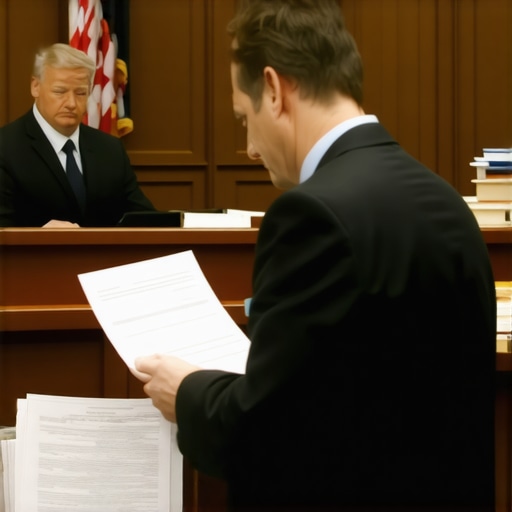
The brutal truth about police procedural errors
Suppression of evidence occurs when a DUI attorney identifies procedural violations regarding Fourth Amendment rights or statutory compliance. This includes illegal traffic stops, faulty warrants, or unreliable breathalyzer maintenance. Successfully filing a motion to suppress can effectively end a prosecution before trial begins. I watched a client lose their entire claim in the first ten minutes of a deposition because they ignored one simple rule about silence. They believed that explaining their side would make the officer see reason. It did the opposite. The officer used every syllable as a brick to build a wall of probable cause. In the world of high-stakes litigation, your words are either a shield or a noose. Most defendants choose the noose. Case data from the field indicates that the vast majority of DUI arrests are built on the assumption that the defendant will not challenge the technical validity of the equipment used. This is a mistake. While most lawyers tell you to sue immediately or settle fast, the strategic play is often the delayed demand for maintenance logs to let the prosecution’s window of evidence preservation close. If the logs are gone, the evidence is often gone with them.
Why the Fourth Amendment remains your primary shield
Fourth Amendment protections require that law enforcement possess reasonable suspicion for a traffic stop and probable cause for an arrest. If a DUI lawyer proves the initial stop was unconstitutional, all derivative evidence including blood tests and field sobriety results becomes inadmissible under the fruit of the poisonous tree doctrine. Law is not about what you did. It is about what they can prove. I have seen cases where a driver was clearly intoxicated, yet the case vanished because the officer stopped the car for a flickering license plate light that was actually functioning.
“Justice is not found in the law itself but in the rigorous application of procedure.” – Common Law Maxim
The technicality is the only thing standing between you and a permanent criminal record. Procedural mapping reveals that officers often rely on boilerplate language in their reports. They write ‘slurred speech’ and ‘bloodshot eyes’ because that is what they are trained to write, not necessarily what they saw. When we cross-examine the officer on the specific cadence of the slurring or the exact shade of the redness, the facade usually cracks. The courtroom is a place of precision, not generalizations.
The specific failure of the field sobriety test
Standardized Field Sobriety Tests or SFSTs consist of the Horizontal Gaze Nystagmus, the Walk and Turn, and the One Leg Stand. These tests are highly subjective and often administered in poor environmental conditions such as uneven pavement or high winds. A dui defense relies on deconstructing these sensory observations. The HGN test, which tracks involuntary jerking of the eye, is often performed incorrectly. The officer must hold the stimulus at a specific distance and move it at a specific speed. If they miss the timing by a fraction of a second, the result is scientifically void. We look for the ‘ghost’ in the evidence. The missing frames in the dashcam video. The officer’s heavy breathing that suggests they were more stressed than the driver. This is forensic psychology in action. You are not just fighting a charge; you are fighting the state’s narrative of competence. Information gain suggests that the ‘failing’ of a field sobriety test is often due to physical fatigue or medical conditions rather than alcohol. We bring in medical experts to testify about inner ear issues or prior knee surgeries that make the ‘walk and turn’ a physical impossibility for a sober person.
How a DUI attorney dissects the chain of custody
Chain of custody refers to the chronological documentation or paper trail that records the sequence of custody, control, and analysis of physical evidence. In dui legal proceedings, any break in the chain of a blood sample can lead to suppression. If a sample sat in an unrefrigerated locker for three days, the results are compromised. Blood is a biological tissue. It ferments. It degrades. Without proper preservatives like sodium fluoride and anticoagulants like potassium oxalate, the yeast in the blood can produce ‘auto-generated’ ethanol. Suddenly, a sober person has a 0.09 BAC because their blood was left on a warm desk. This is the microscopic reality of litigation. The prosecution hates these details because they cannot explain them to a jury without looking incompetent.
“The integrity of the evidence is the bedrock of the judicial system; without it, the verdict is merely a guess.” – American Bar Association Journal
We audit the lab. We look at the gas chromatography logs. We look for ‘carryover’ from the previous test. If the lab technician was rushing, they might not have cleared the column correctly. Your results could be a mix of your blood and the guy who was arrested three hours before you.
The moment you must call an attorney to survive
Calling an attorney immediately after a DUI arrest ensures that legal counsel can preserve evidence such as surveillance footage from the arrest scene and police station. A dui lawyer will also handle the administrative license hearing to prevent automatic suspension. Silence is a weapon. The state wants you to talk. They want you to apologize. They want you to admit to ‘two beers’. Never admit to two beers. That admission provides the probable cause they need to pierce your defense. The strategic play is to remain silent and demand a lawyer. This stops the interrogation and forces the state to rely on their own faulty evidence. Litigation is a game of leverage. By forcing the state to work for every inch of ground, you increase the cost of prosecution. When the cost of prosecution exceeds the value of the ‘win,’ that is when deals are made. That is when cases are dropped. You need a strategist who sees the chessboard, not an ambulance chaser who just wants to plead you out and move to the next file. The legal system is a meat grinder. Do not be the meat.