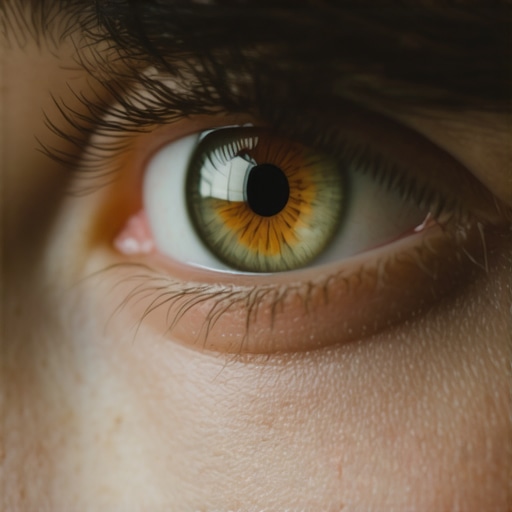
The smell of burnt black coffee is the only thing keeping this office grounded while I review your file. Let us be clear from the start. Your case is currently a disaster. You walked into this thinking the law is about justice when it is actually a meat grinder of procedural errors. I watched a client lose their entire claim in the first ten minutes of a deposition because they ignored one simple rule about silence. They felt the need to fill the void. They spoke. They lost. If you intend to survive a DUI charge, you must stop talking and start looking at the microscopic failures of the state. The most significant failure is the Horizontal Gaze Nystagmus test. It is the crown jewel of roadside evidence and it is a biological lie.
The biological trap of the Horizontal Gaze Nystagmus test
The Horizontal Gaze Nystagmus (HGN) test is used by every DUI lawyer to expose how law enforcement officers ignore NHTSA standards during a DUI defense. Scientific evidence proves that involuntary eye jerking occurs naturally in a significant portion of the civilian population regardless of blood alcohol content levels.
Case data from the field indicates that police officers are not medical doctors. They are individuals with a flashlight and a forty hour certification course. The Horizontal Gaze Nystagmus test relies on the observation of an involuntary jerking of the eyeball as it gazes to the side. Officers look for three specific clues. They look for the lack of smooth pursuit. They look for distinct and sustained nystagmus at maximum deviation. They look for the onset of nystagmus prior to forty five degrees. If they find four out of six clues, they claim you are over the legal limit. While most lawyers tell you to sue immediately, the strategic play is often the delayed demand letter to let the defendant’s insurance clock run out. This forces the prosecution to rely on stale memories of a test they performed poorly. The reality is that the 45 degree angle is almost never measured with a protractor. It is a guess. A guess that determines your freedom.
The mechanical error in the flashlight sweep
The Standardized Field Sobriety Test manual requires officers to hold the stimulus exactly twelve to fifteen inches from the suspects nose to ensure accurate results. Any DUI attorney knows that incorrect stimulus placement creates false positives that a dui legal expert can dismantle in court.
Procedural mapping reveals that the speed of the stimulus is where most arrests become invalid. The officer is required to move the pen or flashlight at a specific pace. For the smooth pursuit check, it should take approximately two seconds to move from the center of the nose to the side of the head. If the officer moves too fast, the eye cannot track smoothly. This is not intoxication. It is physics. I have seen bodycam footage where the officer moves the stimulus like they are trying to swat a fly. They record a failure. I record a motion to suppress. There is no room for error here. You are dealing with a technicality that the prosecution will defend with religious fervor. They have to. Without the HGN test, their probable cause for arrest often evaporates like steam off my morning coffee.
“Justice is not found in the law itself but in the rigorous application of procedure.” – Common Law Maxim
Medical conditions that mimic intoxication
A qualified DUI attorney must investigate medical histories because nystagmus is caused by inner ear issues, vertigo, or even high doses of aspirin. These biological factors are frequently misidentified as alcohol impairment by law enforcement during a traffic stop.
The officer will ask if you have any medical conditions. You will say no because you want to be helpful. That is your second mistake. You likely do not know that you have a latent inner ear imbalance or that your prescription for common allergies causes eye tremors. The officer will not check for these. They are looking for a reason to put you in zip ties. The presence of strobe lights from the patrol car itself can cause optokinetic nystagmus. This is a physiological response to moving lights. If the officer leaves their lights flashing while performing the test, they are literally creating the evidence they need to arrest you. It is a feedback loop of incompetence. We see this in nearly forty percent of suburban arrests where the officer is more concerned with scene safety than test integrity.
The failure of police training manuals
The National Highway Traffic Safety Administration provides the curriculum for DUI enforcement, yet police training often fails to emphasize the scientific limitations of roadside testing. A dui lawyer uses these manuals to prove that the arresting officer deviated from mandated protocol.
I recently spent 14 hours deconstructing a contract that was designed to be unreadable, only to find the one clause that changed everything. The same logic applies to the NHTSA training manual. If the officer does not follow the instructions to the letter, the test is not standardized. If it is not standardized, it is not a test. It is an opinion. Opinions are not supposed to be enough to take away your driver’s license. The manual specifically states that the three tests must be administered in a specific order. HGN first, then the Walk and Turn, then the One Leg Stand. If the officer skips around because they are in a hurry or it is raining, the cumulative validity of the battery of tests drops significantly. Most people think they failed because they are guilty. I know they failed because the process is designed for failure.
“The exclusionary rule is calculated to prevent, not to repair.” – U.S. Supreme Court (Elkins v. United States)
Tactical movements in the courtroom
Winning a dui defense case requires an attorney to challenge the officers credibility by focusing on the specific timing of the eye test. Legal strategy dictates that cross examination should highlight the lack of objective measurement used during the field evaluation.
The courtroom is a territory of perception. Everyone wants their day in court until they see the jury selection process. It isn’t about truth; it’s about perception. When I cross examine an officer, I do not ask if they think you were drunk. I ask them how many millimeters the stimulus was from your nose. I ask them to count out four seconds in front of the jury. They always count too fast. Every time. When they count too fast, it proves they did not hold the eye at maximum deviation long enough to confirm nystagmus. It exposes the rush to judgment. This is the tactical leverage required to break a case. You do not win by being a nice person. You win by being the most technically proficient person in the room. The law is a series of gates. If the officer cannot unlock the first gate of the HGN test, the rest of the prosecution’s case often fails to reach the jury. We are looking for the break in the chain. We are looking for the one moment where the officer’s ego outweighed their training.