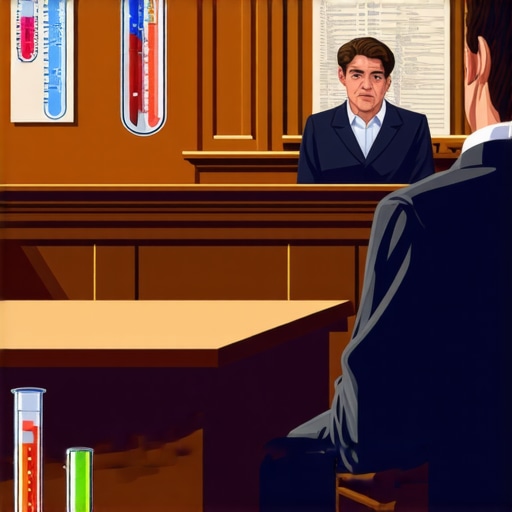
The Brutal Reality of Public Defense in Complex Forensic Cases
I smell like strong black coffee and the stale air of a courtroom that has seen too many lives ruined by technicalities. I am here to tell you that your case is failing before you even walk through the door of the courthouse. I watched a defendant lose their entire DUI defense in the first ten minutes of an evidentiary hearing because their assigned counsel had not even looked at the maintenance logs of the breathalyzer. The client spoke when they should have stayed silent, and the lawyer, drowning in a stack of two hundred other files, did not have the presence of mind to object. That is the reality of the system. It is not a justice machine; it is a processing plant. If you are facing a charge that relies on gas chromatography or retrograde extrapolation, you are not just fighting a police report. You are fighting a scientific narrative that requires a specialized architect to dismantle. A generalist cannot help you here. A public defender, no matter how well-meaning, lacks the time to find the one broken seal or the one software glitch that changes everything.
The technical incompetence of overburdened legal counsel
Public defenders often lack the technical training to challenge gas chromatography results or blood draw protocols. This results in a DUI defense that fails to address analytical errors, thermal degradation of samples, or chain of custody gaps that a specialized dui lawyer would exploit to win a dismissal or reduction. The systemic failure of the public defense system is not a secret. It is a mathematical certainty. When a lawyer is tasked with representing forty people in a single morning session, the microscopic details of a forensic lab report are the first things to be ignored. They look at the blood alcohol concentration number, they see it is above the legal limit, and they start looking for a plea deal. They do not look at the chromatogram. They do not look at the baseline noise levels of the Flame Ionization Detector. They do not look at the calibration curves to see if the machine was drifting during the run. This is where cases are won, but it requires hours of focused analysis that a court-appointed attorney simply does not have. The law is not about what the police say happened; it is about what the state can prove through a rigorous application of procedure. As the saying goes:
“Justice is not found in the law itself but in the rigorous application of procedure.” – Common Law Maxim
Why gas chromatography determines the fate of a DUI case
Gas chromatography is the gold standard for DUI legal testing, yet it is prone to baseline noise, co-elution, and calibration drift. A specialized dui attorney identifies these scientific discrepancies by auditing the raw data packets and chromatograms which are frequently overlooked by court-appointed counsel due to time constraints. The process of testing blood for alcohol is not as simple as putting a vial into a machine and getting a number. It involves the vaporization of the sample and the separation of chemicals as they move through a thirty-meter column. If the temperature of that column varies by even a fraction of a degree, the results are compromised. If the technician does not properly use the gray-top tube, which contains sodium fluoride as a preservative and potassium oxalate as an anticoagulant, the blood can ferment. When blood ferments, it produces its own alcohol. This is called endogenous ethanol production. A public defender sees a 0.09 and tells you to take the deal. A forensic dui lawyer sees a 0.09 and asks if the Candida Albicans in your system created a false positive. They demand the laboratory’s internal standard operating procedures and the validation studies for the specific software version used to calculate the results.
[image_placeholder]
The forensic vulnerability of the gray top blood tube
Blood collection vials used in a DUI legal investigation must be handled with strict adherence to Title 17 or equivalent state administrative codes. Failure to perform the eight to ten manual inversions required to mix the preservatives can lead to clotting, which artificially inflates the blood alcohol concentration during the headspace analysis. Most people assume that a medical professional knows how to draw blood. In a forensic context, this is a dangerous assumption. Forensic blood draws are not medical; they are evidentiary. The nurse or technician often uses an alcohol swab to clean the site, which introduces an external contaminant into the sample. They might use a vacuum tube that has expired, meaning the seal is no longer airtight. They might leave the sample in a hot police car for four hours before placing it in a refrigerator. Each of these steps is a point of failure. A private dui attorney will depose the blood draw technician and the transport officer to create a timeline of the sample’s journey. If there is a gap in that timeline, the evidence is tainted. While most lawyers tell you to sue immediately or settle fast, the strategic play is often the delayed demand for the full laboratory litigation packet, which puts the state on the defensive as they struggle to produce missing logs.
The hidden timeline of a successful DUI defense
The DUI legal process starts within ten days of an arrest via the administrative license hearing. Missing this procedural deadline results in an automatic driver’s license suspension. A private dui attorney manages this regulatory timeline while simultaneously filing motions to suppress based on Fourth Amendment violations and lack of probable cause. While the criminal case moves slowly, the administrative case moves at lightning speed. If you rely on a public defender, they often do not even represent you in the administrative hearing. They only handle the criminal side. This means your license is gone before you even see a judge. You need to call an attorney who understands the dual-track nature of these cases. Procedural mapping reveals that the average public defender carries a caseload exceeding one hundred active files, leaving approximately twelve minutes of research time for a complex suppression motion. That is not enough time to find the body camera footage that shows the officer didn’t actually follow the National Highway Traffic Safety Administration guidelines for the horizontal gaze nystagmus test. As the Supreme Court has noted:
“Effective assistance of counsel is not a mere formality but a constitutional necessity for a fair trial.” – Strickland v. Washington, 466 U.S. 668 (1984)
Why calling an attorney immediately changes the evidence landscape
You must call an attorney immediately following a DUI arrest to preserve digital evidence, such as body camera footage and squad car recordings. Overworked public defenders rarely secure this exculpatory evidence before the police department overwrites the data during their standard thirty-day retention cycles. The first forty-eight hours are the most significant. This is when the memory of the witnesses is fresh and the digital footprints of the arrest are still available. A private dui lawyer will send an immediate preservation letter to the precinct. They will hire a private investigator to go to the scene of the arrest to check for private security cameras or doorbell cameras that might contradict the officer’s narrative. They will check the weather reports and the road conditions. They will look for the “ghost in the machine”—the data that the police forgot to include in the report. If you wait until your first court date to get a lawyer, that evidence is likely gone forever. The state has no incentive to keep evidence that hurts their case. They will let the tapes be erased and the samples be destroyed unless someone with authority stops them. This is why the choice of counsel is the most important decision you will make in the entire process. The system is designed to facilitate a guilty plea. Only a dedicated strategist can force it to produce a different result.
The hard reality of the courtroom
The law is a weapon of procedure. If you do not have someone who knows how to wield it, you are the target. Relying on a public defender for a case involving complex forensics is like asking a general practitioner to perform heart surgery. They might know the basics, but they do not have the tools or the time to save you when things go wrong. You need a dui attorney who understands the math, the science, and the cold, clinical reality of the courtroom. Do not let your life be reduced to a number on a lab report that nobody bothered to check. The cost of a private dui defense is high, but the cost of a conviction—the loss of your career, your freedom, and your reputation—is infinite. Stop the bleed. Secure your counsel. Fight the science with better science.