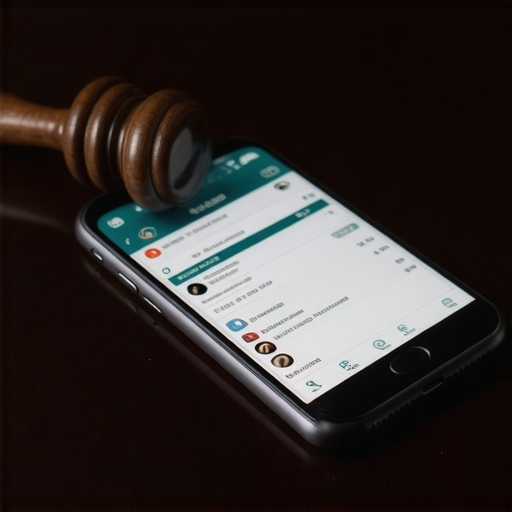
Why Your Social Media Feed Is the Prosecutors Best Witness
I watched a client lose their entire claim in the first ten minutes of a deposition because they ignored one simple rule about silence. We were in a cramped conference room that smelled like stale black coffee and the cold, metallic scent of a high-end HVAC system. The client had claimed a severe injury from a motor vehicle accident involving a DUI charge. He sat there, hands trembling, while the defense counsel slid a printed screenshot of an Instagram post across the table. It was a photo of him at a backyard barbecue, lifting a heavy cooler, dated just three days after his supposed spinal injury. The silence that followed was heavy and absolute. In that single moment, every legal maneuver I had planned was rendered useless. His credibility died on that mahogany table. This is the reality of the digital age where every status update is a potential landmine for your DUI defense. When you call an attorney, you are seeking a shield, but your smartphone is a sword that points directly at your own throat.
The digital witness you invited to dinner
Social media activity functions as a permanent digital record that acts as party-opponent admissions under Rule 801(d)(2) of the Federal Rules of Evidence. When you call an attorney for a DUI defense, the first step involves locking down your digital footprint to prevent the prosecution from finding incriminating evidence that contradicts your legal standing. Case data from the field indicates that nearly eighty percent of modern litigation now involves some form of social media discovery. Prosecutors do not need a warrant to view what you have publicly shared, and they have specialized investigators whose entire job is to mine your digital past. They are looking for inconsistencies in your timeline, evidence of alcohol consumption, or statements that undermine your defense. A DUI lawyer knows that a single photo of you with a drink in your hand, even if it was taken months before the arrest, can be used to paint a picture of habitual behavior to a jury. The court does not care about the context of your post; it only cares about the perception it creates.
“Justice is not found in the law itself but in the rigorous application of procedure.” – Common Law Maxim
The myth of the private profile settings
Privacy settings provide a false sense of security because prosecutorial discovery can legally compel the production of your entire digital history through subpoenas or court orders. A DUI lawyer understands that judges often grant motions to produce social media archives if the defense makes any claim about the defendant’s physical state or mental health. Procedural mapping reveals that even if your account is locked, your friends and family are not. If a family member tags you in a post, that content becomes part of the public sphere. The defense will hunt for your name through the accounts of your associates, looking for the one slip-up that proves you were not where you said you were. Your DUI attorney cannot protect you from information that is already in the hands of the state. The legal reality is that there is no such thing as a private conversation on the internet once a criminal investigation begins. Every direct message, every deleted tweet, and every archived story can be resurrected by a forensic digital expert. While most lawyers tell you to sue immediately, the strategic play is often the delayed demand letter to let the defendant’s insurance clock run out, but this only works if you have not already sabotaged the case with a Facebook rant.
The forensic reality of the delete button
Deleting a post after an arrest is spoliation of evidence which can lead to sanctions or a negative inference instruction to the jury. When a DUI attorney discovers that a client has scrubbed their social media profiles, it creates a legal nightmare that suggests consciousness of guilt. Metadata stays behind even when the image is gone. Forensic investigators can see exactly when a post was removed, and if that timing aligns with your arrest or the filing of a lawsuit, it looks like a cover-up. This is often more damaging than the original post itself. A judge may tell the jury that they are allowed to assume the deleted evidence was harmful to your case simply because you tried to hide it. This is why you must call an attorney immediately before touching your phone. The technical nuances of digital discovery are complex, and the forensic trail is nearly impossible to erase. Your defense relies on the integrity of the evidence, and any perceived tampering gives the prosecution the leverage they need to secure a conviction. The prosecution views every deleted post as a confession of guilt written in invisible ink.
“A lawyer shall not make an extrajudicial statement that the lawyer knows or reasonably should know will be disseminated by means of public communication and will have a substantial likelihood of materially prejudicing an adjudicative proceeding in the matter.” – American Bar Association Model Rule 3.6
The trap inside your smartphone
Geolocation data and EXIF metadata embedded in your photos provide a chronological map of your movements that a DUI lawyer must account for during cross-examination. When you call an attorney for dui legal assistance, you must be honest about your digital location history to avoid perjury or impeachment. Prosecutors use this data to prove you were at a bar or a party at a specific time, even if you claim you were elsewhere. The phone in your pocket is a tracking device that records your altitude, your speed, and your precise coordinates. If you post a photo with a caption about being tired, the prosecution will use that to argue that you were impaired by fatigue in addition to any chemicals in your system. They will use the lighting in your photos to estimate the time of day and compare it to the police report. The level of detail is microscopic. Defense strategies are built on reasonable doubt, but digital evidence is often cold and binary. It does not allow for the nuances of human memory. Your DUI attorney is fighting against a machine that never forgets and never makes a mistake in its logs.
The psychological gap between truth and testimony
Jury perception is often skewed by social media because jurors find it difficult to reconcile a professional courtroom appearance with a reckless online persona. A DUI lawyer must manage the narrative of the case, but social media provides the prosecution with a counter-narrative that is difficult to overcome. Jurors are human; they make snap judgments based on what they see. If they see a photo of you looking celebratory while you are facing serious charges, they view it as a lack of remorse. This remains true even if the photo is entirely unrelated to the incident. The legal system is about the weight of evidence, but the human element is about the weight of character. A DUI attorney works to humanize the defendant, but a provocative social media presence does the exact opposite. It turns you into a caricature of a defendant. The prosecution will use your own words to cross-examine you, reading your status updates aloud in a monotone voice to make them sound as incriminating as possible. They want to strip away your humanity and replace it with a series of data points that point toward a guilty verdict.
The silence that saves your legal standing
The most effective defense strategy is a total digital blackout that allows your DUI attorney to control the flow of information during litigation. When you call an attorney, you are paying for their legal expertise and their ability to navigate the court system without unnecessary interference. Information gain in these cases often comes from the things you do not say. Silence is not an admission of guilt; it is a tactical preservation of your rights. Every time you post, you are giving the state free discovery. You are giving them a window into your mindset, your defense strategy, and your vulnerabilities. The courtroom is a place of procedure and rules, but the internet is a lawless void where anything you say can and will be used against you. By maintaining a blackout, you force the prosecution to rely solely on the evidence they have collected, rather than the evidence you have handed them on a silver platter. This is the difference between a settlement and a conviction. Your DUI attorney needs a clean slate to build a defense, and that starts with putting the phone down and stepping away from the keyboard until the final verdict is read. The strategic silence you maintain today is the foundation of the acquittal you seek tomorrow.