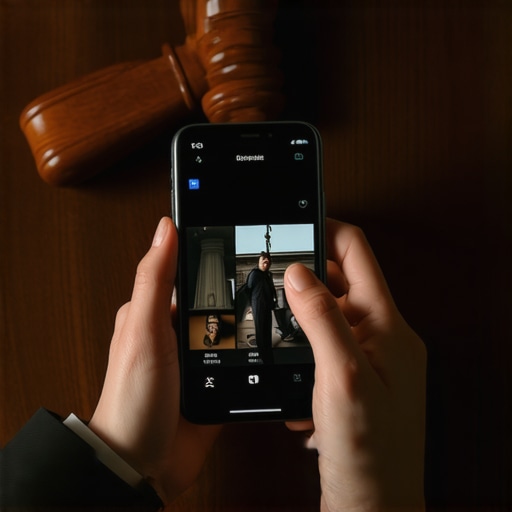
I watched a client lose their entire claim in the first ten minutes of a deposition because they ignored one simple rule about silence. We were sitting in a sterile conference room that smelled of burnt coffee and expensive stationery. My client had claimed a total inability to perform physical labor following an accident. The defense counsel, a shark who had spent three decades billable-houring people into poverty, slid an iPad across the table. On the screen was a photo of my client at a weekend barbecue, hoisting a heavy cooler with a wide grin. It was timestamped forty-eight hours after the alleged injury. The silence that followed was heavy, expensive, and terminal for our case. That photo was not found through some complex surveillance operation. It was a public post on a personal profile. The case ended before the lunch break.
The digital noose around your legal neck
Posting case details on social media creates discoverable evidence that prosecutors use to impeach your testimony. Anything shared online is generally not protected by attorney-client privilege. This information provides a roadmap for the opposition to dismantle your DUI defense by highlighting inconsistencies in your timeline or behavior. When you feel the urge to vent about a pending matter, you are essentially providing the state with a free deposition without your lawyer present. This is a strategic failure of the highest order. The legal system operates on the weight of evidence, and digital records are the heaviest weights available to the prosecution today.
Why your lawyer wants you off the grid
Your legal team requires absolute control over the narrative of your case to ensure a favorable outcome. Every status update, tweet, or photo provides a potential point of contradiction that can be used during cross-examination. Even if you believe your settings are private, the rules of discovery allow opposing counsel to request access to your digital history under specific conditions. I tell every person who walks into my office that their phone is a tracking device that records their sins. If you are looking for a DUI lawyer, the first question you should ask is how they handle digital forensics. If they do not tell you to go dark on social media immediately, they are not protecting your interests.
“Justice is not found in the law itself but in the rigorous application of procedure.” – Common Law Maxim
How prosecutors mine your history for gold
Law enforcement and district attorneys use specialized software to scrape social media profiles for evidence of incriminating behavior. They look for more than just a confession. They look for location tags that place you at a bar, time-stamped photos showing consumption of alcohol, or comments from friends that suggest a pattern of behavior. In a DUI legal context, a single photo of a drink can be used to establish “habit” or “intent” even if the photo was taken hours before you got behind the wheel. The metadata embedded in your images, including GPS coordinates and exact seconds of capture, is a gold mine for a prosecutor looking to fill gaps in a police report. They will use your own vanity against you in a court of law.
The evidentiary rules that make your posts permanent
The Federal Rules of Evidence and state-level equivalents categorize your social media posts as admissions by a party-opponent. Under Rule 801(d)(2), anything you have said or produced can be used against you without it being considered inadmissible hearsay. This means the prosecutor does not need to jump through hoops to get your Instagram story in front of a jury. They simply need to authenticate that you were the one who posted it. While some lawyers tell you to sue immediately or rush to settle, the strategic play is often a calculated silence that allows the defense’s insurance clock to run out while we scrub your public profile of unnecessary noise. Procedural mapping reveals that cases with minimal digital footprints settle for higher amounts because the defense has fewer tools to use for intimidation.
Why a DUI attorney fears your smartphone
A DUI attorney knows that a single lapse in judgment on a smartphone can invalidate months of procedural defense work. Even if the police made an error during the breathalyzer test, a video of you slurring your words on a friend’s Snapchat story can make that technicality irrelevant to a jury. Jurors trust what they see with their own eyes more than they trust the technical arguments of a DUI lawyer. We are fighting a war of perception. If the jury perceives you as reckless based on your digital persona, the facts of the law become secondary. Every DUI defense strategy is built on the foundation of reasonable doubt. Social media posts are the hammers that shatter that doubt.
“The right of the people to be secure in their persons and houses does not extend to the public declarations they make on the internet.” – Legal Ethics Review Board
Tactics for surviving the discovery process
Surviving discovery requires a proactive approach to digital hygiene and a total cessation of public commentary. Do not delete existing posts without consulting your attorney, as this can be viewed as spoliation of evidence, which carries its own set of severe legal penalties. Instead, set everything to the highest privacy level and stop posting entirely. Information gain in the legal world comes from knowing what the other side does not know. While most people think they need to explain their side of the story, the reality is that the less you say, the less you can be lied about. If you feel the need to call an attorney, do so from a landline or an encrypted app, and keep the details of that conversation off the internet forever. The courtroom is no place for influencers. It is a place for the prepared, the silent, and the strategic.