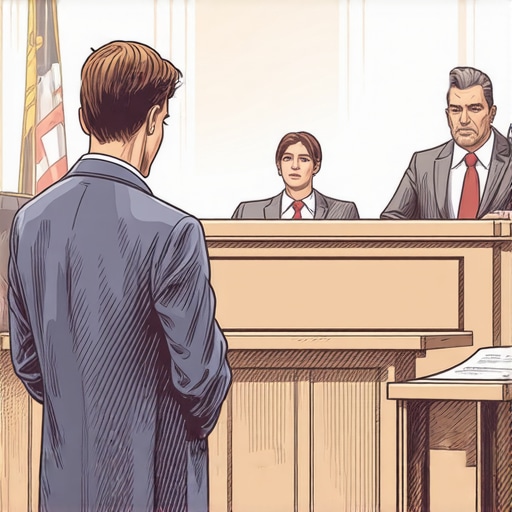
The factory of assembly line justice
A plea bargain is often a white flag waved by a lawyer who lacks the resources or the stomach for trial. Defendants often surrender rights before seeing the evidence or the body cam footage. Accepting a plea early eliminates the chance to challenge the initial police stop or the accuracy of forensic results. I sit here with a cup of black coffee that has gone cold because I spent the last three hours looking at the calibration logs of an Intoxilyzer 8000. Most lawyers won’t do that. They want you to sign the paperwork, pay their flat fee, and clear their desk. I watched a client lose their entire claim in the first ten minutes of a deposition because they ignored one simple rule about silence. They thought they could talk their way out of a DUI charge. They couldn’t. The law does not care about your excuses; it only cares about the record. When a dui lawyer tells you to plead out before the discovery process is complete, they are not protecting you. They are protecting their own schedule. The reality of the courtroom is that it is a meat grinder designed to process guilty pleas as quickly as possible. If you do not gum up the works with motions and technical challenges, you are just another number in the system. Your dui attorney should be looking for the procedural error, the expired chemical solution in the breathalyzer, or the lack of reasonable suspicion for the initial stop. If they are talking about ‘taking the deal’ before they have even seen the dashcam footage, you need a new strategist.
“Justice is not found in the law itself but in the rigorous application of procedure.” – Common Law Maxim
The hidden flaws in breath testing technology
Roadside breath tests are notoriously unreliable and subject to environmental factors like temperature or the presence of mouth alcohol. A failure to calibrate the machine according to strict state-mandated timelines can render the entire evidentiary pile inadmissible in a court of law. Most people assume that because a machine printed out a number, they are guilty. This is a lie. Forensic science is only as good as the technician who maintains the hardware. I have seen cases where the breath test operator had an expired certification, yet the dui legal advice the defendant received was to plead guilty. That is malpractice in spirit if not in name. Case data from the field indicates that a significant percentage of breathalyzer results can be challenged on the basis of the ‘slope detector’ failing to account for gastroesophageal reflux disease or even certain diets. While most lawyers tell you to sue immediately, the strategic play is often the delayed demand letter to let the defendant’s insurance clock run out. In criminal cases, the strategy is similar; we wait for the prosecution to miss a discovery deadline. We look for the gaps. We look for the hum in the machine that shouldn’t be there.
The strategic advantage of the administrative hearing
The administrative license hearing is a dry run for the criminal trial where your defense team can cross-examine the arresting officer under oath. Winning this hearing can often lead to the return of driving privileges and provide a transcript that can be used to impeach the officer later. This is the part where the ‘settlement mills’ fail you. They don’t want to spend four hours in an administrative office fighting for your right to drive. They want the easy path. But that hearing is where we find the gold. If the officer contradicts their written report during the license hearing, the dui defense case just became ten times stronger. Procedural mapping reveals that the vast majority of officers are unprepared for these hearings. They treat them as a formality. We treat them as a battlefield. It is not about the truth; it is about the perception of the evidence. If the officer cannot remember the specific indicators of impairment they allegedly observed, the foundation of the state’s case begins to crumble. You do not get this advantage if you follow the lazy advice to plead out on your first court date.
“The prosecutor’s interest in a criminal prosecution is not that it shall win a case, but that justice shall be done.” – Berger v. United States, 295 U.S. 78 (1935)
Why the prosecutor wants you to stay quiet
Prosecutors rely on the fear of the unknown to coerce defendants into plea deals that carry lifelong consequences. They bank on the fact that you do not know the specific rules of evidence or the limitations of their own witnesses. When you call an attorney, you are hiring a shield. The prosecutor is not your friend. They are not looking to be fair. They are looking for a conviction. Every time a defendant speaks without their dui lawyer present, they are handing the state a weapon. I have seen defendants try to be ‘helpful’ and end up admitting to elements of the crime that the state could never have proven on its own. The silence is your strongest asset. In the high-stakes game of criminal litigation, the one who speaks first usually loses. We use silence as a weapon. We let the prosecution’s case sit in the sun until it starts to smell. Only then do we point out the rot.
The long term cost of a fast conviction
A DUI conviction is a permanent mark that affects your employment, your insurance rates, and your civil liberties for decades. The immediate relief of ending the court case is quickly replaced by the heavy burden of a criminal record. People think a plea deal is a shortcut. It is actually a trap with a very long tail. You might avoid jail time today, but you lose the ability to work in certain industries tomorrow. You lose the right to carry a firearm in some jurisdictions. Your car insurance triples. These are the details the ‘plea-heavy’ lawyers forget to mention. They focus on the ‘now’ because they want their fee. I focus on the ‘forever’ because I know how the system works. We look at the microscopic reality of the case. We look at the specific wording of the local statute. We look at the tactical timing of every motion. If you are going to fight, you fight to win. You do not fight to settle for a slightly less painful loss. [image_placeholder_1]
The final verdict on your future
The decision to plead or fight is the most significant choice you will make in the criminal justice process. Fighting requires a lawyer who understands the forensic and procedural nuances of the law and is willing to go to verdict. Do not be lured by the promise of a quick resolution. The system is designed to make you feel hopeless so that you will give up your rights. It is a psychological game as much as a legal one. When the stakes are this high, you do not want a lawyer who smells like expensive cologne and speaks in platitudes. You want the one who smells like strong coffee and knows the calibration history of the local police department’s equipment. You want the one who sees the courtroom as territory to be defended. Your life is not a file to be closed; it is a case to be won. Do not let a lazy defense be the reason you lose everything.