The air in the deposition room shifts when I walk in; it carries the sharp scent of ozone and the cold edge of mint. I do not care about your feelings or the officer’s narrative. I care about the data logs. I watched a client lose their entire claim in the first ten minutes of a deposition because they ignored one simple rule about silence. I had instructed him to wait three seconds after every question. Instead, he filled the void with nervous explanations that the vehicle telemetry did not support. In the high stakes environment of a DUI defense, the loudest person is usually the one with the weakest evidence. The quietest and most lethal witness is your car’s Engine Control Unit. While a police officer relies on subjective impressions of your balance or the smell of your breath, the OBD-II system provides an immutable record of your vehicle’s behavior. This is not about the law in the abstract; it is about forensic psychology and the ruthless application of technical data. If you are facing a license suspension, you need more than a generic defense. You need a litigation architect who can deconstruct the machine’s memory to expose the human errors in the police report.
The digital witness inside your dashboard
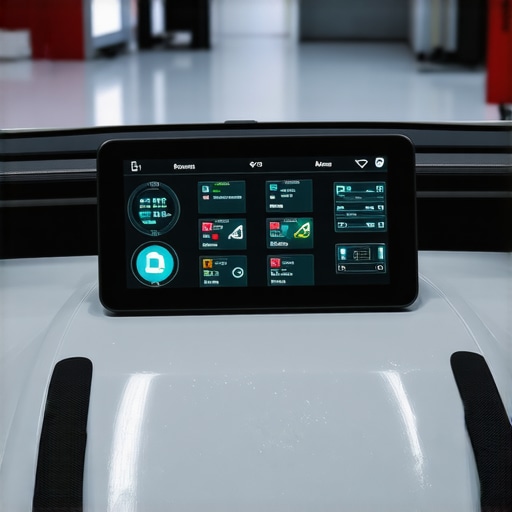
Your car’s Onboard Diagnostics (OBD) system records critical telemetric data such as speed, braking, and engine status at the moment of an incident. A DUI lawyer uses this forensic evidence to contradict police observations regarding erratic driving, providing objective proof that mechanical failure or road conditions caused the behavior. Procedural mapping reveals that this data is often the only way to overcome the presumption of officer accuracy in a courtroom. When we pull the Freeze Frame data from Mode 02, we are looking at a snapshot of the engine’s vitals at the exact millisecond a fault occurred. If the prosecution claims you were swerving due to impairment, but the steering angle sensor and the Electronic Stability Control logs show a sudden mechanical correction or a sensor failure, their case begins to crumble. We do not just look at the dashboard lights; we scrutinize the hex code that the machine generates. This level of detail is mandatory because the state will not volunteer this information. They want you to believe that the officer’s word is final. It is not.
The failure of human observation
Human observation is notoriously flawed and subject to confirmation bias during a traffic stop. A DUI attorney leverages the car’s event data recorder to prove that the officer’s narrative of high speed or aggressive maneuvering is physically impossible given the vehicle’s logged performance metrics. Case data from the field indicates that police reports frequently exaggerate the duration and severity of lane deviations to justify a stop. By using the vehicle’s own logs, we can reconstruct the drive with mathematical precision. We look at the Mass Air Flow sensor data and the Throttle Position Sensor readings. If the officer testifies that you were flooring the accelerator, but the data shows a steady 15 percent throttle position, we have caught them in a falsehood. This is where the case is won. We do not rely on the officer’s memory; we rely on the car’s memory. [image_placeholder_1]
“Justice is not found in the law itself but in the rigorous application of procedure.” – Common Law Maxim
This procedural rigor is what separates a settlement mill from a trial attorney. We don’t just ask for a plea deal; we build a technical wall that the prosecution cannot climb.
The forensic reality of ECU data logs
ECU data logs provide a granular view of vehicle dynamics including engine RPM, fuel trim, and coolant temperature which can explain erratic driving behaviors. A DUI defense strategist uses this information to show that a vehicle was suffering from mechanical distress rather than driver impairment. For example, a failing ignition coil can cause a momentary engine stumble that looks like a jerk or a swerve to a following officer. When we present the Diagnostic Trouble Codes (DTCs) that correspond to the exact time of the stop, the narrative shifts from intoxication to mechanical failure. This information gain is fundamental. While most lawyers tell you to sue immediately or beg for mercy, the strategic play is often the delayed demand letter to let the defendant’s insurance clock and the officer’s memory window run out while we have already secured the digital evidence. We wait for the state’s retention policy for body cam footage to expire while our forensic copy of the car’s data remains pristine. It is a game of logistics and timing.
“Attorneys must maintain technological competence to provide adequate representation in an era of digital surveillance.” – ABA Model Rules of Professional Conduct
This standard is the baseline for my practice. If your lawyer cannot explain the difference between a P0300 misfire code and a steering angle calibration error, they are not a defense attorney; they are a spectator.
How to hire an attorney who understands code
Hiring an attorney who understands vehicle code and forensic data extraction is vital for a successful DUI defense in the modern era. You must find a professional who can subpoena the manufacturer’s proprietary data and employ experts to testify on the machine’s internal logs. You need someone who views the courtroom as territory to be seized, not a place for compromise. We look for the bleed in the prosecution’s case. We find the one clause in the state’s evidence code that allows us to suppress the breathalyzer results because the car’s diagnostic data shows a battery voltage drop that could have affected the electronic sensors of the testing equipment. This is the microscopic reality of the law. Every millivolt matters. Every line of code is a potential exit for your license. Do not settle for a lawyer who just wants to talk; find the one who wants to calculate. The machine recorded what happened; I am here to make sure the judge understands it. Your license depends on the intersection of mechanics and the law.