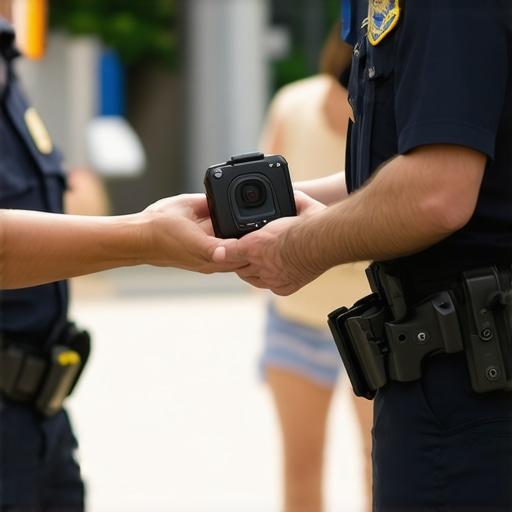
How to Request the Bodycam Footage From Your Arrest
I smell strong black coffee and the distinct scent of a losing case before I even sit down at my desk. You think the video is your savior. You think the truth will set you free. I have watched a client lose their entire claim in the first ten minutes of a deposition because they ignored one simple rule about silence and assumed the camera caught everything. The reality of the legal system is that the truth is a secondary concern to the preservation of evidence. If you do not act within the first forty eight hours of a DUI arrest your most powerful defense tool might be deleted by a routine server sweep. This is not a game of justice. This is a game of logistics and metadata. You are fighting an administrative machine that wants to overwrite your innocence with a binary code of silence.
The digital evidence trap
To request bodycam footage from your arrest you must immediately issue a formal preservation letter to the arresting agency to prevent data purging. Follow this with a specific Public Records Act request that identifies the officer name badge number and the exact millisecond of the encounter to ensure compliance. This process is the foundation of any competent DUI defense strategy. Case data from the field indicates that police departments often use automated retention schedules that range from thirty to ninety days. If your dui lawyer does not file a notice to preserve within the first week you are effectively litigating with one hand tied behind your back. The footage is not just a video. It is a sensory record of the state’s failure to follow protocol. Procedural mapping reveals that most errors occur during the transition from the patrol car to the booking station. This is where the defense finds its leverage. While most lawyers tell you to sue immediately the strategic play is often the delayed demand letter to let the defendant’s insurance clock run out or to catch the prosecution in a discovery violation during the preliminary hearing phase.
“Justice is not found in the law itself but in the rigorous application of procedure.” – Common Law Maxim
Why most requests fail before they start
Failure to secure bodycam footage usually stems from overly broad requests that allow the records clerk to deny the filing based on administrative vagueness. You must cite the specific statute of your jurisdiction whether it is a FOIA request or a state specific transparency law. Be precise. Be clinical. If you simply ask for the video of my arrest the clerk will throw your request into a pile of low priority paperwork. You need the CAD report first. The Computer Aided Dispatch report contains the timestamps that synchronize with the video. Without these timestamps your dui attorney cannot prove that the officer arrived five minutes after the radio call or that the field sobriety tests were conducted on a slope. Details win cases. Vague complaints lose them. The law does not reward the loud. It rewards the prepared. You must treat the records department like a hostile witness. Every word must be calculated. Every deadline must be hit with surgical precision. If you miss the window the evidence is gone. The server overwrites the file. The truth disappears into a zeroed out hard drive.
The timeline of digital decay
Retention policies for police bodycams are governed by local administrative code which often permits the destruction of non evidentiary recordings after a short window. You must trigger a litigation hold to stop this automated deletion process and secure the raw unedited files for your legal team. I have seen more cases ruined by the passage of time than by the facts themselves. The digital world is fragile. A simple server glitch or a standard maintenance cycle can erase the footage of the officer failing to read your rights. This is why you must call an attorney the moment you are released. Do not wait for the first court date. By then the video is a ghost. You need a dui lawyer who understands the back end of the Axon or WatchGuard systems. You need someone who knows how to read an audit trail to see if the video was accessed or edited before it was turned over. This is the microscopic reality of modern litigation. It is not about what you remember. It is about what the machine recorded and whether you were smart enough to save it before the machine forgot.
“The duty to preserve relevant evidence is a cornerstone of the adversarial system.” – ABA Standards for Criminal Justice
Drafting the formal demand
A formal demand for bodycam footage must include the officer names the date of the incident and a specific reference to the evidence preservation requirements of the Fourth Amendment. It should be sent via certified mail with a return receipt requested to create a paper trail. Do not rely on email. Do not rely on a phone call. The law operates on paper and physical proof. Your demand should explicitly state that any destruction of the footage will be treated as spoliation of evidence. This creates a powerful tactical advantage in court. If the footage disappears after you sent the letter your dui legal counsel can request a jury instruction that assumes the evidence was favorable to you. This is how you flip the script. You take their administrative failure and turn it into a weapon. You move from a position of defense to a position of strategic offense. The courtroom is a territory. You must occupy the high ground of procedure before the first motion is ever filed. Every sentence in your demand must be a brick in the wall of your defense.
When the police claim the camera was off
When an officer claims the bodycam was not activated your legal strategy must pivot to investigating the department policy on recording and checking for secondary footage from dashcams or nearby surveillance. This discrepancy often creates enough reasonable doubt to dismantle a DUI charge entirely. Technical failures are rarely accidental in the eyes of a cynical jury. If the policy says the camera must be on during every interaction and it was off you have a procedural breach. Your dui lawyer will exploit this. We look for the gaps. We look for the shadows. If the officer forgot to turn on the camera they likely forgot other steps in the standardized field sobriety tests. Incompetence is rarely isolated. It is a pattern. We map that pattern. We show the jury that the state is unreliable. If they cannot manage a power button they cannot manage the complex science of a breathalyzer. This is the brutal truth of the system. Reliability is everything. Once you break the seal of reliability the entire case begins to leak. You do not need to prove innocence. You only need to prove that the state’s narrative is a series of broken protocols.
Tactical use of footage in a DUI defense
Bodycam footage provides an objective record of your speech patterns physical balance and the officer behavior which can be used to impeach the written police report. This visual evidence often contradicts the subjective descriptions of intoxication found in the official documents. The police report will say you were slurring. The video will show you were articulate. The report will say you were stumbling. The video will show the ground was covered in ice. This is the information gain that wins trials. You use the state’s own tools against them. I have sat in rooms with prosecutors and watched their faces turn pale as the video played. They rely on the report. They rely on the officer’s memory. Both are flawed. The video is the only witness that does not lie and does not get nervous on the stand. But you must get the video first. Without it you are just another person complaining about a bad arrest. With it you are a litigant with power. You are a person with leverage. You are a person who has the receipts.
The cost of waiting too long
The window for securing electronic evidence closes faster than most defendants realize and once the data is gone there is no legal remedy to recover it. Early intervention by a qualified dui attorney is the only way to ensure the integrity of your defense. Speed is a tactic. Delay is a confession. If you are reading this and you have not yet sent a preservation letter you are losing ground. Every hour the server churns. Every hour the administrative staff processes more data. Your arrest is just a file number to them. To you it is your life. You must act with the urgency the situation demands. Call an attorney. Secure the data. Lock down the evidence. Do not let the truth be deleted because you were waiting for a better time to act. There is no better time. There is only now and there is the permanent loss of your rights. The system does not care about your excuses. It only cares about the files on the drive. Make sure your file is there when the time comes to fight back.