The Calculated Failure of the Standardized Field Sobriety Test
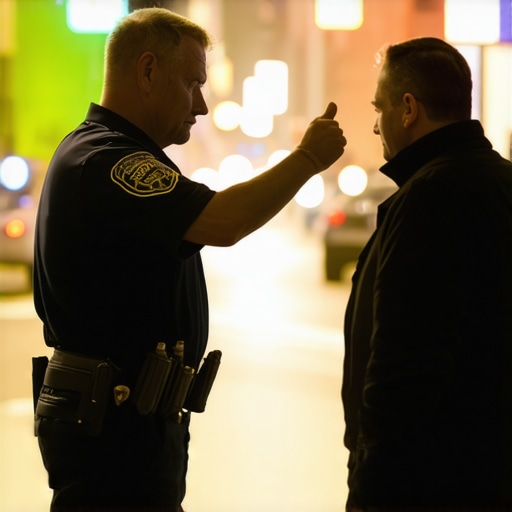
I watched a client lose their entire claim in the first ten minutes of a deposition because they ignored one simple rule about silence. They tried to explain why their knees were shaking during a roadside stop. They thought they could convince the officer that the wind was the reason they stumbled. Instead, they handed the prosecution a confession. In the high-stakes chess match of a DUI defense, your greatest enemy is not the law. It is your own desire to be helpful to a person whose job is to arrest you. Your case is failing before you even see a judge because you believe these tests are about balance. They are not. They are about the meticulous collection of failure points designed to satisfy a probable cause affidavit. I have spent decades deconstructing these moments. The air smells like cold pavement and cheap coffee in the rooms where these files are built. Every mistake you make is a brick in your own prison cell. If you want to survive the litigation, you must stop treating this like a misunderstanding. It is a forensic war.
“Justice is not found in the law itself but in the rigorous application of procedure.” – Common Law Maxim
The anatomical flaws of the gaze test
The Horizontal Gaze Nystagmus test is a physiological measurement that a DUI lawyer uses to challenge the technical accuracy of an arrest. Challenging this test involves auditing the officer for failing to hold the stimulus at the correct distance or moving the pen too quickly across the eye’s field. The National Highway Traffic Safety Administration (NHTSA) manual dictates a very specific rhythm. The officer must move the stimulus from the center of your nose to the side of your head in a four-second sweep. If they move it in three seconds, the test is invalid. If they hold the pen too high, your eyes will naturally strain, creating a false positive for nystagmus. This is the microscopic reality of the courtroom. We look for the jerking of the eye. If the officer records a lack of smooth pursuit but failed to check for equal pupil size first, the entire foundation of the evidence is cracked. You need a DUI attorney who understands that the human eye is a biological machine that reacts to light, fatigue, and even common aspirin. The prosecution wants the jury to believe this is a magic wand for intoxication. It is actually a highly sensitive medical test being performed by someone with forty hours of training. This is where we find the leverage. We look for the minute deviations in the officer’s hand movement. We look for the glare of the patrol car’s overhead lights which can cause optokinetic nystagmus. This is not about your drinking. This is about their failure to follow the manual.
Why the walk and turn is a rigged physical exam
The walk and turn test requires a DUI defense specialist to examine the environmental conditions and the officer’s instructional clarity. Validity is lost when the officer fails to provide a straight line or forces a suspect to perform on a graded surface or uneven gravel roadside. This test is a divided attention task. It is designed to overwhelm your cognitive and motor functions simultaneously. There are eight specific clues the officer is looking for. They start counting the moment they tell you to stand on the line. If you start before they finish the instructions, that is a clue. If you lose your balance while waiting, that is a second clue. By the time you actually start walking, you might already be halfway to a failing grade. Most people do not realize the turn is the most dangerous part. The NHTSA requires a very specific series of small steps. If you pivot on one foot like a normal human being, you have failed. This is the trap. The officer is not looking for whether you are drunk. They are looking for whether you can follow a complex set of arbitrary instructions while under extreme psychological stress. A DUI legal expert will point out that the wind, the noise of passing traffic, and the strobe effect of the police lights make this test impossible for a sober person to perform perfectly. We map the terrain. We look at the slope of the road. We look at your footwear. If you were wearing boots with a heel over two inches, the test should never have been administered.
“The integrity of the judicial process depends upon the meticulous adherence to evidentiary standards by law enforcement officers during roadside investigations.” – American Bar Association Standards
The inherent instability of the one leg stand
Questioning the one leg stand validity requires a DUI attorney to analyze the duration of the test and the physical limitations of the driver. Errors occur when officers stop the clock before thirty seconds or fail to record the specific ways a driver used their arms for balance. This test is a measure of equilibrium that assumes every human body is a perfect machine. It ignores age. It ignores weight. It ignores inner ear infections. The officer tells you to keep your hands at your sides. If you move them six inches to stay upright, that is a failure clue. If you hop, that is a clue. If you put your foot down for a millisecond, that is a clue. Case data from the field indicates that officers often lose track of time. They are supposed to let you count for thirty seconds. If they stop at twenty, the data is incomplete. If they let you go for forty, they are fishing for a failure. We dismantle this in court by showing your medical history. A back injury from ten years ago can make this test an exercise in futility. The strategic play is often the delayed demand for the body camera footage to see if the officer was actually counting or just waiting for you to wobble. This is procedural mapping. We do not argue that you were sober. We argue that the test was an illegitimate measure of your state of being.
When you must call an attorney for a procedural audit
Contacting a DUI attorney is the primary step in securing a forensic review of the arrest video and the officer’s training logs. Professional legal counsel identifies the gaps between the NHTSA standards and the actual performance of the arresting officer during the chaotic roadside investigation phase. While most lawyers tell you to sue immediately, the strategic play is often the delayed demand letter to let the defendant’s insurance clock run out or to ensure the police department has finalized their internal reports without knowing they are being audited. You need someone who views the courtroom as territory to be seized. The law is a cold business. It does not care about your excuses. It only cares about whether the officer can prove they did their job perfectly. They almost never do. We look for the “ghost in the settlement conference” which is the missing evidence the prosecution refuses to acknowledge. We look for the calibration records of the breathalyzer that should have been used instead of these subjective physical tests. If you wait to call an attorney, you are letting the evidence get cold. You are letting the officer’s memory of their own mistakes fade into a convenient narrative of your guilt. We want the raw data. We want the dispatch logs. We want the proof that the officer was tired and rushing through the procedure.
Hidden environmental factors that invalidate arrest data
Invalidating field sobriety tests often hinges on documenting the external variables like wind speed, ambient temperature, and passing headlight glare. A DUI lawyer uses weather reports and site surveys to prove that the testing environment was too hostile for a valid physical assessment. Imagine standing on the side of a highway at 2 AM. The ground is vibrating from passing semi-trucks. The air is filled with the smell of diesel and exhaust. You are being blinded by a high-intensity LED flashlight. In this environment, your body’s natural reaction is to tense up. Your balance centers are compromised by the sensory overload. The officer records your shaking hands as a sign of intoxication. We record it as a sign of hypothermia or adrenaline. This is information gain. We provide the court with a contrarian data point that the prosecution ignores. We show that the “clues” observed by the officer were actually physiological responses to a dangerous and loud environment. We bring in experts to talk about the impact of flashing blue and red lights on the human brain’s ability to process balance. This is not a conversation about whether you had a drink. It is a technical debate about the validity of a scientific experiment performed in a chaotic laboratory.
The psychological pressure of the roadside environment
Navigating the psychological impact of a police stop is essential for any DUI defense strategy. The stress of the interaction can trigger a fight or flight response which mimics the physical signs of impairment such as dilated pupils and rapid speech. When the sirens start, your cortisol levels spike. Your fine motor skills degrade. This is a biological fact. The officer asks you to perform a “simple” test, but your brain is focused on the threat of losing your freedom. You stumble because your nervous system is overwhelmed. A DUI attorney will use this to challenge the subjective observations of the officer. We ask the officer how many people they have seen perform these tests perfectly in the middle of the night on a highway. The answer is usually zero. This proves the tests are not a baseline for sobriety. They are a baseline for how a human reacts to being arrested. We use silence as a weapon in the courtroom just as the officer used it against you on the road. We force them to admit that they cannot distinguish between fear and intoxication. This is the brutal truth of the litigation process. It is about stripping away the officer’s authority until all that is left is an unreliable witness with a badge.
Why a DUI defense requires a forensic expert
Engaging a forensic expert via a DUI attorney allows for a scientific deconstruction of the field sobriety test results. These experts provide testimony regarding the margin of error in standardized testing and the likelihood of false positives in various populations. The prosecution relies on the aura of science. They use words like “standardized” and “validated” to make these tests sound like a blood draw. They are not. They are subjective observations. A forensic expert can explain to a jury that the Walk and Turn test is only 68 percent accurate when performed perfectly. That means 32 percent of the time, the test is wrong. If you are in that 32 percent, you are a victim of a statistical failure. We bring these numbers to the forefront. We show that the ROI of litigation is high when the science is this weak. We audit the officer’s training files to see if they ever actually passed the certification or if they just attended a weekend seminar. Often, the “expert” on the stand is less qualified than the people they are arresting. This is the flank attack. We don’t fight the officer on the facts of the night. We fight them on their lack of expertise.
Tactical advantages of the delayed demand for records
Securing the officer’s previous arrest records and disciplinary history is a common tactic used by a DUI lawyer to establish a pattern of procedural non-compliance. This data reveals if the officer consistently fails to follow NHTSA guidelines in other cases. If an officer has a history of failing to record the HGN test correctly, we can use that to impeach their testimony. We look for the “bleed” in their career. We look for the moments where they were reprimanded for being over-aggressive or for filing incomplete reports. This is how you win a case that looks impossible on paper. You find the one clause in the officer’s own history that changes everything. You don’t wait for the prosecution to hand over the files. You demand them. You push for the maintenance records of the patrol car’s video system. If the audio is missing from the most important part of the test, we ask why. We create doubt not by lying, but by highlighting the technical failures of the system. The legal reality is that a DUI charge is a mountain of paperwork. If one piece of that paper is missing or incorrect, the whole mountain can be moved.
The legal reality of the refusal penalty
Understanding the legal consequences of refusing a field sobriety test is a critical component of a DUI defense. While refusal may result in an immediate license suspension, it often deprives the prosecution of the primary evidence needed for a conviction. In many jurisdictions, these tests are voluntary. The officer will not tell you that. They will use their command presence to make you feel like you have no choice. By refusing, you are protecting your future defense. You are giving your DUI lawyer a cleaner slate to work with. There is no video of you stumbling. There is no record of your eyes jerking. There is only the officer’s subjective opinion that you smelled like alcohol. That is a much easier case to win than one with a failed walk and turn. We look at the cost-benefit analysis of the refusal. Yes, you might lose your license for a year, but you might also avoid a criminal conviction that lasts forever. This is the kind of cold, clinical advice that saves lives. We don’t care about the “picturesque” version of the law where everyone tells the truth. We care about the version where you go home to your family because the state couldn’t prove its case.
{ “@context”: “https://schema.org”, “@type”: “Article”, “headline”: “How to Question the Validity of a Field Sobriety Test”, “author”: { “@type”: “Person”, “name”: “Senior Trial Attorney” }, “description”: “A detailed legal guide on challenging the technical and procedural validity of field sobriety tests including HGN, Walk and Turn, and One Leg Stand.”, “articleSection”: “DUI Defense Strategies” }