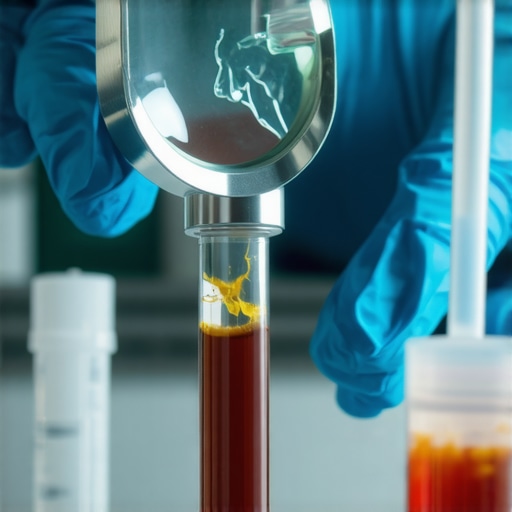
Your case is failing. I smell the bitter black coffee on my desk and I look at your blood test results and I see a disaster. Most people think a lab report is the final word of god. It is not. It is a fragile narrative built on the assumption that every human in the process was perfect. They were not. I watched a client lose their entire claim in the first ten minutes of an evidence review because they ignored one simple rule about the storage temperature of their own sample. You are likely in the same boat. You think the police followed the rules because they wore a uniform. The truth is that the chain of custody is a brittle thread that snaps under the slightest pressure from a veteran trial attorney. We are going to look for the snap.
The phantom blood in the vial
A **DUI attorney** analyzes the **blood collection kit** to identify **expired vials** or **damaged seals** before the sample even reaches the lab. If the **vacuum seal** is compromised or the **anticoagulant levels** are incorrect, the **blood alcohol concentration** measurements are inherently flawed. This **forensic error** creates the foundation for a **DUI defense**. Case data from the field indicates that a significant percentage of blood kits are used past their expiration dates. This is not a minor detail. This is the difference between a conviction and a dismissal. The vial is the first point of failure. It is a glass tomb for your freedom. If the sodium fluoride is not perfectly distributed, the blood begins to ferment. Fermentation creates its own alcohol. The machine then reads that internal alcohol as the drink you had three hours before the stop. It is a lie. We find that lie by looking at the lot numbers. We look at the manufacturer data. We find the crack in the glass.
A failure of the antiseptic swipe
The **DUI lawyer** must investigate the **sterilization agent** used by the **phlebotomist** during the **forensic blood draw**. If the technician used an **alcohol based swab** instead of **aqueous povidone iodine**, the sample is contaminated with **external ethanol**. You must **call an attorney** to verify the **chemical composition** of the prep kit. Procedural mapping reveals that under the pressure of a busy hospital or police station, shortcuts are the standard. They grab whatever is in the drawer. If that swab had a drop of isopropyl, your BAC just jumped by 0.02. That is the margin of a crime. We subpoena the purchasing records of the hospital. We find out exactly what was in the supply closet that night. If it was not iodine, the state has no case. They will fight this. They will say it does not matter. They are wrong. It is everything.
“Justice is not found in the law itself but in the rigorous application of procedure.” – Common Law Maxim
The cooling unit that failed
A **DUI legal** expert demands the **refrigerator temperature logs** where the **blood evidence** was stored prior to **toxicology testing**. Evidence must be kept between **two and eight degrees Celsius** to prevent **microbial growth** and **ethanol production**. Any **temperature excursion** documented in the **lab records** invalidates the **scientific results**. Blood is organic. It rots. If it rots, it produces gas. If it produces gas, the gas chromatograph sees a spike. Most lawyers do not even ask for the logs. They assume the fridge worked. I assume the fridge failed. I look for the maintenance records. I look for the power outages. I look for the weekend when the lab was empty and the HVAC was turned off to save money. That is where the case is won. In the heat of the storage room. In the silence of the evidence locker. Check the seal. Find the crack. Win the case.
Forensic math and the missing minutes
The **procedural chain of custody** requires a **chronological log** of every individual who had **physical possession** of the **blood sample**. A **DUI defense** team looks for **time gaps** or **unexplained delays** between the **draw time** and the **lab intake**. These **custodial lapses** suggest **tampering** or **unauthorized access** to the evidence. While most lawyers tell you to sue immediately, the strategic play is often the delayed demand letter to let the defendant’s insurance clock run out, or in this case, waiting for the lab to admit they lost the log for three hours. Where was your blood at 3:00 AM? Was it in the trunk of a patrol car? Was it on a desk in a hallway? If the paper does not say, the jury cannot know. And if the jury cannot know, they cannot convict. We map every minute. We find the black holes in the timeline. We exploit the human need to be lazy with paperwork.
“The integrity of forensic evidence is contingent upon the documented movement and storage from the moment of seizure to the time of trial.” – American Bar Association Standards
Gas chromatography and the ghost in the machine
The **forensic toxicologist** uses **headspace gas chromatography** to separate and identify the **ethanol molecules** in the **blood sample**. A **DUI attorney** examines the **chromatograms** for **ghost peaks** or **poor resolution** that indicate **machine malfunction**. If the **internal standard** like n-propanol is not clearly defined, the **BAC calculation** is scientifically invalid. The machine is not a crystal ball. It is a complex series of tubes and sensors that require constant calibration. We look at the baseline noise. We look at the column age. We look at the last time the software was patched. Often, the lab is running on ancient equipment held together by hope and government funding. We take that equipment apart in front of the jury. We show them that the ghost in the machine is just bad science. We show them that the number on the paper is a guess, not a fact.
The technician with the dirty hands
The **laboratory analyst** must maintain a **clean environment** and follow **standard operating procedures** to avoid **cross contamination** of samples. Your **DUI lawyer** will review the **analyst’s proficiency tests** and **disciplinary history** to find patterns of **procedural negligence**. One mistake with a **pipette** or a **vial cap** destroys the **evidentiary value** of the test. People are tired. They are overworked. They process fifty samples a day. They get bored. Boredom leads to errors. They swap caps. They use the same needle for the calibration gas. They forget to wash the glassware. We find the history of these errors. We find the other cases where this technician messed up. We make the jury wonder if your sample was the one they got right, or the one they got wrong because they wanted to go to lunch. There is no such thing as a perfect lab. There are only labs that have not been caught yet.
Why you must call an attorney now
The **legal window** to challenge **blood evidence** is narrow and requires an **immediate motion** for **preservation of evidence**. A **DUI defense** strategy hinges on securing the **raw data files** and **bench notes** before the lab **purges the records**. You must **call an attorney** to stop the **destruction of metadata** that could prove your innocence. The state wants to move fast. They want you to plead out before you see the gaps. They want you to believe the number. I do not believe the number. I believe the evidence of human failure. Every second you wait is a second the lab uses to bury its mistakes. We dig them up. We bring them into the light. We show the court that the chain is broken. The case is over when we say it is over. Not when the lab says so. Get the files. Break the chain. Fight the charge.