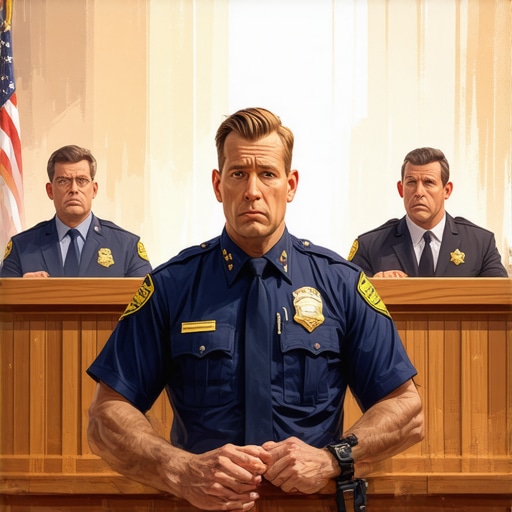
Tactics to Challenge the Training of an Arresting Officer in DUI Cases
I watched a client lose their entire claim in the first ten minutes of a deposition because they ignored one simple rule about silence. In the high-stakes arena of a DUI defense, silence is not merely a constitutional right but a tactical shield used against an officer who lacks the procedural training to handle it. When you are pulled over, the power dynamic is skewed. The officer relies on their supposed expertise to command the scene. However, my twenty-five years in the courtroom have taught me one undeniable truth: the badge does not guarantee competence. Proving the arresting officer was not properly trained is often the difference between a lifetime criminal record and a dismissed charge. We do not look for the truth in these cases; we look for the failure of the state to follow its own rigid protocols.
The failure of the standardized field sobriety test
DUI defense attorneys recognize that the standardized field sobriety test or SFST is only as valid as the training of the individual administering it. If the arresting officer fails to follow the National Highway Traffic Safety Administration (NHTSA) manual to the letter, the results are scientifically invalid. A dui attorney will scrutinize the exact positioning of the officer during the horizontal gaze nystagmus test to ensure no optokinetic nystagmus was induced by the patrol car lights. The science of nystagmus is precise. If the stimulus is held at the wrong distance or moved at the wrong speed, the entire test is a legal nullity. We look for the lack of a smooth pursuit and the distinct nystagmus at maximum deviation. If the officer cannot define these terms in a deposition, their credibility evaporates. This is why you must call an attorney who treats the SFST manual like a religious text. The manual dictates that the officer must check for equal pupil size and resting nystagmus before proceeding. Most officers skip this step in their haste to make an arrest. This procedural shortcut is the leverage we need.
“Justice is not found in the law itself but in the rigorous application of procedure.” – Common Law Maxim
Why the academy training records are your best weapon
DUI lawyer expertise involves more than just arguing facts; it involves the surgical extraction of personnel files and training logs. To prove an officer was not properly trained, your dui legal team must subpoena the Peace Officer Standards and Training (POST) records to find the expiration of certifications. Often, an officer will perform a breath test on an Intoxilyzer 8000 or 9000 while their operator permit has lapsed by a matter of days. These records reveal the microscopic reality of the state’s negligence. We look for the specific hours of instruction the officer received on the specific model of the breath machine used. If the training occurred five years ago and the software has been updated three times since, the officer is no longer qualified to testify as an expert on that device. The litigation architect does not accept a certificate at face value. We demand the curriculum. We demand the test scores. We demand the proof of continuing education that the state so often ignores.
The myth of the expert witness with a badge
DUI defense rests on the ability to strip away the officer’s aura of authority by exposing their ignorance of the very laws they enforce. When we call an attorney to the stand, we expect expertise, but when the state calls an officer, they often provide nothing but rote memorization. A dui attorney will ask the officer to explain the physiological cause of the walk and turn clues. If the officer cannot explain how alcohol affects the vestibular system or the cerebellum, they are not an expert; they are a parrot. While most lawyers tell you to sue immediately, the strategic play is often the delayed demand letter to let the defendant’s insurance clock run out or to allow the officer’s memory of the faulty training to fade further. Information gain in these cases comes from the officer’s inability to reconcile their field notes with the NHTSA standards. We use the gap between the manual and the dashcam footage to create reasonable doubt.
“The integrity of the judicial process depends upon the scrupulous adherence to the rules of evidence and the training of those who gather it.” – American Bar Association Standards for Criminal Justice
The science of horizontal gaze nystagmus errors
DUI legal challenges frequently center on the horizontal gaze nystagmus test because it is the most technical of the three standardized tests. To prove the officer was not properly trained, we focus on the lack of a 45 degree angle check. If the officer moves the stimulus too quickly, they miss the onset of nystagmus, or worse, they create it through poor technique. A dui lawyer knows that the officer must perform at least two passes per eye for each of the three clues. This requires a total of twelve passes. Dashcam footage often shows officers doing four or five passes and then moving to the next test. This is a fatal flaw in the prosecution case. We do not care if the driver was swaying; we care that the officer failed the mandatory 12.5 percent error rate margin established by federal guidelines. By highlighting these technical failures, we turn the officer into the one who is on trial.
Subpoena tactics for personnel and training files
DUI defense requires a deep dive into the administrative background of the arresting department. A dui attorney should look for the department’s internal training memos. Often, small municipalities lack the budget for annual recertification. This creates a systemic vulnerability. When you call an attorney, ask if they have a database of officer training histories in your county. We track which officers are prone to skipping the ‘instructional phase’ of the walk and turn test. If an officer starts the test before giving the full instructions, they have violated the protocol. The protocol states that the test is a divided attention task. If the officer fails to divide the suspect’s attention properly, the results are legally meaningless. We use this to move for a motion to suppress all evidence gathered after the point of the procedural error. This is the chess game of litigation.
The truth about the intoxilyzer operator certification
DUI lawyer strategies must include a forensic audit of the breath test operator’s history. Being properly trained on a breath machine requires more than just knowing which buttons to push. The officer must understand the slope detector and the interference subroutines. If the officer cannot explain what a RFI (Radio Frequency Interference) error means on the stand, they have no business testifying to the accuracy of the blood alcohol content result. We look for the logbooks of the machine itself. Has it been calibrated? Was the officer who calibrated it properly trained? The chain of competence is only as strong as its weakest link. If the technician who performed the monthly maintenance was overdue for their own certification, every test performed on that machine during that window is suspect. This is the level of detail required to win a case in the modern legal landscape.
Why you must call an attorney before the first hearing
DUI legal counsel is essential the moment the handcuffs click. The state starts building its narrative of expertise immediately. You need a dui attorney to start deconstructing that narrative just as fast. The first hearing is the time to demand the preservation of all training logs and bodycam footage. If the department ‘loses’ the footage of the field sobriety tests, we can often get an adverse inference instruction. This tells the jury that they should assume the missing evidence would have been favorable to the defense. This is why you must call an attorney who understands the logistics of evidence preservation. We do not wait for the prosecution to hand us the files; we go and take them through the power of the subpoena. The courtroom is a territory, and we must seize the high ground of procedural accuracy before the trial even begins.