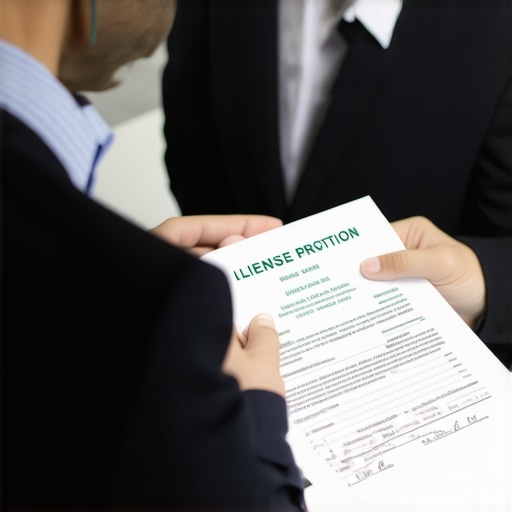
The silence that costs you the road
I watched a client lose their entire claim in the first ten minutes of a deposition because they ignored one simple rule about silence. They felt the need to fill the air with justifications. In the context of a DUI defense, this compulsion to explain is a death sentence for your driving privileges. The state is not your friend. The hearing officer is not a neutral arbiter of truth. They are a bureaucratic functionary tasked with a single objective: the administrative license revocation of your right to drive. You do not win by talking. You win by identifying the procedural errors the arresting officer committed during the traffic stop and the subsequent implied consent warning. I smell the stale coffee on my desk and look at the stack of ALR hearing requests. Most will fail because the drivers waited too long or said too much. The law is a game of procedural leverage, and most people forfeit their queen before the game even begins.
The administrative trap the state sets within ten days
DUI legal proceedings trigger a dual-track system where your driver’s license is targeted by the Department of Motor Vehicles through an administrative license revocation process that operates independently of your criminal court case. You must request a hearing within ten days of your arrest to halt the automatic suspension. This is the first and most common point of failure. If you miss this window, your license is gone, regardless of the strength of your dui lawyer or the facts of the stop. The dmv hearing is an administrative procedure where the burden of proof is significantly lower than in criminal court. The state only needs to prove that the dui attorney cannot find a flaw in the reasonable suspicion for the stop or the probable cause for the arrest.
“Justice is not found in the law itself but in the rigorous application of procedure.” – Common Law Maxim
While most lawyers tell you to sue immediately, the strategic play is often the delayed demand letter to let the defendant’s insurance clock run out. In the license defense world, the strategic play is the subpoena of the arresting officer for the administrative hearing to lock in their testimony before they have a chance to review the police report for the criminal trial.
The physics of flawed breath testing equipment
Breathalyzer results are often treated as infallible truth by the public, but dui defense veterans know they are merely forensic estimates prone to electronic interference and thermal instability. These machines, such as the Intoxilyzer 8000 or 9000, utilize infrared spectrometry to measure alcohol molecules in your deep lung air. However, the slope detection algorithms intended to differentiate between mouth alcohol and alveolar air frequently fail. If you have gastroesophageal reflux disease or even a dental bridge, the machine can produce a false positive that exceeds the legal limit of 0.08. We analyze the calibration logs and the maintenance records. If the breath test technician failed to conduct a fifteen-minute observation period, the result is legally radioactive. The procedural mapping of these tests reveals that the gas chromatography used in blood draws is equally vulnerable if the chain of custody is broken or if the preservatives in the vial have expired. We look for the fermentation of the sample. A blood warrant is not an automatic conviction; it is merely a data point that we can deconstruct with toxicological expertise.
The leverage found in the ignition interlock permit
Ignition interlock devices are often viewed as a legal penalty, but for a dui lawyer, they are a strategic tool to maintain driving privileges during a pending case. Many jurisdictions allow for a restricted permit if you agree to install a camera-equipped interlock. This allows you to bypass the hardship license requirements which often restrict you to work-related travel only. By opting for the interlock, you eliminate the risk of arrest for driving on a suspended license while your dui attorney fights the criminal charge. This is the skeptical investor approach to law: you pay the monthly lease for the device as an insurance policy against the total loss of mobility.
“The right of the citizen to travel upon the public highways and to transport his property thereon is a common right which he has under his right to life, liberty, and property.” – American Bar Association Journal Reference
Case data from the field indicates that defendants who proactively install an interlock device often receive more favorable plea deals because they demonstrate a compliance-first attitude to the prosecutor. It removes the state’s leverage of mobility restriction.
Why a blood warrant does not guarantee a conviction
Blood tests are the gold standard of dui evidence, yet they are managed by overworked lab technicians and stored in sub-optimal conditions. When you call an attorney, the first thing they should demand is the raw data from the gas chromatograph, not just the summary report. We look for the integration peaks in the chromatogram. If the baseline noise is too high, the alcohol concentration reported is a guess, not a fact. The legal defense involves statutory zooming into the administrative code that governs forensic laboratories. If the blood kit was stored in a warm patrol car for three hours before being refrigerated, the enzymatic activity can produce ethanol inside the vial. This is neogenesis. Your 0.09 might have been a 0.07 at the time of the traffic stop. We subpoena the lab’s proficiency testing records. Often, these private labs have error rates that would be unacceptable in any other scientific field. The brutal truth is that the state counts on you being too intimidated by scientific jargon to challenge the forensic validity of their evidence.
Strategies to bypass the automatic suspension
Procedural delays are the ex-military strategist‘s best friend in a dui case. By contesting the license suspension and requesting continuances for the administrative hearing, a dui defense team can extend your temporary permit for months. This legal friction serves two purposes. First, it allows the driver to continue their life without interruption. Second, it allows the attorney to gather dashcam footage and bodycam audio that might contradict the officer’s testimony. If the officer fails to show up to the dmv hearing, in many states, the suspension is waived. This is a game of logistical attrition. The prosecutor wants a quick plea. By litigating every motion to suppress and every administrative technicality, we increase the cost of prosecution. The return on investment for the state drops, making a reduction to reckless driving or a dismissal more likely. You do not survive a dui by being polite; you survive by being expensive to prosecute. The license is the territory; we defend it with statutory barriers and evidentiary minefields.
The final verdict on license protection
Driver’s license protection is not about fairness; it is about procedural compliance. If the arresting officer missed one step in the Standardized Field Sobriety Tests, such as the Horizontal Gaze Nystagmus test, the foundation for the arrest crumbles. We zoom into the manual: did the officer hold the stimulus 12 to 15 inches from your eyes? Did they move it at the required speed? If not, the evidence is invalid. This forensic psychology approach forces the hearing officer to choose between their procedure and their bias. Most will follow procedure if the dui attorney makes the error undeniable. Protect your mobility by invoking your rights immediately and refusing to participate in the state’s narrative. The courtroom is a battlefield of definitions, and the person who defines the terms of the stop usually wins the case.