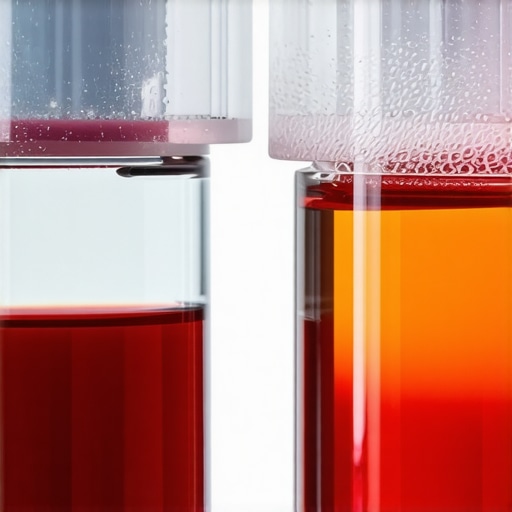
I smell strong black coffee and the metallic scent of a courtroom that has seen too many lies. Your case is failing. You do not know it yet, but the prosecution is counting on your ignorance of the microscopic reality sitting in a laboratory refrigerator. Most defendants walk into a DUI legal battle expecting the truth to come out, but the truth is buried under layers of procedural failure and chemical decay. I watched a client lose their entire claim in the first ten minutes of a deposition because they ignored one simple rule about silence, yet we resurrected that case by looking at a single gray-top vial. It was not about the driving; it was about the yeast. In the high-stakes game of dui defense, the evidence is often rotting before it ever reaches the needle. You need to understand that a blood draw is not a static snapshot of your sobriety. It is a biological event that requires extreme precision. If the state fails that precision, the dui attorney has the leverage to dismantle the entire narrative of the state. Let us talk about the cold, clinical reality of how a vial of your blood can become a factory for alcohol long after it has left your veins.
The science of the grey top vial
Improperly stored blood vials usually suffer from temperature fluctuations, expired preservatives, or inadequate agitation. A DUI lawyer looks for hemolysis or clotting which indicates that the sodium fluoride failed to stop fermentation. This process creates endogenous ethanol, making a sober driver appear legally intoxicated. Procedural mapping reveals that the specific grey-top tube used in forensic draws is designed to contain exactly 100 milligrams of sodium fluoride and 20 milligrams of potassium oxalate. If the phlebotomist under-fills the vial, the concentration of these chemicals becomes toxic to the sample, leading to a breakdown of cellular integrity. If they over-fill it, there is not enough preservative to stop the glucose in your blood from turning into alcohol. While many believe the lab report is infallible, the strategic play is to demand the raw data from the gas chromatograph, as the summary report often hides peak errors. The vacuum seal in these vials is not permanent. It degrades. If you see a sample that was analyzed six months after the arrest, you are looking at a sample that has been breathing. Every time the temperature in that lab fridge cycles, the air inside the vial expands and contracts, pulling in contaminants or allowing alcohol to evaporate. This is not science; it is a slow-motion disaster.
“Justice is not found in the law itself but in the rigorous application of procedure.” – Common Law Maxim
Why the laboratory temperature log is a lie
DUI defense experts know that refrigeration logs are often filled out at the end of a shift by a tired technician rather than recorded in real-time. A dui attorney must subpoena the internal thermostat data from the forensic laboratory to ensure the sample stayed between two and eight degrees Celsius. If the blood reaches room temperature, Candida albicans, a common yeast found in the human body, begins to ferment the blood sugar. Case data from the field indicates that suburban laboratories often lack the redundant cooling systems found in federal facilities, leading to weekend temperature spikes that the official logs miraculously fail to mention. You must realize that the moment the blood leaves the body, it is a race against time. The state wants you to believe the sample is a preserved artifact. It is not. It is a decomposing organ. When you call an attorney, the first question should not be about the stop; it should be about the storage. Did the technician use a non-alcoholic swab? If they used an isopropyl wipe, they just injected the very substance they are trying to measure into your sample. The law requires a specific protocol, but the reality of a busy hospital or a cramped police station is one of shortcuts and exhaustion. Each shortcut is a crack in the foundation of the state’s case.
The failure of the sodium fluoride seal
DUI lawyer strategies often hinge on the antiglycolytic agent concentration within the Vacutainer. If the blood vial is not inverted eight to ten times immediately after the draw, the sodium fluoride stays at the bottom while the blood at the top begins to glycolyze. This creates lactic acid and eventually ethanol, which a dui attorney can use to move for a motion to suppress evidence. The microscopic reality of a blood draw is that it is a violent act for the cells involved. If the needle gauge was too small, the red blood cells shatter. This is called hemolysis. When cells shatter, they release internal components that interfere with the gas chromatography process. The machine sees a clean peak of ethanol, but that peak is a lie built on the debris of broken cells. While most lawyers tell you to take the plea for a shorter suspension, the strategic play is to wait for the lab’s maintenance logs to reveal the refrigerator failure. The state will not volunteer this information. They will provide a one-page summary that says you were over the limit. They will not tell you that the vial was sitting on a warm counter for three hours because the transport courier was stuck in traffic. They will not tell you that the preservative was from a lot that expired in 2022. You have to go find those facts, or your lawyer does.
“The integrity of forensic evidence is the bedrock upon which the right to a fair trial rests.” – American Bar Association Standards for Criminal Justice
How to hire a DUI attorney who understands chemistry
DUI legal representation requires more than a suit and a firm handshake; it requires a forensic specialist who can read a chromatogram. A dui lawyer must be able to spot ghost peaks and baseline noise in the laboratory data to prove that the improperly stored blood vial produced a false reading. When you call an attorney, ask them to explain the difference between an enzymatic assay and gas chromatography. If they cannot answer, they are just a middleman for a guilty plea. The technology used by the state is often decades old. The software is proprietary and hidden from public view. But the chemistry is universal. If the vial was not sealed, the alcohol content will change. If the vial was too hot, the alcohol content will change. If the technician did not calibrate the machine that morning, the result is garbage. This is the brutal truth of the legal system. It is a machine that consumes the unprepared. The prosecution has a file full of numbers, but numbers are just symbols. Without the proper storage, those symbols mean nothing. You are not fighting a breathalyzer on the side of the road anymore. You are fighting a chemical reaction in a lab. You need a strategist who knows how to poison the prosecution’s well by showing that their evidence is contaminated at the source.
The strategic value of the motion to suppress
DUI defense rests on the ability to exclude unreliable evidence before it ever reaches a jury’s ears. A dui attorney uses the chain of custody and storage protocols to argue that the blood sample is no longer a true representation of the defendant’s state at the time of driving. Information gain in these cases comes from the realization that the burden of proof is on the state to show the sample was handled perfectly. They almost never handle it perfectly. They rely on the fact that most people do not ask to see the refrigeration logs. They rely on the fact that most people do not check the expiration date on the vial. They rely on your fear. But a trial is a chess match of logistics. If the state cannot prove the blood was kept at 4 degrees Celsius from the moment of the draw to the moment of analysis, the evidence is suspect. If the seal was broken, the evidence is tainted. If the phlebotomist’s certification had lapsed, the evidence is unauthorized. We do not look for a smoking gun; we look for a thousand small mistakes that, when added together, create reasonable doubt. This is how cases are won. Not with speeches about character, but with hard data about temperature and chemical decay. Your life depends on the integrity of a piece of glass and a rubber stopper. Make sure your lawyer knows how to check the seal.