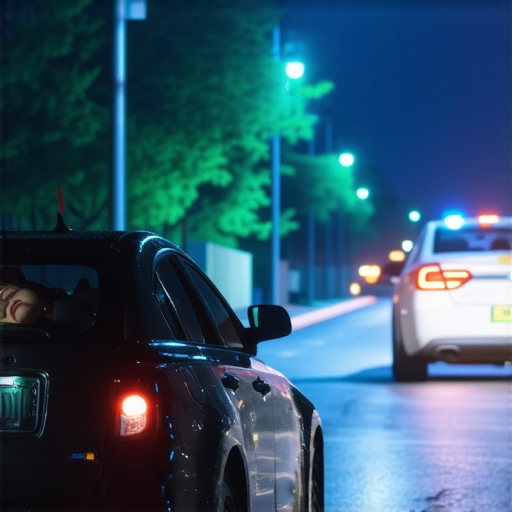
Tactical Defense for DUI Charges in Stationary Vehicles
I watched a client lose their entire claim in the first ten minutes of a deposition because they ignored one simple rule about silence. They felt the need to fill the void. They started explaining why they were in the backseat of their sedan. The prosecutor did not care about the reason for their nap. The prosecutor only cared that the defendant admitted they could reach the ignition from that position. Most people think they are being helpful by explaining their responsible choice to sleep it off. In the cold light of the law, that explanation is an admission of physical control. You are not just fighting a charge; you are fighting a legal definition that is stacked against you from the moment the officer knocks on your window.
The legal fiction of physical control
Actual physical control is the legal standard used by a dui attorney to determine if a parked person can be charged. It implies the defendant had the present ability to operate the motor vehicle. Prosecution relies on circumstantial evidence like key location and seat position to secure a dui conviction.
The law does not require you to be in motion to be guilty of a crime. This is the brutal truth that most defendants fail to grasp until they are standing in front of a judge. Procedural mapping reveals that the state only needs to prove you had the immediate capability to operate the vehicle. This includes sitting in the driver seat with the keys in your pocket. While most lawyers tell you to explain your intent to the officer, the strategic play is total silence to prevent the creation of circumstantial links that the prosecution will use to hang you. Case data from the field indicates that the more a defendant talks, the higher the probability of a conviction. Your choice to sleep was a decision to avoid driving, but the statute often ignores your intent in favor of your proximity to the steering wheel.
The engine block as a forensic clock
The engine block temperature serves as a silent witness in a dui defense. A police officer touching the hood of the vehicle creates a timeline of recent operation. If the metal is cold, your dui attorney can argue the car had been stationary for hours, undermining the prosecution case.
Officers are trained to check the warmth of the hood as soon as they approach a parked vehicle. This sensory data point is used to establish that you were driving shortly before you decided to sleep. If the engine is stone cold, it supports the narrative that you used the car as a fixed shelter rather than a means of transport. Information gain suggests a contrarian point here. If you were sleeping with the heater on, you have inadvertently provided the state with evidence that the battery and engine systems were engaged, which satisfies the requirement for operation in many jurisdictions. A defense strategist must examine the specific mechanics of the vehicle to challenge the officer’s subjective report of heat. We look at the ambient temperature, the cooling rate of that specific make and model, and the lack of infrared thermal imaging to discredit the officer’s testimony.
“The defense of a person accused of a crime is the highest calling of the legal profession.” – American Bar Association Standards
Key placement as a defense barrier
The ignition key position determines the strength of a dui legal challenge. Keys in the ignition signal intent, while keys in the trunk or outside the vehicle suggest a lack of physical control. A skilled attorney uses this distinction to file a motion to dismiss before the trial begins.
Where you put your keys is the difference between a dismissed case and a license suspension. If the keys are in the ignition, even if the engine is off, the court views you as being in control of the machine. If the keys are on the floorboard, in the glove box, or in the trunk, the nexus of control is broken. The legal argument becomes one of accessibility. Can a person who is unconscious in the backseat be in control of a vehicle if the keys are hidden under the spare tire? The answer should be no, but a prosecutor will argue that the keys were within your reach. We analyze the exact measurements of the cabin. We calculate the distance from your hand to the ignition. We turn the interior of your car into a forensic map where every inch of separation between you and the keys is a win for the defense. [IMAGE_PLACEHOLDER]
The tactical advantage of the passenger cabin
The driver seat vs the backseat creates a legal divide in dui litigation. Being found in the rear of the automobile suggests the occupant used the vehicle as a shelter rather than a transportation device. This physical evidence is an essential component of a successful dui defense strategy.
If you are in the driver seat, you are a pilot. If you are in the backseat, you are a passenger in a stationary room. This distinction is the foundation of the shelter defense. The defense argues that the car was not being used as a vehicle, but as a temporary residence. This requires proving that you had no intent to move the car. Procedural zooming allows us to look at the recline of the seat, the presence of blankets, and whether your shoes were removed. These microscopic details paint a picture of someone who has settled in for the night, not someone who is waiting for a moment of sobriety to pull into traffic. A brutal truth is that most officers will still arrest you regardless of where you are sitting. They want the stat; they do not care about the nuance of your sleeping arrangements. Your lawyer must force that nuance into the record during the preliminary hearing.
Sleep inertia versus chemical impairment
Field sobriety tests performed on a person recently awakened are scientifically unreliable. The nystagmus and balance issues observed by the patrol officer are often the result of sleep inertia rather than alcohol impairment. A dui attorney must challenge these arrest observations during the evidentiary hearing.
When an officer rouses you from a deep sleep with a flashlight in your eyes, your brain is in a state of sleep inertia. You are disoriented. Your balance is compromised. Your eyes may even exhibit nystagmus, which is the involuntary jerking the officer is looking for during the Horizontal Gaze Nystagmus test. The officer will record your stumbling and slurred speech as signs of intoxication. A sophisticated defense involves bringing in a sleep expert to testify that these symptoms are physiologically indistinguishable from drunkenness for at least twenty minutes after waking. The officer never waits twenty minutes. They want you out of the car and in cuffs immediately. We challenge the timing of the tests to prove that the evidence collected is a byproduct of biology, not bourbon.
“Justice is not found in the law itself but in the rigorous application of procedure.” – Common Law Maxim
The failure of the community caretaker doctrine
Probable cause for the initial police contact is often the weakest link in a parked DUI. If the officer lacked a valid reason to approach a stationary vehicle, all subsequent evidence like breathalyzer results becomes inadmissible. This legal maneuver can collapse the entire prosecution within minutes.
Police often use the community caretaker doctrine to justify approaching a parked car. They claim they were just checking on your welfare. This is a common legal loophole. If they see you sleeping, they claim they need to make sure you are not having a medical emergency. Once you roll down the window, they claim they smell alcohol, and the welfare check turns into a criminal investigation. A strategic defense analyzes the initial moments of the encounter. Did the officer have their lights on? Was the car legally parked? If the officer cannot prove a legitimate welfare concern, the entire encounter is an illegal seizure under the Fourth Amendment. We look for the moment the officer’s role shifted from protector to hunter. If that shift happened without probable cause, the case is over.
Strategic silence during the arrest process
The intent to drive is the ghost in the courtroom that the prosecutor must materialize. Without a witness seeing the car in motion, the state relies on circumstantial evidence. Your defense counsel must systematically dismantle the narrative that you intended to put the vehicle in motion.
Your biggest enemy in a parked DUI case is your own mouth. Every word you say is a brick in the wall the state is building around you. If you tell the officer you were driving earlier, you have just handed them the conviction on a silver platter. If you tell them you were planning to drive home in an hour, you have established intent. The brutal truth is that you should never answer questions about your timeline. The officer is not your friend. They are collecting data to support a predetermined conclusion. Procedural mapping shows that defendants who remain silent have a significantly higher rate of successful motions to suppress. You must refuse the roadside tests and refuse the interview. Let the officer arrest you based on their flimsy observations. It is much easier for an attorney to fight a lack of evidence than it is to fight a signed confession.
Procedural defects in the chemical test
Chemical test results from a breathalyzer are vulnerable to scientific challenges when the subject has been sleeping in a car. Factors like mouth alcohol or gastroesophageal reflux disease can cause false positives that a dui lawyer can expose. The observation period is a mandatory requirement for a valid **test**.
The breathalyzer is not a magic box; it is a fallible machine. If you have been sleeping, you may have issues like acid reflux that bring raw alcohol from your stomach into your oral cavity. This creates a reading that is artificially high. Furthermore, the law requires a strict twenty-minute observation period where the officer must watch you to ensure you do not burp, hiccup, or vomit. In the chaos of a roadside arrest from a parked car, officers frequently cut corners on this observation period. We demand the logs. We review the body cam footage second by second. If the officer looked away to talk to their partner or search your trunk, the observation period is broken. This renders the chemical test result inadmissible. In the world of high-stakes litigation, a single missed minute on a timer can be the difference between losing your license and walking out of the courtroom a free person.
The final strategic overview
The reality of fighting a DUI when you were sleeping is that the law is not on your side, but the procedure is. You must be aggressive. You must be clinical. You must look at the vehicle as a crime scene where every detail, from the temperature of the hood to the position of the seat, is a potential weapon for your defense. Do not expect the jury to feel sorry for you because you tried to do the right thing by not driving. The jury follows instructions, and the instructions are written by the state. Your only path to victory is to dismantle the state’s evidence piece by piece until there is nothing left but reasonable doubt. This is not about the truth of your intoxication; it is about the failure of the state to prove its case within the narrow confines of the law. If you find yourself in this position, call an attorney who treats the courtroom like a battlefield and the law like a scalpel.