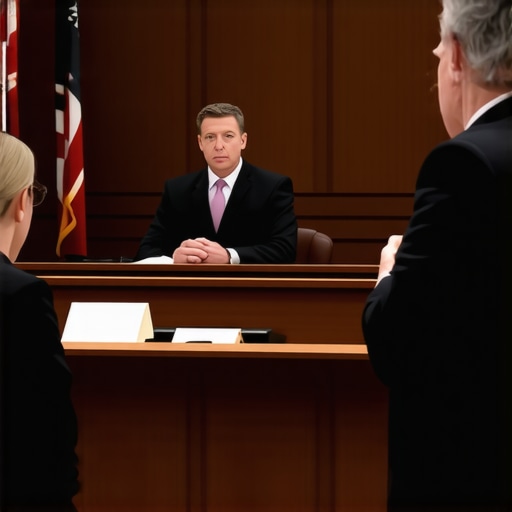
The Brutal Reality of Defeating an Aggravated DUI Charge
I watched a client lose their entire claim in the first ten minutes of a deposition because they ignored one simple rule about silence. It was a cold Tuesday morning, and the coffee in the room was as bitter as the prosecutor’s disposition. My client, a mid-level executive with everything to lose, thought he could talk his way out of an aggravated DUI by explaining how little he had eaten that day. By the time he finished his rambling justification, he had inadvertently admitted to being behind the wheel at the exact moment of the alleged infraction. He handed the state the only piece of evidence they were missing on a silver platter. This is the reality of the legal system. It is not a place for explanations or apologies. It is a battlefield where every syllable you utter is a potential landmine. When you face an aggravated DUI charge, the stakes shift from a simple misdemeanor to a felony-level threat that can dismantle your life, your career, and your freedom in a single afternoon. You do not need a friend in the courtroom. You need a strategist who understands the forensic and procedural mechanisms required to dismantle the state’s narrative. Most people believe the evidence is immutable. They are wrong. Evidence is a collection of human errors, mechanical failures, and procedural shortcuts that can be systematically exposed under the right pressure.
The anatomy of a failing case
Aggravated DUI charges stem from specific aggravating factors such as high blood alcohol concentration (BAC), the presence of a minor child in the vehicle, or driving with a suspended license. A dui lawyer must identify these legal elements immediately to determine if the prosecutor can meet the burden of proof beyond a reasonable doubt. The law is a machine. If one gear is missing, the entire apparatus fails. Your case is currently failing because you believe the police report is an objective truth. It is not. It is a subjective narrative written by an individual who is incentivized to secure a conviction. Aggravated charges often rely on technicalities that are surprisingly fragile. For instance, if the state alleges you were driving on a suspended license, but the notification of that suspension was never properly served, the entire aggravated portion of the charge may collapse. This is the difference between a year in jail and a dismissed case. We do not look for the truth; we look for the error. We look for the moment the officer decided to skip a step because it was raining or because they were at the end of their shift. That is where your defense begins. It starts with the understanding that you are currently losing and that only a clinical, aggressive deconstruction of the state’s timeline can save you.
“Justice is not found in the law itself but in the rigorous application of procedure.” – Common Law Maxim
When the breathalyzer lies
The breathalyzer test is a fallible scientific instrument subject to calibration errors, residual mouth alcohol, and radio frequency interference. A skilled dui defense attorney will demand the maintenance logs and usage history of the specific Intoxilyzer device to challenge the admissibility of evidence in court. Most people assume that the number on the screen is final. In reality, these machines are remarkably sensitive to environmental factors. Did you know that some breath testing devices can be triggered by the electromagnetic waves of a police radio? Or that certain medical conditions like acid reflux can cause a false high reading by pushing stomach gases into the esophagus? We investigate the operator’s certification. If the officer’s training has lapsed by even twenty-four hours, the test results become legally radioactive. We look at the temperature of the room. We look at the observation period. If the officer looked away to check their phone for thirty seconds during the mandatory twenty-minute waiting period, the integrity of the sample is compromised. We do not accept the machine’s word. We cross-examine the machine by proxy, challenging every line of its code and every day of its maintenance history. Case data from the field indicates that a significant percentage of breath test results are scientifically unreliable when subjected to rigorous forensic scrutiny. Your defense depends on exposing these technical ghosts.
Constitutional breaches on the asphalt
The Fourth Amendment protects citizens against unreasonable searches and seizures, meaning the police officer must have reasonable suspicion to initiate a traffic stop. If the dui attorney proves the initial stop lacked a legal basis, all subsequent evidence including field sobriety tests and chemical results may be suppressed under the exclusionary rule. This is the most powerful weapon in the litigation architect’s arsenal. If the foundation of the case is illegal, the entire structure must be razed. I have seen cases dismissed because an officer claimed a driver was swerving when the dashcam footage showed the vehicle remained perfectly within the lines. The officer’s instinct is not a legal justification. Procedural mapping reveals that many officers use the catch-all phrase of a broken tail light or a failure to signal as a pretext for a DUI investigation. We scrutinize the timestamp of the stop. We analyze the geography. If the officer was outside of their jurisdiction, the stop is void. This is not a matter of getting off on a technicality. This is a matter of holding the state accountable to the very laws they claim to uphold. If they cannot follow the rules of the road themselves, they have no right to penalize you. A motion to suppress is the tactical strike that ends the war before the first witness is even called. We do not wait for the trial to win. We win by making the trial impossible for the prosecution to pursue.
The fermentation of the blood sample
A blood draw for dui legal proceedings must follow a strict chain of custody and use proper preservatives like sodium fluoride to prevent fermentation. Errors in blood vial storage or laboratory testing protocols can lead to blood alcohol content readings that are artificially inflated and scientifically invalid. Blood is an organic substance. It changes over time. If the sample is not refrigerated immediately, or if the vial is not shaken correctly to mix the preservatives, the sugars in the blood can turn into alcohol through a process called fermentation. The machine at the lab then reads this new, internal alcohol as if you had consumed it before the stop. This is a common failure point that most general practitioners never even think to investigate. We demand the gas chromatography data. We look at the chromatograms for peaks that indicate contamination or improper separation. We look at the lab technician’s history of errors. If that lab has a high rate of false positives, we bring in our own forensic toxicologists to testify. This is the granular level of detail required to beat an aggravated charge. You are not fighting a police officer; you are fighting a chemist. To win, you must be better prepared than the chemist. You must understand the molecular reality of your own blood better than the person who tested it. While most lawyers tell you to sue immediately, the strategic play is often the delayed demand letter or the prolonged discovery phase to ensure all lab data is fully exposed before the defense commits to a theory.
“The defense of the accused is the primary check on the power of the state to infringe upon individual liberty.” – American Bar Association Standards
Procedural weapons that win
Successful dui defense involves filing pre-trial motions such as a motion in limine to exclude prejudicial evidence or a motion to dismiss for lack of evidence. The dui legal strategy focuses on procedural leverage to force the prosecution into a favorable plea bargain or a full acquittal at trial. The courtroom is a game of territory. Every motion we file is a flag planted on the field. We file motions to exclude the officer’s subjective observations of your speech or balance, especially if those observations were made under stressful or poorly lit conditions. We challenge the state’s expert witnesses on their qualifications. If they cannot prove the science behind their claims, their testimony is excluded. This leaves the prosecutor with a case built on sand. They have a driver, a stop, and no admissible evidence. At this point, the leverage shifts. The prosecutor, facing a high-profile loss, becomes much more willing to discuss a reduction of charges. We do not ask for mercy. We create a situation where the state has no choice but to retreat. This is the chess match of litigation. You win by anticipating the opponent’s move three steps in advance. You win by being the most difficult person in the building to convict. Every document, every witness, and every piece of data is a potential weapon. Our job is to find the sharpest one and use it at the exact moment of maximum impact.
Tactical silence during the interrogation
The right to remain silent is the most underrated defense tool available during a dui attorney consultation or a police interrogation. Admitting to drinking alcohol or taking medication provides the probable cause needed for an arrest, effectively doing the law enforcement officer’s job for them. People have a natural urge to explain themselves. They think that if they are polite and honest, the officer will let them go with a warning. This is a dangerous delusion. The officer is not your friend. They are a data collector for the prosecution. Every word you speak is being recorded and will be used to build the aggravated case against you. If you say you had two beers, the state’s expert will extrapolate that into four. If you say you are tired, they will cite it as impairment. Silence is not an admission of guilt; it is a shield of protection. By refusing to speak without a lawyer, you stop the flow of evidence. You force the officer to rely on their own observations, which are far easier to challenge in court than your own recorded statements. The deposition disaster I mentioned earlier happened because the client thought they were smarter than the process. No one is smarter than the process. You must respect the procedural reality. You must let the lawyer do the talking. Your only job in the initial stages of an aggravated DUI is to remain an enigma. Do not give them the map to your own conviction.
The cost of a weak attorney
Choosing a dui lawyer based on low fees often results in a settlement mill approach where the attorney prioritizes volume over case results. An aggravated DUI requires a litigation strategist who is willing to go to verdict and possesses the forensic knowledge to challenge complex state evidence. You get exactly what you pay for in the legal world. If you hire a lawyer who spends their days pleading everyone out, the prosecutor knows they don’t have to work hard to beat you. They will offer you a standard, harsh deal and wait for you to sign it. But if you hire someone with a reputation for taking cases to trial and winning, the dynamic changes. The prosecutor knows that a trial with an expert litigator is a resource-intensive risk. They know that every mistake they made will be paraded in front of a jury. This reputation alone can be enough to get an aggravated charge dropped. We do not look for the easy way out. We look for the way that preserves your future. This means hiring experts, conducting independent lab tests, and spending hundreds of hours on discovery. It is an investment in your own life. The