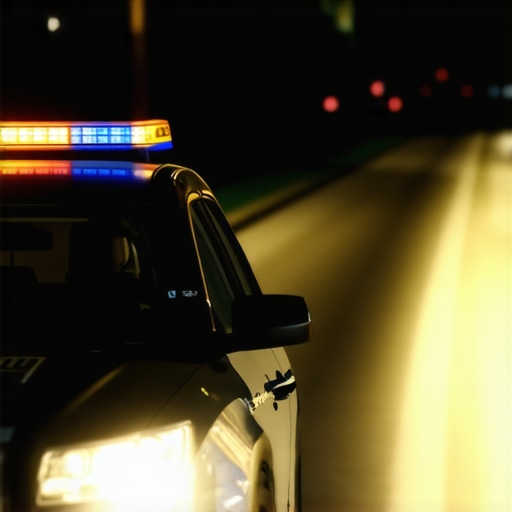
The office smells like strong black coffee and old paper. You are sitting across from me because you think the law is about what is fair. It is not. The law is about what can be proven through rigid adherence to procedure. I watched a client lose their entire claim in the first ten minutes of a deposition because they ignored one simple rule about silence. They spoke when they should have listened. They tried to justify their actions to a court reporter who did not care. If you want to survive a DUI charge, you must stop talking and start looking at the mechanics of the stop. Your case is failing right now because you believe the police officer’s version of the story is the final word. It is the first draft of a fiction. We are here to edit it. Case data from the field indicates that most traffic stops for suspected intoxication are built on foundations of sand. If the officer cannot articulate a specific violation, the house of cards collapses. This is not a game of feelings. This is a game of logistics and constitutional boundaries. You need a dui lawyer who understands that the fight begins before the handcuffs even click shut. Most people wait until the court date to worry. That is a mistake. The strategic play is often the delayed demand letter or the aggressive motion to suppress to let the defendant’s insurance clock run out while we dismantle the state’s timeline.
The legal anatomy of a stop
Reasonable suspicion serves as the legal threshold required for a police officer to initiate a traffic stop under the Fourth Amendment. This constitutional standard requires specific and articulable facts rather than a mere hunch or unsupported intuition to justify the temporary detention of a motor vehicle and its driver. Case data from the field indicates that officers often substitute personal bias for legal facts. An officer might claim you were weaving, but without video evidence showing you crossing the fog line or the double yellow, that claim is a phantom. We look at the dui defense from a forensic perspective. Did the officer note the exact distance of the swerve? Did the officer account for road conditions or wind gusts? These are the details that win cases.
“Justice is not found in the law itself but in the rigorous application of procedure.” – Common Law Maxim
In the world of dui legal strategy, we do not care about your intent. We care about the officer’s failure to follow the manual. If the traffic stop was illegal from the first second, every piece of evidence that follows is the fruit of the poisonous tree. This includes your breath test, your blood work, and your admissions.
The error in the officer narrative
Police reports often contain standardized language and boilerplate descriptions of impairment that do not reflect the unique reality of the incident. When a dui attorney reviews these affidavits, they frequently find contradictions between the written testimony and the available dashcam footage or body-worn camera recordings. You must understand that the officer is trained to write a report that leads to a conviction. They will mention bloodshot eyes and the smell of alcohol. They will not mention that you had been awake for twenty hours or that the smell was coming from a passenger. Procedural mapping reveals that these narratives are often constructed after the arrest to justify the initial suspicion. This is where the dui defense finds its leverage. We look for the 15-minute observation period. If the officer was busy searching your car, they were not observing you. That failure alone can invalidate a breath test. It is a technicality. The law is nothing but technicalities.
The technical failure of field tests
Standardized Field Sobriety Tests or SFSTs are subjective evaluations disguised as scientific measurements of physical coordination and cognitive function. These roadside exercises including the Horizontal Gaze Nystagmus, the Walk and Turn, and the One Leg Stand are prone to human error and environmental interference. A slight slope in the road can ruin a balance test. A passing truck can distract a driver during the eye test. Case data from the field indicates that even sober individuals struggle to perform these tasks under the stress of blue lights. The dui lawyer must demand the training logs of the officer. Was the officer certified to perform these tests? When was the last time they attended a refresher course? If the police officer did not hold the stimulus exactly twelve to fifteen inches from your face, the results of the HGN test are legally worthless. We do not accept the officer’s score. We conduct our own forensic audit of the video.
The motion to suppress as a weapon
A motion to suppress is a procedural tool used to exclude evidence that was obtained through unconstitutional means or illegal police conduct. This legal filing challenges the reasonable suspicion of the initial stop or the probable cause for the subsequent arrest. If the judge grants this motion, the prosecution often loses the breathalyzer results and incriminating statements. This is the heart of dui legal warfare. While most people think the trial is where the case is won, the motion to suppress is actually the central event.
“The right of the people to be secure in their persons, houses, papers, and effects, against unreasonable searches and seizures, shall not be violated.” – U.S. Constitution, Fourth Amendment
We analyze the timeline. If the officer detained you for thirty minutes while waiting for a K9 unit without additional suspicion, that is an illegal extension of the stop. The clock is a weapon. We use it to cut the state’s evidence into pieces. You must call an attorney who knows how to read the timestamp on the video against the timestamp on the radio dispatch.
The strategy behind the DUI defense
DUI defense strategies require a meticulous examination of scientific data and law enforcement protocol to identify procedural gaps. This defense methodology involves questioning the calibration of breathalyzers and the chain of custody for blood samples collected during the investigation. You might think your high blood alcohol content is the end of the story. It is not. Machines fail. The Intoxilyzer 8000 is a computer, and like any computer, it can glitch. Case data from the field indicates that software errors and temperature fluctuations can lead to false positives. We look at the maintenance logs. If the machine was not calibrated within the last thirty days, the numbers it produced are hearsay. A dui attorney does not argue that you were sober. A dui attorney argues that the state cannot prove you were intoxicated with the flawed tools they used. This distinction is the difference between a conviction and a dismissal.
The reason to call an attorney early
To call an attorney immediately after a dui arrest ensures that critical evidence such as surveillance footage and witness statements are preserved. Early legal intervention allows for a defense team to conduct an independent investigation before police records are finalized or evidence is lost. The longer you wait, the more the state hardens its narrative. When you call an attorney, you are putting a shield between yourself and the prosecutor. Do not talk to the police. Do not try to explain the situation. The police are not your friends. They are data collectors for the state. Every word you say is a brick in the wall they are building around you. An experienced dui lawyer will tell you to stay silent. Silence is not an admission of guilt. Silence is the exercise of a right. We take the facts you give us and we find the cracks in the state’s case. We look for the missing calibration records. We look for the officer’s history of disciplinary actions. We look for anything that proves the stop was a result of laziness or malice rather than law.
The truth about police dashcam evidence
Dashcam footage provides an objective record of the driving behavior and officer interaction that led to the arrest. This video evidence often serves as the primary tool for challenging reasonable suspicion because it can contradict the officer’s testimony regarding traffic violations. If the officer claims you were speeding, the video should show you passing other cars. If the officer claims you swerved, the video should show the tires crossing the line. Often, the video shows a driver who is perfectly in control. This creates a conflict in the evidence. When the written report says one thing and the video says another, the dui defense has the upper hand. We zoom in on the video. We look at the officer’s feet. We look at the lighting. We look at the weather. Procedural mapping reveals that many officers do not realize their cameras capture more than they think. We use that against them. It is about the data. It is about the facts. It is about the truth that the police tried to hide in a poorly written report.
The impact of illegal detention time
Illegal detention occurs when a police officer holds a motorist longer than reasonably necessary to issue a citation or complete the initial purpose of the stop. Any evidence gathered after this unauthorized delay is subject to exclusion under the exclusionary rule. If you were stopped for a broken taillight, the officer has about ten minutes to check your license and write the ticket. If they start asking you where you were headed and what you were doing, they are fishing. If they make you wait for a drug dog without a clear reason, they have violated your rights. Case data from the field indicates that these fishing expeditions are common in dui cases. A dui lawyer will map out every minute of the stop. If the officer spent twenty minutes talking to their supervisor instead of processing the stop, we have a case. This is how we win. We do not win by being nice. We win by being more technical and more prepared than the state. This is the brutal truth of the courtroom. Preparation is the only thing that matters.