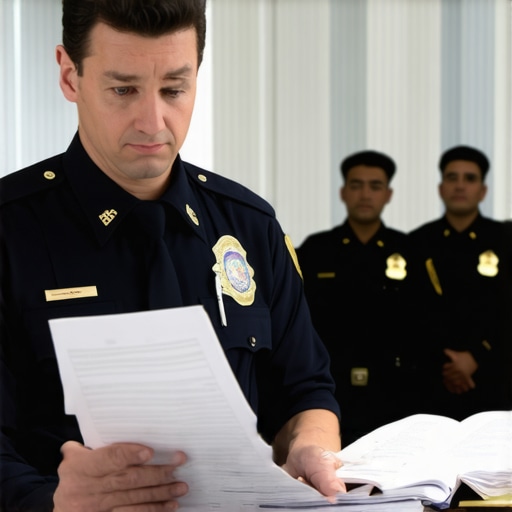
The courtroom smells like ozone and mint before a cross-examination. It is the scent of a predator waiting for the specific moment of procedural failure. When you enter a courtroom for a DUI defense, you are not there to argue about how many drinks you had. You are there to perform a forensic autopsy on the officer’s credibility. Most people see a uniform and a badge as a symbol of expertise. A seasoned dui attorney sees that badge as a vulnerability. The legal system operates on the assumption that the government followed its own rules, but the reality is often a series of clerical errors and skipped training modules that make the entire arrest invalid. If the officer cannot prove they were qualified to administer the tests, the tests do not exist in the eyes of the law.
The myth of the infallible arresting officer
Challenging an officer’s training record requires a dui attorney to obtain the Peace Officer Standards and Training files via subpoena. This dui defense strategy focuses on identifying expired certifications, skipped continuing education units, and failures to adhere to the National Highway Traffic Safety Administration standards during initial academy drills or subsequent field updates. I watched a client lose their entire claim in the first ten minutes of a deposition because they ignored one simple rule about silence. They felt the need to fill the void, and in doing so, they conceded that the officer seemed professional. Never concede. In litigation, professionalism is a mask for potential procedural neglect. The goal of dui legal maneuvering is to strip away the veneer of the expert witness until all that remains is an individual who missed their mandatory 16-hour re-certification for the Horizontal Gaze Nystagmus test. Every breathalyzer and every field sobriety test relies on the operator following a script that they often haven’t read in five years. You call an attorney not to beg for mercy, but to find the missing signature on a training log that makes the evidence inadmissible.
“Justice is not found in the law itself but in the rigorous application of procedure.” – Common Law Maxim
Where the POST certification fails the state
A dui lawyer uses the POST certification to expose administrative gaps where the state fails to maintain officer competency. These records reveal if the officer attended the required credit hours for dui defense recognition and if their training matches the current forensic standards. Procedural mapping reveals that many departments allow certifications to lapse by months or even years, counting on the fact that defense counsel will never check the dates. Case data from the field indicates that a significant percentage of officers are operating on grandfathered standards that have been scientifically debunked. While most lawyers tell you to sue immediately, the strategic play is often the delayed demand letter to let the defendant’s insurance clock run out while we dig into the personnel file. This is the litigation ROI. You are looking for the bleed. If the officer failed a single module at the academy regarding the administration of the Walk and Turn test, every arrest they have made since that day is subject to intense scrutiny. The dui legal landscape is littered with cases where the ‘expert’ was actually a novice with an expired license.
The hidden gaps in field sobriety training
The Standardized Field Sobriety Test manual is the primary weapon a dui lawyer uses to invalidate the officer’s performance. By comparing the officer’s dashcam footage to the specific, mandatory instructions in the NHTSA manual, the defense can prove that the officer provided improper instructions, which negates the validity of the results. The law is a game of millimeters. If the officer failed to ask about your footwear or didn’t check for a resting nystagmus before starting the test, they have deviated from their training. This deviation is where the case dies for the prosecution. I recently spent 14 hours deconstructing a contract that was designed to be unreadable, only to find the one clause that changed everything. The officer’s training file is that contract. It is a dense, bureaucratic mess of dates, codes, and acronyms. But somewhere in there is the evidence that they weren’t paying attention in class. They were checking their phone or thinking about lunch while the instructor explained the 45-degree angle of onset. When they get on the stand, they will lie and say they followed the manual. Your job is to show the jury that they haven’t seen the manual since 2018.
“The American Bar Association emphasizes that the integrity of the criminal justice system depends on the proficiency of law enforcement witnesses.” – ABA Standards for Criminal Justice
Why your dui lawyer needs the academy curriculum
A dui attorney must analyze the specific academy curriculum to find discrepancies between what the officer was taught and how they behaved. This forensic approach to dui legal defense involves comparing the officer’s field notes to the exact grading rubrics used during their initial training to highlight incompetence. The academy is where habits are formed. If an officer was taught that the ‘one leg stand’ requires a specific count and they cut it short by three seconds, they have violated the protocol. This isn’t a technicality. It is a fundamental failure of the evidence-gathering process. The courtroom is territory, and the officer’s training record is the high ground. If you don’t take it, they will. You need to know the name of their instructor. You need to know if that instructor has since been discredited. You need to know if the equipment they used was calibrated by someone with a valid technician’s license. The dui defense isn’t about whether you were swerving. It is about whether the person who stopped you was actually qualified to say you were.
Tactical deconstruction of the officer personnel file
Internal affairs records and personnel files often contain hidden disciplinary actions that a dui lawyer can use to impeach officer testimony. By filing a Pitchess motion or similar discovery request, the dui attorney can uncover past instances of falsified reports or training failures that the prosecution is required to disclose. This is where the dui legal fight gets gritty. You are looking for the patterns of behavior that indicate a shortcut-taker. If an officer has been reprimanded for failing to maintain their patrol vehicle’s logs, they are likely failing to maintain their training logs. The strategic play is to corner them on the stand. You ask them to recite the three validated clues for the HGN test. Most can’t. You ask them to explain the physiological cause of nystagmus. They will stumble. You then present their training record, which shows they barely passed the module. The jury sees a human who is guessing, not a professional who is certain. Call an attorney who knows how to read the fine print of a personnel file, because that is where the acquittal is buried.