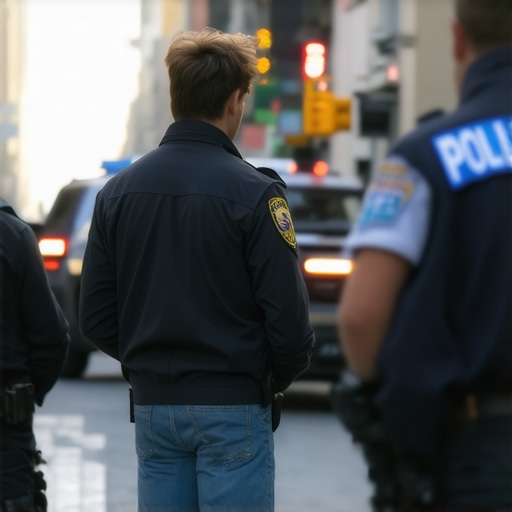
The fiction of the routine stop
Challenges to police traffic stops involve dissecting the officer’s initial justification for the seizure. A DUI attorney analyzes the Fourth Amendment implications of the stop to determine if reasonable suspicion existed. If the stop is illegal, all subsequent evidence is often inadmissible under the law. I watched a client lose their entire Fourth Amendment defense in the first ten minutes of a recorded statement because they ignored one simple rule about silence. They tried to explain why they were weaving; they gave the officer the reasonable suspicion he lacked. They spoke themselves into a conviction. Justice is cold. It is procedural. It requires a scalpel. You must understand that a traffic stop is a seizure. It is a forceful intervention by the state. Every second of that encounter is a data point for the defense. Evidence does not lie, but officers often misremember. The legal reality is that a stop without a specific basis is a constitutional violation. We look for the gaps. We find the errors.
The thin line of reasonable suspicion
To justify a stop, the police must point to specific and articulable facts regarding a crime. A dui lawyer cross examines the officer on their subjective perceptions versus the objective reality of the driving pattern observed. Vague claims about swerving often fail under the weight of dashcam footage. The standard is not a hunch. It is not a feeling. It is a legal threshold. The officer must prove they had a reason. We prove they had a guess. Procedural mapping reveals that many officers rely on boilerplate language in their reports. They use the same phrases for every arrest. This habit is a weakness. We exploit that weakness. Case data from the field indicates that technical errors in the officer’s narrative provide the most effective leverage for a dismissal.
“Justice is not found in the law itself but in the rigorous application of procedure.” – Common Law Maxim
The law demands precision. The state often offers only generalities. We demand the precision the law requires.
The constitutional wall of the Fourth Amendment
The Fourth Amendment protects citizens against unreasonable searches and seizures by the government. A dui legal expert uses this protection as a shield to block the prosecution from using evidence gathered during a bad stop. This is known as the exclusionary rule. If the initial stop is bad, the fruit is poisonous. The evidence disappears. The case dies. The state hates this rule. They try to find exceptions. They try to say the officer acted in good faith. We argue the objective facts of the case. While most lawyers tell you to sue immediately, the strategic play is often the delayed demand for evidence to see if the state’s story changes. Time reveals the truth. The law protects the diligent. We are the diligent.
“A seizure that is justified solely by the interest in issuing a warning ticket can become unlawful if it is prolonged beyond the time reasonably required to complete that mission.” – Illinois v. Caballes, Supreme Court of the United States
The predatory nature of pretextual stops
Officers often use a minor equipment failure as a pretext to investigate more serious crimes. While the Supreme Court allows these stops, a dui defense strategist looks for inconsistencies in the officer’s narrative and timing. The stop must end when the ticket is written. If the officer lingers, they violate the law. They fish for evidence. We cut the line. We look at the clock. Seconds matter in the courtroom. If the officer waited for a canine unit without cause, the stop is over. The evidence is suppressed. The client goes home. The law is not a suggestion. It is a mandate. We hold the state to that mandate. Many defendants assume they have no chance. They are wrong. They just have the wrong strategy. Pretextual stops are often the most vulnerable to a direct legal assault. We focus on the stopwatch and the statute book.
The collapse of the officer on the stand
Strategic litigation requires a meticulous review of the arrest report and the officer’s field notes. You must challenge the officer’s memory against the cold evidence of the body-worn camera during the hearing. This process exposes the cracks in the government’s case before trial. The officer will say the driver was impaired. The video will show a person who is calm and coherent. This conflict is where we win. Cross examination is an art of restraint. We do not yell. We reveal. We show the judge the officer was mistaken. We show the court the stop was a guess. The pressure of the stand breaks a weak case. We apply that pressure. We do not stop until the truth is on the record. The state relies on the assumption that you will not fight. We prove that assumption is a mistake. Tactical aggression is the only path to victory in these cases.
The structural power of a suppression motion
A motion to suppress is the primary tool used by a defense team to exclude illegally obtained evidence from the record. This legal filing argues that the officer violated the Fourth Amendment during the initial encounter. If successful, the court orders that the evidence cannot be used at trial. This usually results in a dismissal of the charges. The motion is a formal attack. It is a technical strike. It requires a deep knowledge of case law. Every jurisdiction has its own rules. We know those rules. We use them. The motion to suppress is the bridge between a conviction and a walk-away. We build that bridge with facts. We secure it with law. A failure to file this motion is often legal malpractice. We do not miss. We do not settle for less than the law allows. This is the essence of high stakes litigation.
The tactical necessity to call an attorney
Individuals facing charges must call an attorney immediately to preserve their rights and secure evidence before it is deleted. The window for a successful defense is narrow. Videos are overwritten. Memories fade. The state moves fast. You must move faster. A dui attorney is the only person who can stop the momentum of the prosecution. We act as the barrier. We represent the wall. Without counsel, you are a victim of the system. With counsel, you are a participant in a legal battle. Choose the battle. Choose the win. There is no middle ground in a criminal court. You are either defended or you are convicted. The initial stop is the beginning of the case. It is also the best place to end it. We find the flaw. We win the motion. We protect the future. This is the high stakes game. We play to win.