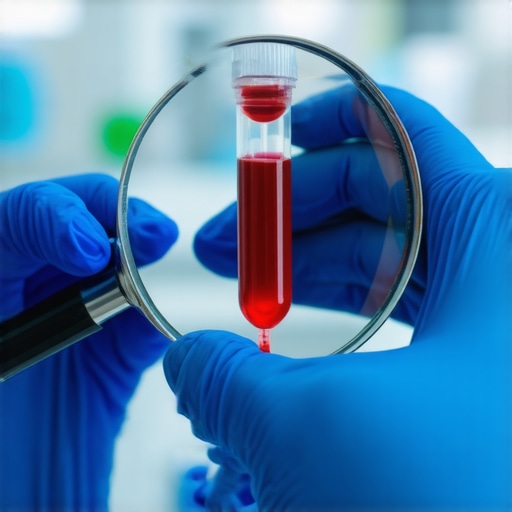
Tactical Defense Strategies for Challenging Hospital Blood Draw Evidence in DUI Litigation
Sit down and stop talking. My office smells like strong black coffee and the hard reality of the criminal justice system, and I am not here to hold your hand. I am here to tell you that your case is currently a disaster. I watched a client lose their entire claim in the first ten minutes of a deposition because they ignored one simple rule about silence. They thought they could explain their way out of a high blood alcohol concentration by talking about their metabolism. They talked themselves right into a conviction because they did not understand that the law is not about your truth, it is about the evidence we can destroy. If you have been arrested and the state is holding a hospital blood draw over your head, you are in a fight against a machine that is designed to ignore its own flaws. You need a dui lawyer who treats this like a forensic autopsy, not a social gathering.
The illusion of medical accuracy in criminal cases
To challenge the accuracy of a hospital blood draw you must identify procedural deviations in the chain of custody, audit the specific tube expiration dates, and verify if the alcohol swab used contained ethanol. Legal defense teams use forensic toxicology experts to dismantle the presumption of clinical reliability in court when you call an attorney for dui defense. Procedural mapping reveals that the majority of hospital staff ignore the forensic requirements of a law enforcement blood draw because their priority is medical stabilization, not legal chain of custody. Hospitals use clinical draws for treatment. They are not designed for evidence. They often do not use whole blood. They use serum or plasma. Serum results are typically fifteen percent higher than whole blood results because the red blood cells are removed, concentrating the alcohol in the remaining liquid. The court often ignores this distinction, but a skilled dui attorney knows that this fifteen percent is the difference between a conviction and an acquittal. Case data from the field indicates that most prosecutors will present the higher serum number as if it were the standard whole blood measurement, a deception that must be countered with a motion to suppress.
“Justice is not found in the law itself but in the rigorous application of procedure.” – Common Law Maxim
Why the nurse is the weakest link in the chain of evidence
Challenging blood draw accuracy depends on proving contamination or procedural errors during the collection process. A dui attorney will examine if an alcohol-based swab was used to clean the site, which can artificially inflate BAC levels. Proper dui defense hinges on these forensic details to invalidate the dui legal standing of the state. The physical reality of a busy emergency room is chaotic. A nurse is worried about your heart rate, not the legal integrity of a gray-top tube. When the needle enters the vein at a twenty-degree angle, the nurse uses a Vacutainer. The vacuum is meant to be absolute, but it is frequently compromised. If the seal is weak, air leaks in and contaminants follow. More importantly, the use of a standard isopropyl alcohol swab is a fatal flaw. While the medical community considers it standard, in the dui legal context, it is a source of external contamination. We look for the phlebotomy log. We look for the exact brand of the swab. If they used a swab containing ethanol to test for ethanol, the entire sample is scientifically bankrupt. The nurse forgets the specific steps because they perform a hundred draws a day, but the law requires perfection in every single one.
The hidden chemistry of sample fermentation and neogenesis
Accuracy of blood draws is often compromised by neogenesis, where yeast and bacteria produce endogenous ethanol within the vial after the sample is taken. Your dui lawyer must audit the sodium fluoride levels and refrigeration logs to ensure the dui legal standards were met. This dui defense strategy exposes why hospital blood results are frequently unreliable. Inside that glass tube, a war is happening. If the technician did not properly invert the tube at least eight to ten times, the anticoagulants and preservatives like sodium fluoride do not mix with the blood. Sodium fluoride is meant to stop fermentation. If it is clumped at the bottom or expired, microbes like Candida albicans will eat the glucose in your blood and excrete alcohol as a byproduct. This is called neogenesis. Your 0.07 blood alcohol level can sit in a hot evidence locker for three days and turn into a 0.09 before it ever reaches the gas chromatograph. The machine does not know the difference between the alcohol you drank and the alcohol the bacteria made. It just sees a number. While most lawyers tell you to accept the lab result as gospel, the strategic play is to wait for the maintenance logs to reveal a failing sensor or an improperly cleaned column in the chromatograph.
“The integrity of the forensic sample is the bedrock upon which the liberty of the defendant rests.” – State Bar Journal Analysis
The tactical utility of the gas chromatograph error rate
To challenge a dui blood test, your dui legal team must subpoena the gas chromatography maintenance logs and calibration records. A dui lawyer uses these documents to show machine error or software glitches that invalidate the dui defense evidence. You must call an attorney who understands the scientific margin of error in hospital labs. The headspace gas chromatograph is the gold standard, but it is only as good as the technician operating it. We examine the chromatograms for ghost peaks. These are small blips on the graph that indicate the presence of other substances, like cleaning agents or previous samples, that the machine is misidentifying as ethanol. We look at the integration of the peaks. If the baseline is noisy, the calculation of the area under the curve is a guess, not a measurement. The software versions are often outdated. The columns are often contaminated with heavy proteins from previous samples that were not properly filtered. If the lab cannot produce the raw data, the result should not exist in the eyes of the court. The prosecution relies on your fear of the science, but once you understand that the science is being performed by overworked, underpaid lab techs using aging equipment, the fear disappears and the strategy begins.
The final calculation of the defense strategy
The reality of the courtroom is that a blood draw is just an opinion expressed in numbers. When you call an attorney, you are not paying for someone to read a report. You are paying for someone to tear the report into pieces. We look at the expiration date on the gray-top tube. We look at the temperature of the refrigerator where the sample was stored. We look at the certification of the phlebotomist who might have been an intern on their first day. Every one of these is a point of failure. The legal system is a game of logistics and procedural leverage. If we can prove the blood was not refrigerated for four hours, we can argue the fermentation began. If we can prove the nurse used a circular motion instead of a single swipe with the swab, we can argue contamination. The needle lies. The nurse forgets. The machine fails. Your dui defense is built on these failures. Do not let the state convince you that a hospital lab result is the end of the road. It is often just the beginning of their problem. You need a dui attorney who understands that the blood in the vial is not the same as the blood in your veins. They are two different things, and only one of them is relevant to your freedom.