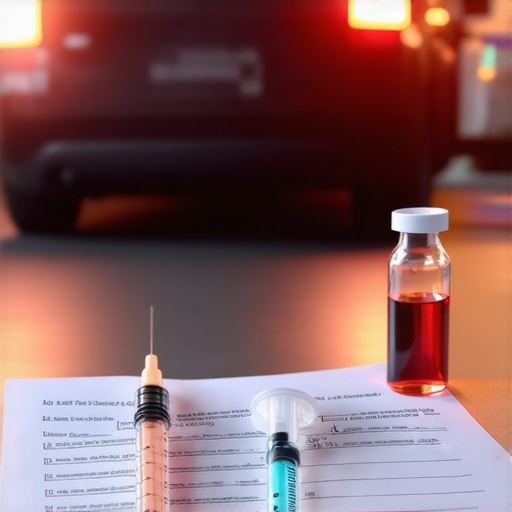
The air in my office smells of ozone and mint. It is the scent of preparation and cold, hard clarity. You are here because the state took your blood by force, and you think the law was on their side. You are likely wrong. Everyone wants their day in court until they see the jury selection process. It isn’t about truth; it’s about perception. I have watched prosecutors paint a picture of guilt using nothing but a single, flawed vial of blood, while the defense sat silent. We will not be silent. We will look at the exact phrasing of the warrant, the tactical timing of the draw, and the microscopic flaws in the lab protocol that your previous lawyer probably missed. [IMAGE_PLACEHOLDER]
The myth of automatic consent in chemical tests
A warrant for a forced blood draw requires more than just an officer’s hunch about intoxication. To challenge it successfully, your dui attorney must prove the affidavit lacked probable cause or contained material misrepresentations that misled the judge. This turns the dui defense into a procedural battle over Fourth Amendment rights and constitutional limits. Many people believe that by simply driving on public roads, they have signed away their right to refuse a needle in the arm. This is a half-truth designed to keep you compliant. While implied consent laws exist, the United States Supreme Court has made it clear that the natural dissipation of alcohol in the bloodstream does not constitute a per se exigency. This means the police cannot just bypass a warrant because they are afraid the evidence is disappearing. They must follow the rules. If the officer bypassed the warrant process or if the warrant itself was a template filled with boilerplate language, the evidence is vulnerable. We examine the timeline. We look at the exact minute the accident occurred versus the minute the warrant was signed. If there is a gap that the officer cannot explain with specific, articulable facts, we have a window to strike.
“Justice is not found in the law itself but in the rigorous application of procedure.” – Common Law Maxim
Flaws in the probable cause affidavit
The probable cause affidavit is the foundation of any forced blood draw and must contain specific facts rather than vague conclusions. A dui lawyer looks for gaps where the officer substituted their own assumptions for actual evidence of impairment. If the affidavit fails the four corners test, the warrant is invalid. When an officer sits in their patrol car and types out an affidavit, they are often tired and prone to shortcuts. They use phrases like “slurred speech” or “glassy eyes” as if they are universal truths. They are not. I have seen cases where the “slurred speech” was actually a documented medical condition or the result of a deployed airbag in a high-speed collision. We scrutinize the affiant. We look at their training records. We look at the dashcam footage to see if their description of your balance matches the physical reality. If the officer lied or showed a reckless disregard for the truth in that document, the whole case can collapse. We call for a Franks Hearing to challenge the veracity of the officer’s statements. If we can prove the magistrate was misled, the blood results go in the trash.
The magistrate role as a rubber stamp
Magistrates are required to be neutral and detached judicial officers when reviewing a warrant request for a blood draw. If the magistrate acts as an extension of the police department or fails to actually read the affidavit before signing, the warrant is constitutionally defective and the dui defense thrives. In many jurisdictions, there are certain judges known for signing anything the police put in front of them at 3 AM. This is a violation of your rights. A warrant is not a formality; it is a shield. We investigate the process of how that warrant was obtained. Was it a phone call? Was it an electronic signature? We demand the logs. We want to know how many other warrants that judge signed in that same hour. If the judge was a mere rubber stamp, they were not acting as a neutral arbiter. This is the procedural leverage we use to dismantle the state’s case.
Contamination during the venipuncture process
The physical act of drawing blood for a dui legal case must follow strict medical and forensic protocols to ensure the sample is not contaminated. If the technician used an alcohol based swab to clean the skin before the needle insertion, the entire blood alcohol concentration reading is scientifically compromised. Most people do not realize that the tiny prep pad used by the nurse can ruin the evidence. In a clinical setting, an alcohol swab is standard. In a forensic setting, it is a disaster. We depose the phlebotomist. We ask them exactly which kit they used. We look at the expiration date on the gray top tubes. Those tubes contain sodium fluoride and potassium oxalate. If the ratios are wrong, or if the tube was not inverted exactly eight times to mix the preservatives, the blood can ferment. Fermentation creates its own alcohol. Suddenly, your 0.07 becomes a 0.12, not because you were drunk, but because the state’s science is sloppy.
The scientific failure of gas chromatography
Gas chromatography is the machine used to analyze your blood, but it is only as accurate as the human who calibrated it. A dui attorney must demand the raw data and the chromatograms to verify that the peaks and valleys of the graph actually represent ethanol. These machines are not magic boxes. They are complex instruments that require constant maintenance. We look for “carryover” from the previous sample. If the person before you had a high BAC, and the machine was not properly flushed, your sample is tainted. We look at the “standard” samples used to calibrate the machine. If the lab was cutting corners to save money, their results are fiction. While most lawyers tell you to attack the blood results immediately, the strategic play is often to wait until the officer has testified under oath in an administrative hearing where the rules of evidence are relaxed, locking them into a version of events that can be dismantled later.
“The requirement of a warrant is not a mere formality but a check against the overzealous officer.” – ABA Criminal Justice Standards
The broken chain of custody
Chain of custody refers to the chronological documentation of the blood sample from the moment it leaves your arm to the moment it enters the machine. Any gap in this record allows a dui lawyer to argue that the sample was tampered with or switched. Where was the blood at 4 AM on a Sunday? Was it sitting in the trunk of a hot patrol car? Was it in an unsecured refrigerator at the station? Blood is a biological tissue. It degrades. If the state cannot account for every second of that sample’s existence, they cannot prove it is your blood they tested. We demand the access logs for the evidence locker. We look for signatures that don’t match or time stamps that are physically impossible. The law requires a seamless record, but human beings are rarely seamless.
Strategy over speed in the defense timeline
Effective dui legal defense requires a patient approach that prioritizes discovery and forensic analysis over quick plea deals. By delaying the demand for a trial until all lab maintenance records are secured, an attorney can often find the one error that leads to a dismissal. The prosecution wants you to plead early because their case is often a house of cards. They hope you are too scared to look at the maintenance logs of the gas chromatograph. We are not. We wait for the lab to fall behind on their paperwork. We wait for the technician to move to another state or change jobs. Time is often on the side of the defense, provided you have a strategist who knows how to use it. We do not rush. We wait for the mistake.
Final motions to suppress the evidence
A motion to suppress is the final tactical strike to prevent the jury from ever seeing the blood results in a dui case. This motion is based on the cumulative errors found in the warrant, the draw, and the lab analysis. This is where the chess match ends. If we have done our job, the judge has no choice but to rule the blood evidence inadmissible. Without the blood, the state is left with the officer’s subjective opinion, which is easily picked apart on cross-examination. We focus on the lack of exigent circumstances. We focus on the Fourth Amendment. We make the cost of prosecution higher than the state is willing to pay. This is how we win. This is the litigation architecture required for a serious defense.