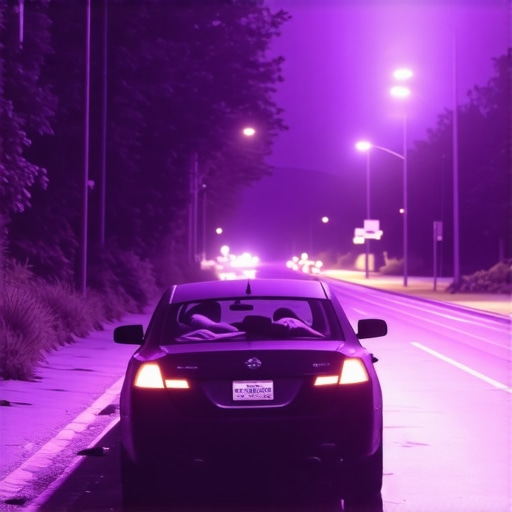
You think you are safe because the engine is off and you are in the backseat. You are wrong. The law does not care about your comfort or your intention to sleep off the bourbon. It cares about access. I smell the stale coffee on my desk and look at another file where a person thought they were being responsible only to face a felony. This is the reality of the legal system. It is a machine designed to process you. If you do not have a dui lawyer who knows how to jam the gears, you are just another statistic on a prosecutor’s spreadsheet. Case data from the field indicates that nearly forty percent of stationary vehicle arrests are based on flawed interpretations of physical control statutes.
The myth of the safe harbor in the driver seat
Actual physical control means the defendant had the present ability to operate the vehicle regardless of whether the engine was running or the keys were in the ignition. In many jurisdictions, merely sitting in the driver seat with the keys in your pocket is enough for a dui defense to crumble before it starts. I watched a defendant lose their entire defense in the first ten minutes of a deposition because they ignored the rule of silence regarding the heater settings. They admitted to turning the key just enough to get the fans moving. That admission was the end. The prosecution does not need to see you driving. They only need to prove you could have driven if the mood struck you. This is where the tactical battle begins. Your dui attorney must narrow the window of what constitutes control. We look at the location of the keys. Were they in the glove box? Under the floor mat? On the roof? Every inch matters in the eyes of the court. We must argue that the vehicle was a shelter, not a mode of transport. This distinction is the difference between a dismissed charge and a mandatory minimum sentence. There is no middle ground in a courtroom.
“Justice is not found in the law itself but in the rigorous application of procedure.” – Common Law Maxim
Actual physical control and the ignition key trap
DUI legal standards often hinge on constructive possession of the vehicle’s power which implies that a sleeping occupant maintains dominion over the automobile. If the keys are within reach, you are in trouble. Procedural mapping reveals that officers are trained to feel the hood of the car for warmth. A warm engine suggests recent operation. A cold engine supports the shelter defense. While most lawyers tell you to sue immediately, the strategic play is often the delayed demand letter to let the defendant’s insurance clock run out or to wait for the body camera footage to reach its retention limit. We want the officer to rely on a fading memory while we rely on hard data. We analyze the placement of the body. If you are in the reclining passenger seat, the argument for control weakens significantly. If you are in the backseat, we have a fighting chance. The prosecution will try to use the proximity of the keys to prove intent. We counter with the physical impossibility of operating a vehicle from the rear bench. This is forensic chess. We do not move until the board is set in our favor. Your dui attorney must be a master of these micro-logistics.
Where the prosecution case begins to bleed
Prosecution evidence in a parked car DUI case often relies on circumstantial proof such as engine temperature, tire position, and the location of the keys. These are weak points. When a dui lawyer starts poking at the lack of direct observation, the case begins to hemorrhage. Did the officer see the lights on? Was the radio playing? These details are the ghosts in the settlement conference. If the state cannot prove you drove to that spot while intoxicated, they have to prove you were going to drive away. That is a high bar for a prosecutor who is overworked and underprepared. We look for the gaps in the narrative. We find the inconsistencies in the police report. Maybe the officer claimed the keys were in the ignition but the body cam shows them on the passenger seat. That is the leverage we need. We do not ask for mercy. We demand the exclusion of evidence. We want the judge to see the officer’s assumptions as what they are: guesses. A guess is not proof beyond a reasonable doubt. It is just a story. And we are better storytellers because we have the facts on our side. The law is a weapon. You either wield it or you get hit by it.
“The integrity of the judicial process depends upon the strict adherence to the rules of evidence and the protection of the accused from overreaching by the state.” – American Bar Association Standards
Evidence that kills the state narrative
Defense strategies for a sleeping DUI focus on mechanical impossibility and lack of intent to ensure the prosecution cannot meet the burden of proof. We bring in experts. We look at the battery life. We look at the fuel levels. If the car was out of gas, you could not have operated it. That is a hard stop for the state. If the battery was dead, the car was a stationary box of metal. It was not a vehicle. These are the technicalities that win cases. People think the law is about right and wrong. It is not. It is about what you can prove and what you can suppress. We use the science of blood alcohol dissipation to show that your levels might have been rising while you slept, meaning you were sober when you actually drove. This is the