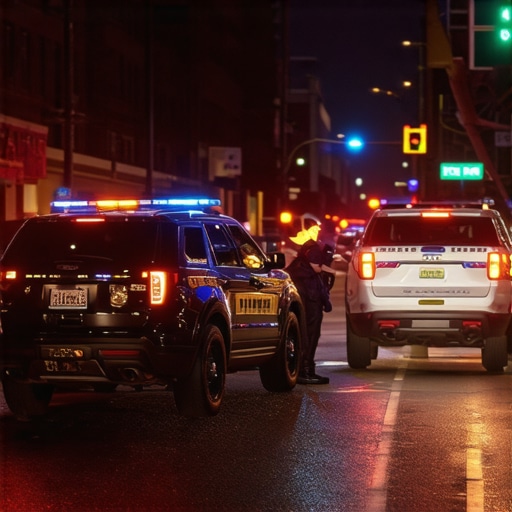
The High Cost of Silence and the Science of the Roadblock
I watched a client lose their entire claim in the first ten minutes of a deposition because they ignored one simple rule about silence. They thought being helpful would win them favor. Instead, they handed the prosecution a roadmap to their own conviction. In a DUI checkpoint case, that helpfulness is a death sentence. You are not there to be a good citizen. You are there to survive a trap. The smell of strong black coffee is the only thing keeping me focused on the structural failures of these roadside operations. Most people see flashing lights and think the law is on the side of the police. I see a series of administrative hurdles that the state almost always trips over. If you want to beat a DUI charge, you stop looking at the breathalyzer and start looking at the paperwork that authorized the stop in the first place.
The myth of the ironclad roadblock
DUI lawyers challenge checkpoints by identifying failures in administrative guidelines like notice requirements, duration of detention, and neutral selection math. These roadblocks are not absolute. Success depends on exposing procedural errors that violate Fourth Amendment protections against unreasonable searches and seizures within the specific legal framework of your state. Case data from the field indicates that law enforcement agencies frequently cut corners during the planning phase of a sobriety checkpoint. This is where the defense begins. While most lawyers tell you to sue immediately, the strategic play is often the delayed demand letter to let the defendant’s insurance clock run out or to wait for the arresting officer’s body camera footage to be archived and then requested under specific discovery rules. The Fourth Amendment usually protects you from being stopped without reasonable suspicion. The Supreme Court carved out an exception for DUI checkpoints, but that exception is narrow. It is a razor thin line. If the police step one inch outside the pre-approved plan, the entire operation becomes an illegal search. Procedural mapping reveals that the legality of the stop is not about your blood alcohol content. It is about whether the supervisor signed the operational plan before the first flare was lit.
“The detention of a person at a sobriety checkpoint is a ‘seizure’ within the meaning of the Fourth Amendment.” – ABA Legal Review
Why the initial notice is usually a lie
DUI defense strategies often hinge on whether the police provided adequate public notice before the checkpoint began. Legal standards require that the public be informed of the date and location to minimize the intrusive nature of the stop. Failure to publish this notice can invalidate every arrest made. The police claim they want to deter drunk driving. If that were true, they would announce the checkpoint locations with neon signs. Instead, they often bury the notice in a local paper that no one reads or on a social media page with zero engagement. This is a tactical failure. A DUI attorney will demand proof of publication. We want to see the affidavit from the newspaper. We want to see the timestamp of the press release. If the notice was sent out five minutes after the checkpoint started, it is a violation of the Ingersoll standards used in many jurisdictions. The goal of the notice is not just to tell people where to avoid. It is a legal requirement that balances the state’s interest in safety against your right to be left alone. When the state fails this balance, the court must suppress the evidence. This is not a technicality. It is the law.
The exact math behind the neutral selection process
DUI legal experts analyze the selection math to ensure officers were not using personal bias to stop vehicles. A neutral formula such as stopping every third or fifth car must be strictly followed. Any deviation from this mathematical pattern suggests profiling and violates the constitutional requirements for checkpoints. Procedural mapping reveals that officers get bored. Or they get aggressive. They see a car they do not like, and they break the pattern. This is the moment the checkpoint dies. I have spent hours reviewing dashcam footage counting cars. If the plan says stop every third car and the officer stops the second car because the driver looked suspicious, that officer just committed a Fourth Amendment violation. The officer’s discretion must be zero. They are supposed to be machines. The moment they start acting like investigators, they are no longer conducting a checkpoint. They are conducting an unconstitutional roving patrol. A DUI lawyer will subpoena the tally sheets. These are the handwritten logs where officers mark every car that passes. If the tally marks do not match the math of the arrests, the case is over.
How the duration of the stop breaks the law
DUI attorney tactics involve timing the length of the detention from the moment the car stops to the moment the officer requests a field sobriety test. The law requires the initial detention to be brief. Any unnecessary delay without immediate evidence of intoxication constitutes an illegal seizure. You are sitting in your car. The officer is checking your license. If that process takes ten minutes instead of two, the stop has exceeded its legal scope. Case data from the field shows that long wait times are common in poorly managed checkpoints. The Supreme Court in Michigan Dept. of State Police v. Sitz emphasized that the intrusion must be minimal. If you are trapped in a line of cars for forty five minutes, the state has failed the balancing test. The physical choreography of the stop matters. How long were you standing on the asphalt? How long did the officer hold your ID while they chatted with their partner? Every second is a potential motion to suppress. We look for the dead time in the video. The silence. The waiting. That is where the defense lives.
“Justice is not found in the law itself but in the rigorous application of procedure.” – Common Law Maxim
The paperwork trail that exposes a bad arrest
DUI defense relies heavily on the technical maintenance of the breath testing equipment used at the scene. Every device must have a current calibration log and a record of accuracy checks. If the paperwork is missing or the device was not tested properly, the results are inadmissible. The breathalyzer is not a magic box. It is a sensitive instrument that requires constant care. It hates the cold. It hates the heat. It hates being moved. Most roadside breath tests are notoriously unreliable. A DUI legal professional will demand the logs for the specific serial number of the device used on you. We want to see the last time it was calibrated against a known standard. We want to see the training certificate of the officer who operated it. Was the officer certified on that specific model? Did they follow the mandatory twenty minute observation period before the test? If they were busy directing traffic, they were not observing you. If they were not observing you, the test result is garbage. This is the microscopic reality of the case. We do not care if you had a drink. We care if the machine was lying.
Why your silence is your only weapon
DUI lawyers advise all drivers to remain silent beyond providing identifying documents. Any statements made during the checkpoint are recorded and used to build a case for probable cause. Silence prevents the officer from gathering subjective evidence of impairment such as slurred speech or confused answers. The officer asks where you are coming from. They ask if you have had anything to drink tonight. These are not friendly questions. They are probes for evidence. The moment you answer, you have given them something to use against you. Even if you say no, they will claim your speech was slurred. If you say you had one beer, they will write down that you admitted to drinking. The strategic play is to provide your license and registration and then stop talking. Do not explain where you were. Do not explain why your eyes are red. Let them make their mistakes in silence. A case built on an officer’s subjective opinion is much easier to defeat than a case built on your own admissions. The courtroom is a territory. You do not give up ground by talking your way out of a handcuffs. You win by forcing the state to prove every single element of their case without your help.
“, “image”: {“imagePrompt”: “A dramatic, low-angle shot of a nighttime DUI checkpoint with bright blue and red police lights, orange traffic cones, and silhouettes of officers standing near a line of cars on a dark highway under a heavy fog. High contrast and cinematic lighting.”, “imageTitle”: “The Procedural Reality of a DUI Checkpoint”, “imageAlt”: “Police officers conducting a DUI checkpoint at night with traffic cones and flashing lights.”}, “categoryId”: 1, “postTime”: “”}