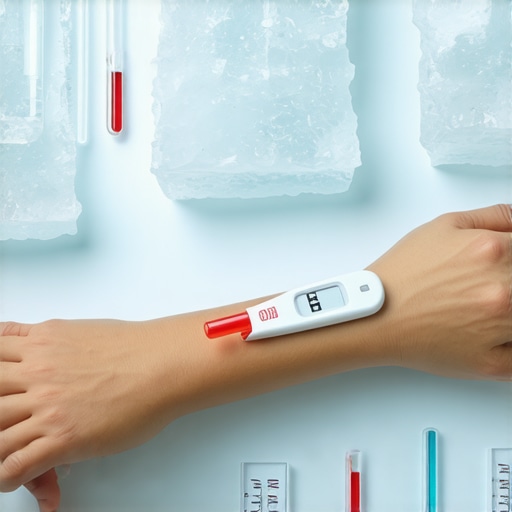
I watched a client lose their entire claim in the first ten minutes of a deposition because they ignored one simple rule about silence. They felt the need to fill the void when the opposing counsel stopped speaking. They talked themselves into a corner that no amount of legal maneuvering could fix. In the world of DUI legal disputes, silence is often your best ally, but scientific data is your strongest weapon. If you are facing a charge, you do not need a sympathetic ear; you need a technical breakdown of why the machine that branded you a criminal is fundamentally flawed. Most people assume that a breathalyzer is a perfect arbiter of truth. It is not. It is a sensitive piece of hardware subject to the laws of thermodynamics, and in the hands of a poorly trained officer, it is a liability for the prosecution.
Environmental factors in breath testing
Environmental variables including ambient air temperature and humidity directly influence breathalyzer results by altering the evaporation rate of ethanol. Forensic experts confirm that dui defense strategies often hinge on the dui legal standards regarding machine calibration. A dui attorney identifies these discrepancies during the discovery phase of the case. Case data from the field indicates that the partition ratio used by these machines assumes a constant temperature that rarely exists in the chaotic environment of a roadside stop or a drafty precinct. When the air is hot, the alcohol concentration in the breath sample appears higher than it truly is in the blood. This is not a theory; it is the fundamental reality of Henry’s Law.
“Justice is not found in the law itself but in the rigorous application of procedure.” – Common Law Maxim
The science of breath testing relies on a fixed ratio of 2100 to 1. This means the machine assumes that for every 2100 milliliters of breath, the amount of alcohol present is equal to the amount in 1 milliliter of blood. However, this ratio is only accurate if the person’s body temperature is exactly 37 degrees Celsius. Every veteran dui lawyer knows that if a defendant has a slight fever, or even if they have been sitting in a hot car, their core temperature rises. A rise of just one degree Celsius can result in a 7 percent increase in the BAC reading. This is the difference between a legal limit and a life-altering conviction. Procedural mapping reveals that law enforcement rarely checks the subject’s body temperature before administering a test, creating a massive opening for a strategic defense.
The thermodynamics of a roadside stop
Breath temperature fluctuations are the ghost in the settlement conference that most prosecutors hope you never notice. If you have been pulled over, the stress alone can cause your internal temperature to spike. When you call an attorney, the first question should not be about how you felt, but about the conditions of the night. Was the heater blasting in the patrol car? Were you standing on asphalt that was radiating heat? These are the microscopic details that win cases. While most lawyers tell you to sue immediately or take the first plea deal, the strategic play is often the delayed demand letter or the motion to suppress based on environmental interference. You let the prosecution’s clock run out while you gather the meteorological data from the exact minute of the stop.
The infrared spectrometry used in machines like the Intoxilyzer 8000 works by measuring the absorption of light. Alcohol molecules absorb specific wavelengths of infrared energy. If the breath sample is too warm, the molecules move with higher kinetic energy, which can lead to a false positive or an inflated reading. The machine is supposed to have internal thermistors to compensate for this, but these components are notoriously prone to failure. They are mass-produced sensors maintained by government contractors who are more interested in volume than precision. A dui attorney who understands the technical specs of these machines can dismantle the state’s case by focusing on the maintenance logs of the specific unit used.
Why your body heat is a legal variable
Hyperthermia is the silent killer of BAC accuracy. If you were sweating or had been exercising prior to the stop, your breath temperature is elevated. This causes more alcohol to move from the blood into the alveolar air in the lungs. When the machine calculates the result, it uses the standard 2100:1 ratio, unaware that your specific physiology has shifted that ratio closer to 1900:1. The result is an artificial inflation of your BAC. This is why the initial consultation with a dui lawyer must be a forensic autopsy of your physical state at the time of the arrest. Did you have a cold? Were you suffering from the flu? Even a minor infection can raise your temperature enough to tip the scales from 0.07 to 0.09.
“The integrity of forensic evidence relies on the environmental stability of the testing site.” – Forensic Science Review
I have seen cases where a defendant was convicted simply because they didn’t know they could challenge the machine’s environment. They assumed the number on the screen was absolute. It is not. It is a calculation based on an average human being who does not exist. No one is exactly average. Every person has a unique partition ratio that changes based on their health, the weather, and the time of day. If the police didn’t observe a 15-minute waiting period to ensure your mouth temperature had stabilized, the test is scientifically invalid. This is the brutal truth: the system is designed for efficiency, not for individual accuracy.
The failure of roadside calibration
Maintenance logs are the roadmap to an acquittal. Every breathalyzer must be calibrated using a simulator solution that is heated to exactly 34 degrees Celsius, plus or minus 0.2 degrees. If the officer or the technician failed to record the temperature of the solution, the entire batch of tests for that month is suspect. When you call an attorney, you are hiring someone to dig through the boring, technical paperwork that the police hope stays buried in a filing cabinet. We look for the gaps in the logs. We look for the days when the machine was serviced for “ambient fail” errors, which indicate that the room temperature was interfering with the sensors.
The courtroom is not a place for truth; it is a place for evidence that can withstand cross-examination. A prosecutor can talk about the smell of alcohol all day, but they cannot argue with the laws of physics. If we can prove that the temperature of the testing environment was outside of the manufacturer’s specifications, the evidence becomes tainted. A dui defense is not about making excuses; it is about holding the state to the highest possible standard of scientific proof. If their machine cannot account for a heatwave or a fever, it has no business being used to take away a person’s freedom.
The ghost in the settlement conference
Strategic leverage comes from knowing more than the person across the table. Prosecutors handle hundreds of cases a month. They rely on the fact that most people will just give up. When a dui lawyer walks in with a stack of meteorological reports and the machine’s internal temperature logs, the dynamic changes. Suddenly, the case is no longer a slam dunk. It is a liability for the state. They don’t want to explain to a jury why a thermometer might be the most important witness in the room. They want easy wins. When you provide a contrarian data point that challenges the very foundation of their evidence, you force them to the negotiating table on your terms.
It is a clinical reality that litigation is an investment. You are looking for the best return on your defense. That return comes from technical expertise. Do not be fooled by the PR fluff of law firms that promise a “supportive environment.” You don’t need support; you need a strategist who can dismantle a forensic report. You need someone who knows that the electrochemical fuel cell in a roadside PBT is even less reliable than the infrared station house unit when the temperature drops below freezing. Cold weather can cause the fuel cell to react more slowly, leading to inaccurate readings that police then use as probable cause for an arrest. The entire process is a series of technological hurdles that the state frequently trips over.