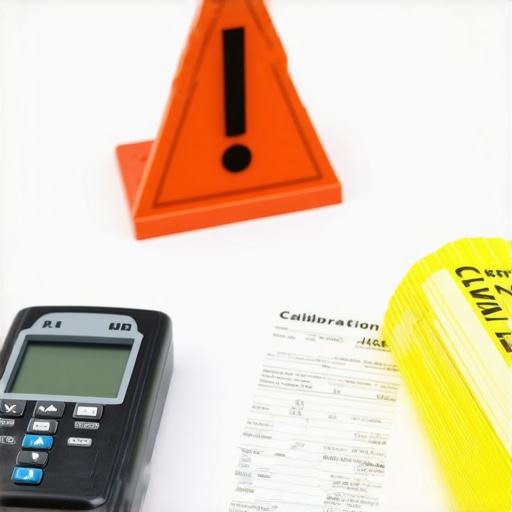
I smell like strong black coffee because I spent the last fourteen hours looking at a spreadsheet of voltage fluctuations and sensor drift metrics. Most people walk into my office thinking the machine is a god. They think that little plastic box with the mouthpiece is an infallible judge of their character. You are wrong. The machine is a liar. The state is lazy. Your case is failing right now because you believe the number on the screen instead of the data in the machine’s memory. I recently spent 14 hours deconstructing a maintenance record that was designed to be unreadable, only to find the one missing entry that changed everything. The technician had logged a slope detection error three days before my client’s arrest, yet the machine was never taken out of service. That is the reality of the forensic landscape. It is not about what you drank. It is about whether the state can prove their equipment was functioning at the microscopic level required for a criminal conviction. If they cannot produce the logs, they cannot produce a conviction.
The myth of the perfect machine
**Breathalyzers** are sensitive **forensic instruments**, not magic boxes. They operate on **electrochemical sensors** that require constant **calibration** against a known **alcohol standard**. If the **police department** fails to produce **maintenance logs**, the **DUI evidence** lacks the necessary **scientific foundation** to prove **blood alcohol content** beyond a reasonable doubt in a **criminal court**. The machine uses infrared spectroscopy or fuel cell technology to detect ethanol molecules. Over time, these sensors degrade. They become saturated. They lose their ability to distinguish between the methyl group of an alcohol molecule and the background noise of the human breath. A breathalyzer without a recent calibration log is just a random number generator. A **dui attorney** knows that the hardware is only as good as the software and the maintenance schedule. When you see a result of 0.09, that number is the product of thousands of calculations. If the baseline voltage of the fuel cell has drifted by even a few millivolts, that 0.09 is actually a 0.07. The difference between those two numbers is the difference between a dismissed case and a life-altering conviction. You must understand that the police are not scientists. They are operators. They press a button and trust the result because it makes their job easier. My job is to prove their trust is misplaced. This is where the **dui defense** begins. It starts with the paper trail. It starts with the logs they hope you never ask to see.
“Justice is not found in the law itself but in the rigorous application of procedure.” – Common Law Maxim
Where the paper trail breaks
The **chain of custody** for **breathalyzer maintenance** is often the weakest link in a **DUI prosecution**. When a **DUI lawyer** subpoenas **maintenance logs**, they frequently find gaps in the **calibration history**, rendering the **breath test results** inadmissible under **State Rules of Evidence**. Every jurisdiction has specific requirements for how often these machines must be checked. In many states, it is every ten days or every one hundred tests. If the log shows a gap of eleven days, the machine is legally a paperweight. We look for the dry gas standard lot numbers. We look for the expiration dates on the simulator solutions. A technician might use a bottle of solution that expired last Tuesday. To the court, that might seem like a minor detail. To a **dui lawyer**, it is a structural failure of the prosecution. While most lawyers tell you to argue about how many beers you had at the bar, the strategic play is to ignore the consumption and attack the sensor drift logs which prove the machine was already failing. The information gain here is simple: the machine’s internal clock and its maintenance clock must align. If they do not, the evidence is tainted. We analyze the ambient air blanks. We look for RFI or Radio Frequency Interference from the officer’s own radio. If the log does not show an ambient air blank of 0.000 before your test, the machine was already contaminated. This is the forensic reality the state wants to ignore. They want to talk about your driving. I want to talk about the gas chromatography-mass spectrometry standards the lab failed to follow.
The ghost in the forensic lab
**Forensic labs** are often overworked and underfunded, leading to **procedural shortcuts** that a skilled **dui lawyer** can exploit. The **calibration logs** must be signed by a **certified breath test technician**, yet discovery often reveals that the person performing the maintenance had an expired certification or lacked the specific training for that model of the **Intoxilyzer 8000**. We look for the software version. Each software update changes the way the machine handles the slope of the breath curve. If the lab updated the software but did not perform a full recalibration, the machine is operating in a state of scientific flux. This is not just a technicality. This is the heart of the Fifth Amendment. You have a right to confront the evidence against you, and if that evidence is generated by a machine with a broken history, that evidence is a lie. I have seen cases where the simulator solution was kept at the wrong temperature. The log showed 34 degrees Celsius, but the thermal sensor on the machine was uncalibrated. This creates an artificial elevation in the BAC reading. The law requires precision. The lab provides approximations. When you **call an attorney**, you are hiring someone to find the gap between those two things. We do not look for the truth in your words; we look for the truth in the machine’s failure logs.
“The integrity of forensic evidence is the bedrock of the adversarial system.” – American Bar Association Standard
Tactics for the suppression motion
A **motion to suppress** is the primary weapon used to **invalidate breathalyzer results** when **calibration logs** are missing or incomplete. This legal maneuver asks the judge to throw out the **breath test evidence** before the trial even begins, often forcing the **prosecutor** to offer a significantly reduced plea or dismiss the **dui legal** charges entirely. The strategy is to create a vacuum. If the breath test is gone, all the prosecutor has is the officer’s testimony. Officers are human. They forget things. They misremember the color of your eyes or the way you stepped out of the car. But a breathalyzer result is hard to fight in front of a jury. That is why we kill it before the jury ever sees it. We argue that the lack of logs constitutes a violation of the foundational requirements for scientific evidence. Without the logs, the state cannot prove the machine was in proper working order. This is a binary situation. Either the machine was maintained according to the strict letter of the law, or it was not. There is no middle ground. There is no “mostly calibrated.” In the courtroom, silence is a weapon. When the technician is on the stand and I ask them to produce the gas lot certification and they cannot, the silence that follows is the sound of your case winning. You do not win DUI cases by being a nice person. You win by being the most prepared person in the room. You win by knowing the physics of the fuel cell better than the person who sold it to the state. This is high-stakes chess. The logs are the board. Without them, the game cannot continue. If you are facing these charges, do not wait for the state to volunteer this information. They won’t. You must take it. You must demand the raw data. You must **call an attorney** who knows how to read the ghost in the machine.