The scientific failure of breathalyzer testing in GERD cases
I recently spent 14 hours deconstructing a contract that was designed to be unreadable, only to find the one clause that changed everything, and that experience mirrors the frustration of defending a DUI where the science is fundamentally broken. The room smelled of ozone and mint as I sat across from a prosecutor who believed the breathalyzer was infallible. He was wrong. The reality of litigation is that we are not fighting against the truth; we are fighting against a machine that makes assumptions about human biology that are frequently and demonstrably false. When a client walks into my office with a DUI charge despite insisting they were not impaired, my first question is often about their digestive health. It sounds like a tangent, but in the world of high-stakes dui defense, the state of your esophagus is often more important than the number of drinks you had. You need a dui lawyer who understands that a breathalyzer is a primitive tool attempting to perform a sophisticated task. If you are facing these charges, you must call an attorney immediately to preserve the evidence before it disappears into the ether of a police evidence locker.
The lie of the infrared slope detector
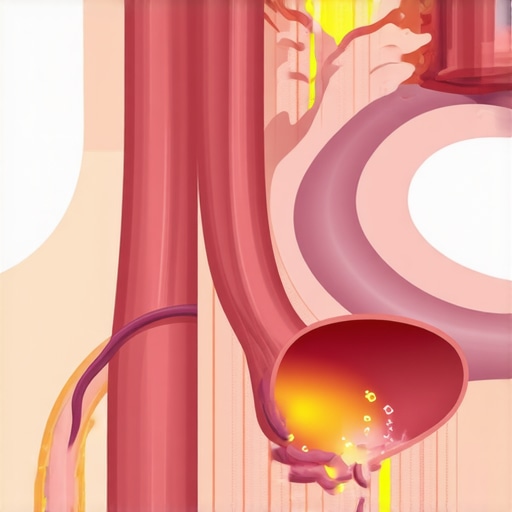
Gastroesophageal Reflux Disease or GERD creates false DUI readings by introducing stomach acid and undigested alcohol vapor into the oral cavity. This mouth alcohol contaminates the breathalyzer sample, leading to an artificially high Blood Alcohol Content or BAC result that misrepresents actual impairment levels for the defendant. The technology used in most police stations relies on infrared spectroscopy. This process identifies molecules based on how they absorb specific wavelengths of light. The machine assumes that every molecule it detects comes from the alveolar air deep within your lungs. This is a scientific leap of faith. When a person suffers from acid reflux, the sphincter between the stomach and the esophagus fails to close properly. This allows raw alcohol vapor to travel upward. Case data from the field indicates that even a microscopic amount of this vapor can spike a reading from a legal 0.04 to a criminal 0.12 in seconds. The slope detector is a software feature supposed to identify this rapid rise in alcohol concentration, but it is notoriously unreliable. It is designed to catch a spike, but it cannot differentiate between a steady leak of stomach gas and the air from your lungs. Procedural mapping reveals that most officers do not even know how the slope detector works. They simply trust the digital readout as if it were handed down from a higher power. A skilled dui attorney will challenge this blind faith by demanding the raw data from the machine.
“Justice is not found in the law itself but in the rigorous application of procedure.” – Common Law Maxim
How stomach acid bypasses the legal limit
Breathalyzers function on infrared spectroscopy or fuel cell technology designed to measure alveolar air from deep within the lungs. When GERD is present, the device fails to distinguish between lung air and esophageal gas, causing a false positive or inflated reading during the chemical test. The core of the problem lies in the partition ratio. The machine is calibrated on the assumption that the ratio of alcohol in your breath to alcohol in your blood is exactly 2100 to 1. This is a mathematical average, not a biological certainty. For someone with GERD, this ratio is completely destroyed. The presence of liquid alcohol or undigested food in the esophagus means the air being blown into the tube is saturated with a concentration that has nothing to do with what is in the bloodstream. While most lawyers tell you to sue immediately, the strategic play is often the delayed demand letter to let the defendant’s insurance clock run out, or in this case, to let the medical records speak for themselves before the prosecution can coach their experts. The stomach is a reservoir of volatile organic compounds. When the reflux event occurs, those compounds are pushed into the mouth. The dui defense must focus on this physiological bypass. If the air in the mouth is 100 times more concentrated than the air in the lungs, the machine will report a number that would imply the person is dead from alcohol poisoning, yet they are standing there performing field sobriety tests with perfect balance. This disconnect is the key to winning the case.
The failure of the mandatory observation period
Observation periods are mandatory 20 minute windows where the arresting officer must ensure the suspect does not burp, regurgitate, or vomit before the breath test. If GERD causes a silent reflux event, the dui lawyer can argue the observation period was violated and the BAC result is scientifically invalid. Most officers treat the observation period as a paperwork formality. They check their watches, look at their phones, or fill out the arrest report while the suspect sits in the back of the patrol car. They are looking for a massive, audible vomit. They are not looking for the silent, internal rise of acid that characterizes chronic GERD. In a courtroom, silence is a weapon. I have watched officers crumble under cross examination when asked to define a “silent reflux.” They cannot see it. They cannot hear it. Therefore, they cannot testify that it did not happen. If the officer failed to maintain continuous, face to face observation for every second of those twenty minutes, the test is compromised. Any dui attorney worth their salt will zoom in on those twenty minutes. We look at the body cam footage. We look at the reflection in the glass. We look for the slight grimace or the swallowing motion that indicates a reflux event occurred. If the officer turned their head to talk to a colleague, the observation is broken. The law requires strict compliance, not “substantial” compliance. When procedure fails, the evidence must be suppressed.
“A defendant’s right to confront the evidence includes the right to challenge the scientific reliability of the instruments used against them.” – American Bar Association Standards for Criminal Justice
The necessity of a medical expert witness
Medical expert witnesses provide the forensic evidence needed to link GERD to breathalyzer errors by testifying about the esophageal anatomy and gastric pressure. Without a doctor, the dui defense is merely a theory, but with medical records, it becomes a scientific reality that a jury cannot ignore. You cannot simply walk into court and claim you have heartburn. You need a gastroenterologist who can explain the mechanics of the lower esophageal sphincter. We use the medical data to show the jury that the client’s body is a biological “leaky faucet.” The expert will explain how the pressure in the stomach can overcome the weakened valve, sending aerosolized ethanol into the throat. This is the microscopic reality of the case. We look at prescriptions for Omeprazole or Nexium. We look at endoscopy reports that show Barrett’s esophagus or hiatal hernias. These are not just medical conditions; they are legal defenses. The prosecution will try to say that GERD is a common excuse, but the data does not lie. When we correlate the timing of the last meal with the timing of the arrest, the dui lawyer can build a timeline that proves the reflux was occurring at the exact moment the machine was sampling the breath. This is how we defeat the machine. We replace the computer’s guess with a doctor’s diagnosis.
How the prosecution hides breathalyzer source code
Source code litigation involves the dui defense demanding access to the software instructions that govern how the breathalyzer calculates BAC results. Prosecutors often fight to keep this proprietary information secret, claiming it is a trade secret, which prevents the dui attorney from exposing hidden software bugs. The machine is a black box. The government tells us to trust it, yet they refuse to show us how it works. In many jurisdictions, the manufacturers of these devices have fought tooth and nail to prevent independent scientists from looking at the code. Why? Because the code contains the assumptions. It contains the “slope detection” algorithms that are supposed to filter out GERD related mouth alcohol. If those algorithms are flawed, every single test the machine has ever performed is suspect. A dui lawyer who understands the tech will push for discovery of these logs. We want to see the error messages that the machine suppressed. We want to see the “ambient air” warnings that the officer ignored. The machine is not a scientist; it is a piece of hardware running old software. When you call an attorney, you are hiring someone to look under the hood. The state wants a quick plea deal. They want you to see the 0.08 and give up. But the 0.08 is just a number generated by a program that might be bugnier than a cheap smartphone app. We do not accept the number. We challenge the logic that created it. This is the difference between a settlement mill and a trial firm. We litigate the science until the state realizes their evidence is a house of cards built on a faulty stomach valve.