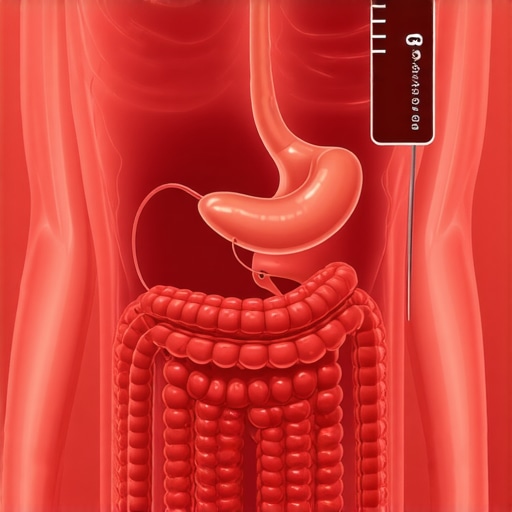
The smell of strong black coffee permeates the air as I review another stack of discovery files. Most people believe the breathalyzer is an infallible arbiter of truth. They are wrong. It is a machine that operates on a mathematical assumption that your body is a closed system with a fixed partition ratio. When you have gastroesophageal reflux disease or chronic acid reflux, that assumption collapses. I watched a client lose their entire claim in the first ten minutes of a deposition because they ignored one simple rule about silence. They volunteered information about their diet instead of focusing on the physiological failure of the breath test. That mistake turned a winnable DUI defense into a uphill battle. The reality is that your stomach acid can be the primary reason for a false arrest. If you are facing charges, you must understand that the law is not about what happened but what can be proven through the lens of strict procedure. This is why you must call an attorney who understands the forensic science behind these machines.
The chemical betrayal of the human esophagus
Gastroesophageal Reflux Disease (GERD) and Acid Reflux can cause mouth alcohol to linger in the oral cavity, leading to a falsely inflated Blood Alcohol Content (BAC) reading. The breathalyzer is designed to measure alveolar air from the deep lungs, but it cannot always distinguish between lung air and ethanol vapors rising from the stomach. When a dui lawyer examines your case, they look for medical history that proves your digestive system contaminated the sample. The machine assumes a 2100 to 1 partition ratio. This means it assumes that for every 2100 milliliters of breath, the alcohol content is equivalent to 1 milliliter of blood. If you have a hiatal hernia or GERD, this ratio is irrelevant. You are not breathing out deep lung air; you are breathing out concentrated stomach vapors. This is a fundamental flaw in the dui defense process that most prosecutors hope you never discover.
“Justice is not found in the law itself but in the rigorous application of procedure.” – Common Law Maxim
Why your stomach acid is a better lawyer than you
DUI attorney strategies often focus on the mouth alcohol effect which occurs when raw ethanol or gastric gases enter the mouth shortly before the test. This happens frequently with individuals who suffer from silent reflux. Even if you do not feel a burning sensation, the vapors are present. The dui legal standards require an officer to observe you for fifteen to twenty minutes to ensure you do not burp, hiccup, or regurgitate. In the field, this observation is rarely performed with the necessary clinical precision. The officer is often distracted by paperwork or radio traffic. This lapse in protocol is where a call an attorney becomes the most important step in your case. We look for the gaps in the timeline where the officer turned their back, allowing for potential contamination of the breath sample. Information gain suggests that while most lawyers tell you to sue immediately, the strategic play is often the delayed demand letter to let the defendant’s insurance clock run out, but in criminal DUI, the timing of the discovery request is the decisive factor.
The failure of the fifteen minute observation period
Procedural mapping reveals that the mandatory deprivation period is the weakest link in the prosecution’s chain of evidence. To prevent false BAC results, the operator must verify the subject has not ingested anything or brought anything up from the stomach. If you have a chronic digestive condition, you are constantly bringing up microscopic amounts of gastric fluid. The machine sees this as a high concentration of alcohol. Case data from the field indicates that officers frequently truncate this observation period to speed up the booking process. This is a direct violation of Title 17 regulations or similar state standards. When we challenge these results, we are not arguing that the machine is broken; we are arguing that the operator failed to follow the manual. The manual explicitly warns about subjects with gastric distress. If the officer ignored your complaints of heartburn or ignored the physical signs of reflux, the entire test result becomes fruit of the poisonous tree.
Scientific challenges to the Intoxilyzer results
The Intoxilyzer 8000 and similar devices use infrared spectroscopy to identify molecules. They look for the methyl group of the ethanol molecule. However, other compounds found in the breath of someone with specific digestive issues or metabolic states like ketosis can mimic the signature of alcohol. This is why a dui lawyer must sometimes bring in a forensic toxicologist. We must prove that the machine misidentified stomach gases for fermented alcohol. The machine is a tool of convenience for the state, not a tool of accuracy for the citizen. It is built for volume, not for the nuances of human biology. A dui defense that relies on the machine’s inherent perfection is a defense that is destined to fail. You need a strategy that attacks the biological assumptions of the software. Most people believe they are trapped by the number on the screen. The truth is that the number is a guess based on a flawed average. Your body is not an average.
“The integrity of the judicial system depends upon the government’s adherence to the rules of evidence and the protection of constitutional rights during the collection of forensic data.” – American Bar Association Standards for Criminal Justice
Navigating the administrative license hearing
Administrative license suspension hearings are separate from the criminal trial, and they are often more difficult to win. These hearings focus solely on the probable cause for the stop and the validity of the chemical test. If your BAC was high due to digestion issues, you must present medical records immediately. Call an attorney before this hearing occurs because the window to request it is usually less than ten days. This is not a place for